As part of the 25-year celebration of Treewhispers, and at the invitation of the HIVE Center for Book Arts, handmade paper rounds from near and far are on display. They are filling the stairwells and third floor of the Evanston Public Library now through January 2026. Each circle holds a story, a reflection, or a memory.
This installation is a small part of the thousands of stories that have grown with Treewhispers over the years. It is also an open invitation for new stories to take root. Pause along the stairwells, linger on the third floor, read, dream, and remember. Let yourself be inspired by creativity, community, and our enduring connection with trees.
Treewhispers and book artists were recently welcomed into the beautiful space of Liggett Studioin Tulsa, Oklahoma, through the thoughtful curation of Teresa Wilber.
With deep gratitude to Steve Liggett and Teresa for their generous invitation, their sensitive handling of the work, and their outreach to so many kindred artists. It was a joy to share this work and to experience the creativity and spirit of others whose art filled the space with story and connection.
Thank you to all who came, lingered, and listened. The exchange of energy and appreciation made the experience truly special.
We’re thrilled to invite you to an immersive, soulful, and hands-on Treewhispers Papermaking Workshopwith the amazing Steve Liggett and the poetic spirit of Phetote Mshari!
In this two-part workshop, artist and papermaker Steve Liggett will guide you through the joyful and surprisingly meditative process of making handmade paper rounds. These textured, earthy pieces are the heart of the Treewhispers installation, a global project celebrating our deep-rooted relationships with trees.
But it doesn’t stop there…
You’ll be joined by the ever-inspiring poet and storyteller Phetote Mshari, who’ll help coax your memories and musings into words that can be added to your handmade papers — becoming part of a larger, living artwork. Whether it’s the memory of climbing your favorite tree, planting one with a loved one, or simply basking in the stillness of a forest — this is your space to remember, reflect, and create.
Your paper pieces can be taken home, treasured, or contributed to the traveling Treewhispers installation, which continues to grow like a tree with every story added.
Come for the art, stay for the wonder. Rediscover that childlike awe. Feel the peace that only trees and creative community can offer.
No experience necessary. Just bring your stories and your love for trees.
In 1972, my grandparents, Otto and Alma Betke, my best friend Dan Danner and I were bumping across the Nebraska pasture when we discovered a giant Eastern Cottonwood, so big I took a photo of them, stretching their arms against the trunk to show the massive size.
Grandma reported it to the Nebraska Fish and Game – they measured it: 38 feet around the trunk! That same year, the Cottonwood became Nebraska’s official state tree.
Coincidence?
Maybe.
Gram also wrote to Nebraskaland magazine about our discovery, asking how many trees this big existed in Nebraska.
Today’s record holder? 37.2 feet.
About the fishing trip – yes we caught bass, crappie and bluegill, but the biggest catch of the day was the story of a tree so grand it might still hold the record!
4207 W Irving Park, Chicago, IL Saturday, March 22 | 2:00 – 6:00 PM
2:00 – 4:00 PM | Columbia College Center for Book & Paper Arts Alumni Reunion (A special time for alumni to gather and reconnect.)
4:00 – 6:00 PM | Closing Reception – Open to All
*For CBPA alumni, this is more than a reunion. It’s a rekindling of the creative spark that first brought us together. Through the wisdom of thought-provoking instructors and the boundless exploration they encouraged, we forged connections that have stood the test of time. Let’s gather to honor those shared experiences, reflect on our artistic journeys, and celebrate the lasting impact of our creative community.
Expect an afternoon filled with lively conversations, creative inspiration, and a few surprises!
If you’ve ever been curious about the process of handmade paper, here’s a glimpse! Melissa Jay Craig is creating paper rounds for the Treewhispers‘ closing reception at Artists Book House on March 22nd. (Don’t miss it! You might be a lucky recipient of this amazing paper!)
What you don’t see is the incredible fiber processing behind the scenes:
Raw hemp & unbleached abaca pulp sheet – both beaten for 90 minutes at 1 in the Hollander beater
Twinrocker black denim pulp sheet – 20 minutes at 1
Papermaking is a labor of time, energy, and talent—often unseen but deeply felt in the final sheet. There are many different processes, fibers, techniques, and materials that can be used, each bringing unique textures, characteristics, and possibilities.
So many generous papermakers have donated handmade paper rounds to Treewhispers. This has made it possible for others to take part. They can write stories, compose poems, or draw on the sheets to be included in the installation.
I’m incredibly grateful for these generous contributions, which allow this collaborative project to grow and evolve with each participant.
Next time you hold a sheet of handmade paper, take a moment to consider the process, the fiber, and the maker. Reflect not just on its touch and texture. Contemplate its color, thickness, and even its sound. Yes, sound.
Enjoy the photos and celebrate the artistry of handmade paper!
When my parents bought their houses it stood on an empty lot devoid of any landscaping. She bought 5 pine trees for the front of the house and every time she trimmed them she would root her cuttings. I inherited the house 65 years later—it is surrounded by a think barrier of yew trees which provide shelter for sparrow and rabbits year round and provide a sanctuary sense as I sit in my front or back yards. She also rooted 4 gingko trees from one existing tree. Thank you, Mom for the haven you created.
Participants will learn the technique of pulp painting, creating imagery within sheets of handmade paper using plant pulp as a medium. We will design and cut our own stencils using nature as our inspiration. Then we will create sheets of paper, including round sheets, in keeping with the theme of the Treewhispers project. Participants will apply colored pulp using their stencil forms to the fresh sheets of paper. The wet sheets can be taken home to dry. Wear clothes that can get wet.
About Don Widmer
Don Widmer is a book and paper artist whose work incorporates papermaking and artist bookbinding. His papermaking utilizes detailed pulp painting with numerous layers of stenciled pulp. His artist books feature structures that explore movement and light. Don has exhibited throughout the Midwest, most recently at David Smith Studio, A+C Architects Studio, the Paper Discovery Center, Bridgeport Art Center, Tall Grass Art Gallery, Morgan Conservatory, Gallery Studio Oh!, and Kalamazoo Book Arts Center. He has received several best of show awards and his work is represented in university, museum and library collections. Most recently, the Smithsonian purchased his artist book Darkness and Light, inspired by Etty Hillesum. Widmer received his MFA in Interdisciplinary Book and Paper Arts from Columbia College Chicago.
Participants will learn the technique of pulp painting, creating imagery within sheets of handmade paper using plant pulp as a medium. We will design and cut our own stencils using nature as our inspiration. Then we will create sheets of paper, including round sheets, in keeping with the theme of the Treewhispers project. Participants will apply colored pulp using their stencil forms to the fresh sheets of paper. The wet sheets can be taken home to dry. Wear clothes that can get wet.
About Don Widmer
Don Widmer is a book and paper artist whose work incorporates papermaking and artist bookbinding. His papermaking utilizes detailed pulp painting with numerous layers of stenciled pulp. His artist books feature structures that explore movement and light. Don has exhibited throughout the Midwest, most recently at David Smith Studio, A+C Architects Studio, the Paper Discovery Center, Bridgeport Art Center, Tall Grass Art Gallery, Morgan Conservatory, Gallery Studio Oh!, and Kalamazoo Book Arts Center. He has received several best of show awards and his work is represented in university, museum and library collections. Most recently, the Smithsonian purchased his artist book Darkness and Light, inspired by Etty Hillesum. Widmer received his MFA in Interdisciplinary Book and Paper Arts from Columbia College Chicago.
Several enthusiastic members of the North Suburban NeedleArts Guild immersed themselves in the Treewhispers forest on Sunday. It was delightful—though perhaps not surprising—that when invited to share their stories, they instinctively reached for needle and thread or brought along their already-stitched handmade paper rounds to continue working on.
There’s something truly special about gathering together, stitching, and sharing tree stories along the way. It’s a gift—one that continues to weave connections through time and art.
Saturday, February 22, 2025; 12pm to 3pm 4207 W Irving Park, Chicago
This is a class for all levels with a focus on drawing, calligraphy, and incorporating nature, using trees as inspiration for creating fun and funky letters.
Students may bring in their own photos or cuttings of trees, branches, twigs, and leaves for inspiration, or they may use the instructor’s samples. We will explore the interesting shapes found in these items and sketch letters based on those shapes. Then, we will illustrate the alphabets using paints, colored pencils, gel pens, markers, and other materials. Students will work at their own pace and may choose to create a variety of letterforms or a cohesive alphabet or short phrase.
Materials will be supplied, but students may bring in photos or natural clippings for inspiration.
A heartfelt thank you to the enthusiastic members of the Chicago Calligraphy Collective and everyone who made the Artists Book House event so meaningful! I’m deeply grateful for the CCC’s talent and generosity in creating the Weathergram outreach. It was so wonderful to see art bringing people together, creating new friendships, and sharing stories. Here’s to more moments like this filled with creativity and connection!
Come watch the masters in action, share in the creative energy, and design your very own weathergram! Whether you’re a seasoned artist or a curious beginner, this is your chance to explore, create, and connect. Don’t miss it—let’s make some art together!
I’m beyond excited that the Chicago Calligraphy Collective (CCC) is collaborating in Treewhispers’ 25th Anniversary festivities!
This special event is a chance to immerse yourself in the beauty of calligraphy, create your own weathergram, and experience the inspiring Treewhispers exhibit.
Admission is free—if inspired, feel free to contribute.
What’s happening?
CCC calligraphers will be demonstrating a variety of lettering styles. Supplies will be provided for visitors to create their own weathergrams—a beautiful calligraphic tradition dating back over 50 years.
Take yours home, display it, or gift it to someone special!
Come celebrate the art of writing, storytelling, and nature with us.
We bought our house in 1999 and proceeded to completely change the landscape. My sister died in 2000 and we put in a memorial garden for her. Then a miracle happened and my granddaughter was born in 2001. As she grew she became increasingly interested in our landscape project. When she was about 3 or 4 we had to replace a dying curbside maple. We replaced it with a white oak, which will not doubt become the mightiest tree in the yard. We told her that it was “her tree”. she then made us assign a tree to everyone in the family. mine is a paper birch, her mom’s is an autumn lazy and her dad’s is a buckhorn fern that lies in the memorial garden. Her white oak is growing tall, strong and beautiful—just like her!
Contributed by Candice Thomas, Naperville, IL (grandmother to Cat Bradley!)
When I was little, my father made me promise him that I knew the trees were not talking to me. It was all right to talk to them but I must know they were not responding.
Your allegory disintegrated my skin, truncated the chapters, changed the leaves.
Yes, of course, I yielded and silently apologized to the Elm.
Language was then only my second language.
I always forget that the first moment of consciousness is intimacy: kindred spirits, falling in love, magical mystery moments.
Your version betrayed a collective concern about chance.
Hearing hearsay brought me sorrow and consolation in learning intimacy is a foreign land where they speak language.
I knew who was taking care of me then and later wondered if sadness brought on the Dutch Elm Disease.
Last week we had to cut down the god tree, so we could live.
We had to assassinate Ailanthus, and stop living in the past.
Should I have just told my father that It had approached me first?
The Tree of Heaven is now a stump wound, a keyhole preserved for eavesdropping.
When my sister and I were returning from our beautiful walk along the creek in Sedona, I looked up at the great wisdom tree and it seemed as though its arms were stretched out to hug me! WOW! I love this tree!
The south is home to some of the biggest live oak trees I’ve ever seen. The ones that I remember most fondly are the kind with the gigantic limbs that swoop down close, in some cases all the way, to the ground. It was amazing growing up around these trees and experiencing them as a child. While growing up, my sister and I would climb trees almost on a daily basis. It was fun and yet magical. Every time I see a big live oak tree like that it brings back the best memories!
Fast forward many years later, I’m now in my early 20’s and still climb trees every chance I get. Their roots are set deep into Mother Earth. Being musically gifted )on Native American flute and other instruments) I wanted to write a song that captures the essence of being in that tree – carefree and joyous.
If you’re interested in hearing this song, log on to my website: http://jonnylipford.com and look for “Up in a Tree” from my most recent release, “Turn The Page.”
I live above 32nd street, in an apartment that overlooks a several acre lot where Dawson Construction is building an office facility for Western Washington University. I have grown accustomed to the early morning sounds of bulldozers, grating metal, and trucks beeping as they back up. But this morning, an unusual sound caught my attention around 7:30 am. It was a loud, slow, and reverberating Craaack. Then a pause, then another loud Craaack. I was still in bed, but the noise was so eerie that I got up and shuffled into the living room to peer out the blinds. Through the slats I saw a small yellow steam shovel ramming itself against a 30-foot-or-so tree on the edge of the sight. The tree was cracking open and falling over slowly, stubbornly, its roots still grasping the earth. Beside it was the next victim, another 30-foot-or-so tree with hardly any leaves on it. It must have already been sick. But, closer to me, on the furthest edge of the lot, a full acre from the three story building that had already been constructed, there was a third tree, at least 40-feet tall, with long healthy branches and lots of green leaves.
For the record, the trees were minding their own business when the travesty occurred.
The steam shovel backed up, took aim, and slammed into the first tree again. I yanked the blinds all the way up and slapped my hand on the glass. “What are you doing?” I said out loud. No one could hear me, off course. I was about 50 yards away and across the street.
I watched in horror as the steam shovel bludgeoned the tree over and over with its shovel. “No!” I yelled through the glass. “Stop! What are you doing?” But the shovel just backed up, dug with iron claws at the tree’s roots, bit into them and ripped them up. My stomach turned as the machine backed up, took aim and slammed into the tree again. Three gut-wrentching cracks later, the tree was leveled.
I wanted to do something, besides standing there slapping my hand on the glass and crying out, but I couldn’t take my eyes off what was happening. The bulldozer backed up, rolled over to the second tree and started hacking at the roots.
Should I run across the street in my pajamas and throw myself in front of the tree? I wondered. No, maybe I should quickly get dressed and then run over. I had to do something. I could call someone like the police or scanning the site I saw a truck trailer with the word DAWSON in short caps. The second tree was already beginning to lean. If I was going to save it, I had to act fast. I ran to the kitchen cabinet and grabbed the phone book. “D-D-D-D,” I said aloud. My hands were shaking as I scanned the columns. “Okay, D-A D-A D-A-W! Where is it!” I already knew I was going to cry. I found the number, ran for the phone and dialed. As an automated voice on the other end of the line went through a list of extensions, I watched the second tree fall over. Now the shovel was backing up to begin its assault on the third, healthiest tree.
“Nooo!” I screamed hitting the glass with the flat part of my fist this time. Finally, the receptionist picked up. “I need to talk to the person in charge of the construction site on 32nd street,” I said.
“Do you want a manager on site or here in the office?”
The shovel started scraping at the roots of the healthy tree. “Does the manager on site have a cell phone?”
“No, the phone is in the trailer on site.”
“Then I’ll talk with the person in your office.”
“And you’re with?”
“I’m with myself,” I said.
“Oh, just a moment, please.”
“Hello, this is —________,” I could tell the receptionist had alerted this male voice that there was a hysterical woman on line two.
“Hi, I live across from the 32nd Street construction site for Western and I am standing here watching one of your guys tear down three trees with a steam shovel. Is that absolutely necessary?”
“Hmmm,” he said. “I don’t think we’re taking down any trees you must have the wrong site.”
“I’m looking out the window at a trailer that says DAWSON in big letters and I’m telling you a guy in a steam shovel is pushing over a perfectly healthy tree as we speak. I’m standing here watching him do it. There can’t possibly be a good reason for that.”
“Hmmm. Exactly how big is this tree?”
“It’s at least thirty feet tall and he’s pushing it over with a F—ing bulldozer.” It was a steam shovel, but I was too upset to care. The healthy tree started going over.
“Alright,” he said, as though he finally believed me. The tree was frozen in mid fall. What’s your name?”
Who cares, I thought. It’s too late. “Christina Katz,” I said trying hard not to cry. With every last ounce of indignation I could muster I said. “There are only two more healthy trees left on the whole lot and I want to be able to look out my window and see them in the morning. Is that too much to ask?”
“Okay,” he said softly. Uh, what’s your phone number? You sound like you could use a call back.”
I managed to give him my number without losing it. I didn’t expect him to call me and he never did.
The steam shovel dragged the fallen trees into a pile. Then it started hacking at them while they were lying on the ground. I couldn’t stand it any more, I went into the bedroom and collapsed into a pile of tears. I haven’t cried that hard since my dog died. When I went back to the window a few minutes later someone who looked like a foreman was running over to the steam shovel operator. He shouted something and then the steam shovel operator resumed hacking at the trees.
I wondered if the trees were dead yet. Then maybe they wouldn’t feel anything, but I doubted it. Trees aren’t like people. They’re more patient. They live more slowly and they die more slowly. That’s why we need to keep them around. That’s why we need to just let them be.
Today, I’m proud to report that I can look out my window in the morning and see two trees, still standing.
A Fall day in freshman biology class…Sister Mary Rita tells us to look out of the classroom window and tell her what we see. “A tree, Sister!” was the general response. “Yes, yes, yes…now what can you tell me about it?” “The bark peels off and makes a mess. My baby brother tried to eat some yesterday.” Muffled hee-hees were then silenced by a disapproving:”Thank you, Angela. Can someone else add something? Sister then points to me. “Well, the boys on Fernon Street call the seed pods itchy balls and make a game of pelting us girls walking home from school. And I can personally attest to the fact that they are itchy ’cause my brother always enjoys dropping and squashing one down my back.” More snickers followed and were quickly silenced by Sister Mary Rita’s now higher pitched voice showing exasperation and asking:”Do any of you know the NAME of this marvelous tree that provides nourishment to baby brothers and artillery for older ones? My goodness, young ladies, 14 years surrounded by Sycamore trees…she feverishly writes the name on the blackboard breaking the chalk. TREES HAVE NAMES!” And DO THEY, I thought…how apropos…Syc like sick and amore, love…image of my brother pelting me with seed pods…Sycamore=sick brotherly love. The next day Sister Mary Rita asks us if anyone can remember the name of the tree discussed the previous day…silence… then a solitary hand…mine..”Sycamore!” Sister Mary Rita smiled with relief. ;-)
On 1/1/06, I lost my brother, sister-in-law & nieces in a random home invasion. My brother and I had always been great lovers of trees-partially because we’d grown up on army posts and never had many trees around our houses. One of the reasons they had bought this house in their neighborhood was because of the beautiful Chestnut trees in their backyard (trees that they unfortunately lost during Hurricane Isabelle). When I was trying to decide what to do for their headstone, it just seemed right that I would make a tree part of the stone. It had to encompass all of their names as well as their birth dates. Once it was done, the tree offered its leaves to shade and protect the memory of their lives and the 4 swallows flying up to the sky. On the back of the headstone, we quoted the last Beatles’ song “The End”….and in the end, the love you take is equal to the love you make”…..it was all appropriate for my brother, a musician, and lover of trees. Trees now represent family, love, strength and inspiration to me.
When I was 8 years old..that was 1958…a very significant year for many folks…I would sneak out of bed in the mild weather, when my folks were asleep and creep out to a large spruce that was in the very back of our property.
In there I had a nest of blankets and that’s where I kept all of my totems and special things. I’d sleep out there and at the first light sneak back to my bed.
In that place I was safe and I truly became the “Indian” that I believed myself to be. Out there…my blonde hair was gone and I had long dark hair and brown skin. The spruce make that so.
One night while I was out there, I saw a light coming closer and thought…”uhoh…dad is coming to find me” As the light came closer…it wasn’t dad at all, but a Native man with a torch. I lifted the heavy branch and looked out at his glowing presence.
“child…I am your great grandfather and I have an important message for you”. I wasn’t afraid…I was comforted by him. “I will always be with you in everything you do…You have a huge future ahead of you with an important path to walk. It’s called the Good Red Road and if you stumble or falter or come up against trials that you can’t imagine over coming….remember this my child….You are Up to the Task.”
With that he faded. I slept with a smile that night. And all through my life, now 60 years, I’ve always remembered his words. They’ve brought me back from death…. and beyond.
It was the tree that I slept beneath that was the energy that facilitated that night…love and peace…lynnann
I have many tree friends, and tree friends in other States, that led me to create and write many books as I shared with them and spirits and devas that came through from them many exciting incidents. One Tree, a young Oak Tree, allowed me to enter and I saw with the Faerie Queen, an elf, a centaur, and watched a procession of dancing fairies depicted as lights whilst I supped Acorn tee atop a large mushroom. I have sat in a tree to prevent loggers from destroying it, have helped to prevent the removal of many beautiful trees from existence in order to turn it into a housing estate. The Goddess Cerridwen came through from a Sugar plum tree, and wrote a poem in my head. The mighty elms that lined the streets where I grew up, to Peppercorn trees, and one in particular whose shape resembled a tea pot,ready to pour tea. Such majesty resides in trees, their energy, their shapes, the beauty that houses within. Who could not be inspired when in a forest,and in particular the Oak, when you feel the energy, the presence of trees. I have trees outside every window, some small, some large, each maintaining its own beauty and song. Music rushes through the leaves of trees and when the wind plays with the branches and the leaves music abounds. Within an acorn, the tree resides. May it continue to be so.
I have always been intrigued by the whispering trees.
Each has a different story it tells, though not always a whispers, the wind that blows through its leaves and branches. With Fall their dried leaves crackle and break from their branches alerting us of times to come; Winter has their bare branches whistling of cold but also of steadfastness and a new beginning; then Spring and the soft, simple immature banter of their new leaves and finally Summer with their full and heavy songs of another circle yet completed.
These stories can best be heard by anyone taking the time to listen.
It was the boots she chose in the end. After days of sifting through his things, she knew. These would be the treasures she would choose to keep, her father’s old boots.
There on the floor of the dusty cluttered shed they stood in a shaft of sunlight. Curling slightly at the toes and worn down at the heels she recognized in them her father’s gait and the impressions it had left on his precious boots. The bump where his bunion had forced the leather to accommodate it and the way the insteps fell together, a result of his flat feet that had eventually kept him out of the war. He hadn’t had the best feet in the world, it was true and while they had caused him pain during his life, they had also carried him for many a year over hill and dale and even up a few mountains.
Her feet were just the same and she remembered the times she had resented this inheritance. How she had envied her best friend’s feet and the accolades heaped upon them by the school nurse because they were so divinely perfect, due in no small part she was sure, to the “sensible shoes” her friend was forced to wear.
But it was different now. She didn’t mind any more. Standing alone in a silt of scattered newspapers and the wreckage of un-repaired furniture her eyes rested upon his boots, the relics of more than a few childhood memories.
These were the boots that had carried her father over the fields and down the lanes to the old Mill Pond where he would seek out the elusive Kingfisher. Sometimes he’d walk as far as Earlswood Lakes to watch his beloved Canada geese, or across the verdant meadows, behind the house to see if the fox had had her cubs yet.
With his boots laced up, his cap set jauntily on his head, his binoculars in hand and a quick look in the mirror, satisfied that he was fit to be seen, he’d saunter off “down the cut” for hours on end to inspect the flora and fauna.
He loved all of nature and was a natural woodsman. It came as no surprise to her that her father had planted hundreds of trees over the years. He sprouted acorns and “conkers” from the great Horse Chestnut trees in pots in his garden. It was a gesture he thought little of as he ambled off to plant them when the time was right. Amongst the banks and the hollows, in a shady spot or a sunny location where he thought an English Oak or a noble Chestnut tree could flourish dramatically. He was happily creating the landscape to his liking.
He probably could have shown her where most of them were if she’d asked, but she didn’t. She just asked him “Why?” and he didn’t have an answer for her. Just a quizzical look as if to say “Why not?” And though he was gone now, he had left a mark on the Warwickshire landscape as permanent as he could wish.
His garden reflected his natural proclivity for all things wild. This being the case, the grasses and wild flowers enjoyed the freedom to grow where they would. This uncontained tanglement was the cause of great aggravation not only for George, the next door neighbour, whose own garden had a park like quality about it, but also her own mother who would never miss an opportunity to gaze over the fence wistfully, especially when her father was out doors. Then, looking over the horticultural nightmare that was her own garden in utter despair, she would give father a withering look before going inside.
Their creature comforts taken care of by the absence of a lawn mower, several small furry residents quickly made themselves at home. They had only to weasel their way through the hedge into George�s abundant vegetable garden for a repast beyond compare. Father increased their bounty by providing warm milk and bread for the Hedgehogs and was always delighted when the babies were brought out for an airing, convinced in his mind that they were brought along solely for his inspection and approval. However, this did little to discourage the hairy rascals from poaching George’s prized vegetables and eventually, over-come with guilt, father eventually put on his boots, picked up his scythe and went “down the gardin” to see what could be done.
The nature preserve was cut down except for “a bit o” green for the faeries and the dryad” at the far end of the garden. The tundra that now greeted him each time he walked outside was so disturbing to him that he was compelled to do something about it. That was the summer he became a gardener and for the next few years he surprised and delighted his family and neighbours with an abundance and variety of vegetables fit for a king. He made friends with George who happily shared his secrets for matchless “tayturs”. They now fell into easy conversations over the fence as they discussed the merits of mulching, fertilizing and harvesting their respective broods of fruits and vegetables.
But then he fell into a steady decline. Although he still went for walks, he could no longer manage the garden and eventually it grew back into the wilderness it had once been. He became angry and frustrated and unable to cope with a disease that came in the night and stole his mind knowing his heart would follow.
In his entire life he’d only seen the inside of a church twice and that was plenty for him. He liked to say “When I die, put me in the dustbin”. He’d laugh and wheeze a bit, having no illusions about where he would be going. Then he’d fall into a happy silence.
Released from her reverie, she cast about the wreckage for his other boots but they were not to be found. A pair of dark green climbing boots that took him to the summits of several mountains, but that was when he was younger. She had sat dangling her feet in Welsh mountain streams with her mother as they watched him take her brother up into the clouds. When his son became a Boy Scout, he joined too, and as Scoutmaster to the senior boys of the 89th troop, he never disappointed his charges. With his talent for climbing and his love for the outdoors, he led mountaineering expeditions and hikes that thrilled and excited his intrepid adventurers. These were probably his glory days, the times he would most wish to remember.
As she climbed over the debris of his life, she remembered him best of all as the father who had quietly loved her and supported her. She remembered his sense of humour and how he would laugh now if he could see her.
She climbed out of the shed, closed the door behind her and walked up to the house for a cup of tea, comforted by the feel of his old boots and how well they fitted her feet.
Contributed by Amanda Bradley, Edmonds, Washington
There is a pine tree on the golf course across the road where I live. I remember the day it was planted some 35 years ago. I was 9 years old with a new Golden Retriever puppy and given the grown up responsibly of walking her. I would take her to that tree, and let her off the leash to swim in the river while I climbed up one of the wobbly branches to play and watch her. This is how life flew though my childhood summers…walking to that tree with a romp in my step and a smile in my heart.
Now that I am older with 3 dogs and 3 children, grown up responsibilities fill my days, the seasons test even the heartiest winter lovers, and some days the walk is a chore. However, a small miracle occurs at that pine tree. I can no longer climb it, and it is much to big to put my arms around; but instinctively, my hand reaches out to touch the huge trunk. Upon touching, a warm flow of energy goes up my arm to my heart, and I smile quite unintentionally.
You see, that tree is me.
The once flexible branches, are no longer able to bend on a whim with the wind. Where the outside was once smooth and soft, weathered lines appear on the thickening bark. Yet in the harshest of winters, the roots have been nurtured, growing deep and strong. As the tree grew bigger, it too took on more responsibility; providing a warm shelter, restful shade, and happiness for the creatures who come in contact with it. If we could see the rings, we would know the inside has not died or changed; it still radiates with pure childlike love.
When I was 8 years old..that was 1958…a very significant year for many folks…I would sneak out of bed in the mild weather, when my folks were asleep and creep out to a large spruce that was in the very back of our property. In there I had a nest of blankets and that’s where I kept all of my totems and special things. I’d sleep out there and at the first light sneak back to my bed. In that place I was safe and I truly became the “Indian” that I believed myself to be. Out there…my blonde hair was gone and I had long dark hair and brown skin. The spruce make that so. One night while I was out there, I saw a light coming closer and thought…”uhoh…dad is coming to find me” As the light came closer…it wasn’t dad at all, but a Native man with a torch. I lifted the heavy branch and looked out at his glowing presence. “child…I am your great grandfather and I have an important message for you”. I wasn’t afraid…I was comforted by him. “I will always be with you in everything you do…You have a huge future ahead of you with an important path to walk. It’s called the Good Red Road and if you stumble or falter or come up against trials that you can’t imagine over coming….remember this my child….You are Up to the Task.” With that he faded. I slept with a smile that night. And all through my life, now 60 years, I’ve always remembered his words. They’ve brought me back from death…. and beyond. It was the tree that I slept beneath that was the energy that facilitated that night…
MY FATHER AND MOTHER HAVE INSTILLED A LOVE OF PLANTING IN OUR FAMILY.
The planting inheritance, a flourishing of the verdurous instinct…
But it’s more to the relishing of seeing things grow. And sharing in that growth. My father comes from a planting background, as a farmer. Early on, our family bought a farm, some several miles from our house in Spokane — mostly hay, back in the beginning. But later, the family — including all the brothers, and Dad, brought trees to plant. And more trees. And more — till finally, the bulk of the land is covered in pine. But it was never about the idea of cutting the trees, but converting the land.
Walking round, cleaning the land around the island studio, I see the many little plantings that have moved to permanence, after nearly two decades of growth. Here, too, are trees that have moved along — some, to growth, others have passed in the harsh and salted winds and rain. Cedars, transplanted couldn’t survive the shift from inland forests to more coastal weather.
I’m seeing the inklings of spring, just coming. Little sprigs of green emerging – the hints that the fierce grasp of winter is shifting to the season of renewal.
The nature of planting — the nurturing sprig or seedling — it’s a mutual gift, whether gardens, flowers, trees; but that gift, as I’ve seen in my parents, is as much a gift in the practice of planting, as the nourishing of green to the outcome of that gesture.
With the sun shining, it’s a day that celebrates that transition, just now — glinting rays illuminate the far shore like a rule of scintillant light, shimmering in slivers.
The waters, calm, still speak the whisper of the tides.
It is told that hundreds of years ago there were small mountain folk, the Alyphanties, who inhabited the rocks and boulders of Backbone Mountain in Western Maryland. They were seldom seen, although local legend has it that on several occasions around sunset, right after the evening breeze had been put to bed and the air was still, you could see the mountain trees––the hickory, elm, oak, poplar, maple and hemlock all dance and sway to the rhythm of a high-pitched musical instrument.
It was the music from Nephod’s flute that drifted across the mountain. He always sat under his favorite old oak tree each day, and his melodies floated away on the winds, wrapped themselves around boulders, and brushed over the plants and flowers. The trees would pick up his rhythm, lift up their branches and then bend to and fro to the tempo. Even the birds would sing along with each new melody, and it is thought that even today they sing the songs learned from Nephod’s flute.
Each spring Nephod would wander through the forests, stopping to play for the new trees that had sprouted, plants as they pushed up from the soil, and for the new flowers as they opened. He paused by animal dens to play for the arrival of new babies. Birds came out of their shells and butterflies emerged from their cocoons to his music. It is thought that Nephod=s gentle music was the reason the Alyphanties lived safely and harmoniously with the wildlife.
One day one of the children, a 12-year old girl named Zinta, who was a strong-willed restless child, decided to wander off into the forest and down the mountain. She was tired of being confined to the mountain top. She hid behind trees as she went so no one could see her. Zinta knew she should stay within the boundaries where she could hear Nephod’s flute. Surely, she thought, it couldn=t hurt to explore the land below. After all, she could always find her way back home.
The trees down on the slope squawked and moaned at her, encouraging her to continue down. AGo down, Zinta, go down,@ they seemed to say. At last there was no music. Zinta had passed into the forbidden new world.
She grinned and clapped as she looked all around her. There’s no reason I can=t be here, she said to herself, it doesn’t look any different down here than it does at home. But Zinta had no more time to explore that day. It had taken her longer than she expected to travel this far and until now she hadn’t noticed how late it was. The sun would soon settle behind the far mountain. She knew she must hurry back home before it was dark and her family missed her, but she also knew she would come back tomorrow and stay longer.
She turned around to retrace her steps, but she saw no trail behind her. Was she facing the wrong direction? She turned in a deliberate circle. There was no trail anywhere. Where could it be? She had just been on the path. She took two steps forward. The ground softened under her feet and she began to sink into the earth.
As she sank she watched the shrubs and vines move towards her. She was now up to her knees in mud. The forest crept closer and closer. The trees creaked and howled with laughter, their branches reaching out to touch her. ANow we have you,@ they screeched. Zinta looked wildly from side to side for a way through to the trail, but not only was she already surrounded by trees, she was still sinking and would soon be buried up to her waist.
AMother, mother!@ she screamed. Her cries of horror pierced through the forest. The Alyphanties looked around in confusion as her shrieks found their way to the village. No one had yet realized Zinta was missing. Some of the men rushed into the forest, hoping the screams would lead them to this person. Others worked their way down the slopes. It was Nephod, however, who knew what to do. He ran to the edge of the mountain and played his music as loud as he could in the direction of her cries. The music sped through the forest on the mountain winds down into the forbidden land. The trees down there, which had never heard music before, stopped howling as the melody brushed against their branches. They moved away from the path and then offered Zinta their branches to grab onto. They pulled and pulled, lifting her up until she was free from the mud. Nephod’s music then wrapped around her and guided her back up the trail to the safety of the mountain top. She knew that this visit to the forbidden land was to be her last.
It has since been told that from then on the trees down on the slopes would listen to Nephod’s music. They, too, learned to dance and sway to its rhythm that floated down on the breezes. They, too, learned to live in harmony with the rest of the forest.
Excerpt re-written from:
The Great Cavern of the Winds: Tales from Backbone Mountain
When I was 10 years old there was tree I used to climb in my backyard. It was around 50 feet tall and I could climb up 40 feet before the branches thinned out. One day I was in the tree when my mother ran out into the yard and yelled at me to get out of the tree. Her over reaction scared me, so I didn’t take the usual caution as I climbed down. I lost my balance and fell 30 feet but the branches of the tree almost seemed to catch me as I dropped through them. It was as if they curled up and wrapped around me, as though the branches passed me from one to another until I was on the ground. Outside of a few scratches I had no injuries. My mother was still yelling at me, not realizing the miracle that had taken place, but I knew some kind of magic had just happened.
Excerpts from “Grandpa Stories” Shovels & Wheelbarrows -Part 1
Certainty knows no bounds when it comes to understanding my grandfather’s time with the soil, his shovels and his wheelbarrow.
This was indeed a man who handled his shovels as if a prize on a shelf, a badge to shine on his shirt. His wheelbarrow was a piece of magic, the size of which seemed far too large for its travel in my grandpa’s car trunk. But those gleaming shovels, clean and free of dirt, and that larger than life wheelbarrow, seemed to go with him everywhere he and his Olds ’98 traveled.
I imagine that coming from Ireland, from a land of rocks, and hills, and farming – with green misty views reaching to infinity – that he grew up with the land in him. So it shouldn’t surprise me to wake in the morning (usually some Saturday morning at 6:30 a.m.) to find my grandpa in our backyard. He would be planting his second –or perhaps even third– blue spruce (another thing I am certain was his favorites).
My brothers and I would hear his wide deep digging shovel grip the gravely dirt – then would come the drag of soil to the surface – the thud of the earth meeting the mound he had formed. We would lie in our beds half awake, half asleep, knowing our grandfather was doing the thing he was most alive doing…digging in the land. More importantly, our backyard!
My Dad and Saturday Mornings -Part 2
Now mind you, it’s a great thing to be so connected to the land, but it’s another not to tell someone you’re feeling connected to “their land,” “their yard.” Oh yes, of this I am also certain — there were days that my dad would have loved a notice posted of: “INTENT TO EXCAVATE YOUR YARD FOR TREE PLANTING.”
Collectively us kid’s, we would know our time of half-awake and half-asleep had ended — and when fully awake had arrived — when we heard my parent’s bedroom door open. First would come the light step of my mom in the hallway heading towards the kitchen, minutes later we could smell the sweetness of cinnamon rolls and icing baking. I am convinced now that this was my mom’s way of signaling a kind of “chore-warning.”
Confirmation of this alert was given when my parent’s bedroom door opened for the second time. My dad had a way of opening their bedroom door – which pushed a gust of wind under each of ours – along with a way of stepping out into the hallway that declared a litany of chores that lie ahead on any given Saturday.
Door Opening Sounds -Part 3
There existed several proclamations within each of my dad’s door opening wind gust:
1. The “let’s clean the garage” – door opening sound (of which the stories are so great in length & quantity – they would best be left for another day and another book entirely of its own).
2. The arbitrary, “let’s all wake-up cause it feels too late to still be asleep” – door opening sound.
3. The “you stayed out to late last night, so get your butt outta bed” – door opening sound.
4. The “let’s have a party and invite lots of people – so get up and clean every dish & glass, mow the lawn, wash the floors, clean the garage, and oh by the way, let’s redecorate” – door opening sound.
and of course…
5. The gust of wind and sound combination of: “your grandpa’s here planting trees and I didn’t know anything about it…but you’re all gonna get up and help – before he digs up all the trees we’ve already planted and moves them” – door opening sound.
Us – Final part
Each of these particular door-opening signals would be followed up with the triple knock on each of our bedroom doors and the somewhat military-ish delivery of “rise – n – shine.”
Indeed as time has passed, the years have provided me with rich recollections. There were important messages there for me – this was a lesson in learning about my grandfather’s time, which created my father’s time, which in turn r-e-i-n-c-a-r-n-a-t-e-d into something totally different in each of my five brothers and my own time. And in the end, regardless of our bodies calling for sleep, it was tree-planting time; for my grandfather, with my grandfather, about his love of shovels & wheelbarrows, of trees, the soil, and most importantly us.
Yes, of this I am truly certain, it was about his time – with us.
Short stories written by Linda Marie Barrett (Submitted in honor of my grandfather Michael R. Barrett, who arrived in the United States of America from Castleisland, Ireland – via Liverpool, England, UK, — aboard the ship Cedric on February 28, 1920.)
Our magnolia was planted as an understory tree beneath several American Elms in 1940 by my grandparents. As kids we sat among her branches. Then last spring a woman stopped by our house to tell us that she had photographed it the year this was taken. It was a low point in her life and she dubbed the tree “hope” and hung it on her wall. This will be my sixtieth spring and I still marvel at its beauty and constancy. Contributed by Sandy Riddell Wagner
We live in a traditional cottage in north east Scotland. When we moved into our cottage, many years ago, there were six Sitka spruce along one side of the garden. Rangy, poor dying souls; so we got them cut down and taken away. I felt dreadful after this, our garden felt bare and too different. We live in the middle of farmland where it seems that trees and hedges get cut down indiscriminately by the farmers; we did not want to be part of that movement. So we planted new trees; we had to think carefully as our garden isn’t big. It is surrounded by a very old beech hedge, and there is a mature Ash tree in the front and a Field Maple in the back garden. So we planted a Cherry, two Hawthorns (one of which I had grown from a seed) a Maple (Crimson King) a Birch (Snow Queen) and a Rowan/Mountain Ash. The trees have now grown a great deal and are the delight of the garden. We even named out son after a tree, Rowan, as it was traditional here to plant a Rowan tree in the garden of a new house to protect against evil spirits. We wanted our son to be protected and we also thought it was a beautiful name. He rather spoilt the romance when he got his first library card and I found out that he had added Geronimo to his birth name, as he felt he lacked a middle name!
Trees… what tree stories do I have? After thinking I realized I had not one tree story, but many… many trees marking my years. How to choose which was better or more important?
I can think of immediate ones—the maple tree in my parents’ front yard. I spent a lot of time in that tree. I sat in it to read, to think or to spy. I shared a lot of time with it. My mother told me a couple of years ago that one of the main branches on the bottom was splitting! They were talking about taking it off. I knew the very branch. It was the first on you would grab onto as you swung your body around and prepared to crawl up and lose yourself in the cover of the leaves. I told my mother if they ever cut it off, I wanted it and would mount it in the corner of a room so that I might hang from it again. I can think of many other neighborhood’ trees—Uncle Johnny’s willow, the Amos’s Box Elder, the pine tree on the on the golf course where we had a makeshift tree house.
I thought of every Christmas tree and how I wanted to hug everyone, but couldn’t. It is a frustration I still have. My father loves Christmas trees so we were fortunate to always have two: the living room tree and the kids’ tree in the rec room. Before any of our outside evergreens were big enough to put lights on, my father would get a 3rd and would put it in the front yard just so he could have a tree with lights outside. Even though all of us kids are grown, my parents still get two trees. I only get one, but I name every one. My husband used to think I was crazy, but now he helps in listening for their name as well. I love a fresh Christmas tree, but insist on them being disposed of properly. They need to be recycled or given back to the earth so that she might recycle it.
I believe in this so strongly that I wrote and illustrated a children’s book about it and about the hidden magic in Christmas trees, one secret being that we don’t choose them, they choose us. I am hoping a green- minded publisher will see the hidden magic in my book and publish it, but so far… no luck… onto the next submission!
I can think of trees that made me laugh—the ”puke berry” one on my college campus… trees that made me cry—the beautiful 40 ft. Blue Spruce they torn down in the middle of the city in order to make room for yet another condo… trees that made me feel safe and trees that made me feel they were watching and recording history. If only we could ”play” a tree as we do a record or a tape. What would they have to say? What would they have seen?
Every day after I came home from school I passed a small evergreen at the corner of my house’s garage. It had awkward branches sticking out on the top and it was only a few feet taller than I was. I wanted it to know that although it wasn’t large and majestic it was special, so I named it Princé (pronounced Pree-say) and kissed its branches every day
I have visited the Primordial Forest near the coast of Oregon. The Hidden Creek Wilderness has a stand of giant Redwoods going back two thousand years.
It seems that few humans wander off the path into this overgrown untouched wilderness with Hidden Creek running through it. Even the Indians that lived along the coast and wore the bark for clothing, gathered berries and seeds from the undergrowth, were said to be afraid of the Dark Forest. Occasionally an old hunter enters the forest, carrying his rifle. The turf is moist and spongy from layers of bark and loam and old trees that have fallen over, becoming part of the ground. It is easy to take a step and sink way down. The smell is fresh and musty. The redwoods grow straight upwards, creating a ceiling at about 200 feet. There are signs of elk and bear along the river. One tree is charred by lightening, somehow burning in all this wetness. Inside this place there are no paths, and the trees are covered in moss hanging down, like old elegant clothing.
Winter wrens hop along the ground and are difficult to see. The only sound is the owl hooting. American Dippers dive in and out of the river.
Inside with the trees the silence is thick, palpable. There are no human sounds left, and not a trace of human presence. Just these ancient trees guarding memory. I say to myself, ”Nothing false can enter Here.”
When I was young, I anxiously awaited the arrival of spring to see the bright pink blossoms on our three peach trees. I was intrigued by how the fruit emerged after the blossoms fell. The trees took up most of our backyard so two of them served as second and third base. Touching any branch of the tree meant you were safe and hitting the ball over a tree was easily a home run! As the peaches matured, becoming soft and red, it was time for picking. I would always start by finding a peach at its peak, washing off the fuzz and then biting into the luscious fruit, juice dripping from both sides of my mouth. Homemade peach ice cream was the summer treat. That would come after canning bushels of fruit. In the winter my favorite breakfast was grandma’s homemade bread and a bowl of those bottled peaches. Oh how I treasure the fond memories from those generous peach trees.
Our love began the summer of 2000 under a white oak tree. This was no ordinary tree, this was a two hundred year old oak whose branches reached wider than her height. She stood on a bluff overlooking a serpentine creek. Emma was her name and she had become a symbol of our fight to protect this beautiful land from a needless road. We met for the first time at an event called “meet the creek” to raise awareness and public support. People came from all over the country to help save this unique landscape comprised of wetlands, meadows, and old growth oak forest. Emma protected the tree sitters who lived in her branches and touched the lives of many who came to defend her that summer. We fought hard, but as the sun was rising in late summer, Winnebago county brought in their bulldozers and pushed over what took 200 years to grow and burned her on the spot. Our hearts were very sad. But life blooms from death, and the friendships that were formed under Emma’s branches will endure a lifetime. We were soon married and conceieved a beautiful son. The cycle of life continues.
my memory brings me back to my life at the age of 6 or 7. i grew up on the northwest side of chicago when it still had prairie land. i remember otto peasle’s prairie house and a fallen tree that i used to sit on and talk to god as i looked into the sky. i asked questions on existence…”why was i here?” ”who was god?” and then i would hear my mother’s voice call me home for dinner. and there was this part of myself that did not want to leave the place of the tree. there was this protective space i had found that only i and god knew of.
my memory moves forwards one week before my highschool graduation. my best friend and i thought it would be fun to ditch classes and go to the local forest preserve to drink a couple beers. i had started drinking very early after i found out that my farther was cheating in his marriage with my mother. so drinking had become a pastime. we found ourselves at the preserves and decided to take a swim across the man-made lake. i had done this before but not on a belly full of beer.
i began to swim across and noticed that my friend decided to turn back. ”no problem”, i thought until two thirds of the way my body began to cramp as i had not eaten all day. i lost control over my swim and went under the water. coming back up i began to look at the sky as i had done when i was small and i began to pray. i went under the water three more times and knew that if i were to emerge again that it would be the last.
out of nowhere, and i still do not know how to explain this, i was carried above the water and to the shore where i crawled to the edge of the forest. i stood and walked into the welcoming trees. within moments i found myself sitting on a fallen tree and at once was brought back to otto peasle’s prairie home and my conversations with god. and an energy swept over me that i can only describe as pure love.
and it was on this day that my life changed as i no longer asked the question ”why am i here” or ”who is this god” as i finally discovered those answers. and it was all due to the fact that i had beneath me, all along, the strength and the love that i have found in trees.
Living on the central Oregon Coast in the Pacific Northwest affords great opportunity for walking in the woods among huge old growth trees. I marvel at their beauty and feel a presence even from the giant stumps left over from logging a century ago. I walk with my dog several times a week on secluded forest trails behind my house. It’s quiet in the solitude save for the voices of the trees who seem to speak volumes.
Maureen Squires, a follower of Treewhispers, sent me this lovely note that I’m copying below with her permission.
Hi Pam–the following is an excerpt from my unpublished manuscript My Father’s People. The passage is part of the story of two trips I took to Ireland to find my “roots”–tree imagery?? Use it or not–thought you might enjoy the ritual–try it…Maureen
This morning Aiseling had me read the myth of the Green Man from Caitlin Matthews’ book of Celtic Meditations. She first told me of a man she met yesterday in the garden by the nun’s cemetery at Diseart. He started talking to her about the ancient copper beech tree that covered the garden with its widespread and many protective arms. He told her if you place your left hand on your head while leaning against the tree and rub your stomach in circles with your right hand, the strength of the tree will fill you, somehow transferred. Then my mind wandered a bit to past Celtic stories. Caesar reportedly ordered the burning of the sacred groves of the Celts when he finally defeated them during the Gallic Wars. He seemed to believe the source of the druid’s powers lay in the sacred groves. Could that fear have also grasped Cromwell in his push to denude Ireland of her great oaks and groves, I pondered? Were shipbuilding and charcoal the only motivations? Christianity was long established but the old ways remained a presence especially in the west.
I play native american flute. It is said that the flute is magic. Why is it that the native flute is so calming, peaceful, and healing….and can calm the savage beast or angry person? Well…the NA flute is made from a tree, the tree is grown from Mother Earth, she was made by The Great Mystery or Creator. There is where the miracle comes in. It is the Spirit of all our brothers and sisters around us, and was gifted to us from Creator. It is that simple.
Contributed by Pattik Singingbird K., Wheeling, IL
Some years ago, I had a friend who had studied to be a Trappist monk. Questioning his vocation, he went to see his abbot, Thomas Merton, to ask his advice. Merton told him to go outside and talk to the trees. My friend thought this was crazy and left the order.
Some years later, in a spiritual crisis of my own, I remembered Merton’s advice. I did go outside and find a lovely oak. I embraced it and asked it’s advice. In silence, it soothed and nourished me. I connected again to life. Since then, I’ve deeply valued trees and their Spirits.
Ah, my tree has to be down by tomorrow night as it needs to be returned to the wild. We rent a living tree every year (it’s about the same cost as buying a tree). It (we called this one “Piney”) arrives on Dec. 12 and must stay outside, snuggled to the side of the house to start acclimating. Piney came in on the 15th, ornaments rolled around for several days until the cats knocked off the ones they could reach and/or lost interest. Piney must go back on the porch, snuggled to the house, for 3 days and then his friends come and pick him up and plant him in the parks.
A TANKA POEM FROM THE BOOK “SACRED TREES”, FIRST PUBLISHED BY KOYAMA PRESS IN 2008. ( The form of Tanka dates from the 8th century in Japan and now is blossoming around the world – it has 5 lines, after the second or third there is a shift in thought/feeling) Giselle Maya is a painter, poet and gardener who lives in Provence. She is a member of TANKA SOCIETY OF AMERICA.
My favorite tree was a mulberry tree at my neighbors. We climbed onto a chicken house to reach our juicy mulberries. We would reach high and keep eating. Our hands and feet stained purple, our faces full of smiles.
Whenever there’s a gathering of people I can’t help but hear a tree story or two—so, some time ago when I had an open house I asked a good friend who happens to be a court reporter, if she would mind documenting the stories. She graciously agreed. Enjoy! JOHN’S TREE STORY Everyone’s got a lot of tree memories. I don’t know if any one in particular is compelling as a story. When you asked me about it, though, I was thinking about a trip that I took recently to northern California. My brother lives there. And I have gone up and visited him. He lives in wine country, but not too far from the redwoods, redwood forest in northern California. So two years ago I went up there in November and visited with my brother and his family, and then went north to what then they call the Lost Coast of northern California. It’s really remote, beautiful hiking area.
On the way up in Humboldt County I had heard about this redwood forest called Montgomery Woods. Montgomery Woods supposedly has the largest tree, might be the largest tree in the world. It’s billed as the largest tree in North America. It’s a redwood. And they don’t identify the tree. They don’t tell you which tree it is. They say the largest tree is in Montgomery Woods someplace. So I thought, well, I’m hiking up towards north of, towards the Lost Coast. I would look for the biggest tree in the world. And I hike in and, you know, there’s a little parking lot and a little — also a little ranger station there. There was nobody there. It was in October, way past the tourist season. I was there by myself essentially I walked in. There was a little gravel trail, looking at these trees, and I decided just get off the trail because the biggest tree in the world is probably off the trail someplace, off the beaten path. So I hiked through. It’s not that big. The park is not that big. But I got completely disoriented and lost. And all of a sudden I was in this glade of redwood trees—a redwood forest. If you’ve ever been in a redwood forest, because the light doesn’t penetrate to the forest floor, there’s no undergrowth. It’s just like ferns, and it’s dark and cool, even on a sunny day. Or a hot day, it’s dark and cool in there. And it gave me a sense of — Oh, it’s difficult to explain, but it’s a sense of, an awesome sense of holiness. You know, a sense of — that this place was a connection to something sacred about the earth; that it inspired in me a sense of respect for nature and a connection to it that I rarely experience because I live in the city.
So I’m hiking along. And all of a sudden I came to this tree. And I thought that’s it. That’s the biggest tree in the world. It has to be. I have never seen anything more massive or huge. Then I start walking another couple of hundred yards. Oh, my God. There’s another tree. It’s 40 percent bigger than the one I just saw. I hiked another couple hundred yards. And there is another tree. So I don’t know if I ever saw the biggest tree in the world, but I saw some massive, massive trees that were just absolutely awe inspiring, and, as I said inspired in me a real sense of connection with the earth and respect for the earth, particularly over long periods of time. These trees are, you know, hundreds, possibly thousands of years old. And the things that those trees, you know, that portions of our history that these trees have come and gone and they just kind of endured all that and continue to grow and endure forest fires while, you know, our mayors and presidents come and go with their petty squabbles. And all their, you know, insignificant things these trees and the earth endures. So that’s my tree story.
It was about a month after I ended school, and I was on my third job interview. The first two had gone horribly, horribly, horribly. The jobs just didn’t feel right… I wanted something that would be satisfying, enjoyable, and right for me at this stage of life.
I arrived extra early for the interview and had enough time to wait in my car. It was a warm summer day, but comfortable. I rolled down the windows and looked straight ahead. There was a rather thin tree that stretched up a good 20 feet or so. It had a thick enough trunk to impose a presence, but not thick enough to reverberate with wisdom.
I sat there and was transfixed by this tree. This little tree, something I would take for granted in almost any other situation, somehow captured my undivided attention. I thought it was beautiful and peaceful and, most importantly, calm. I really listened to those thoughts. The tree had this amazing calming power and felt… yes… right.
I went into the interview incredibly calm and confident. As the story goes, I had another interview lined up that day, but skipped it. I knew I had this job. I have no doubt that the overall sense of purity gained from the tree helped.
When I was growing up there was a cherry tree outside our kitchen door. And it had this incredible branch, went straight out sideways, horizontal. And we used to ride it as a horse. And in that one spot in Iowa I probably traveled the whole west. I galloped across the whole country on this make-believe horse. It was a wonderful memory. Spirit Lake, the northwest corner. In one spot I traveled the world.
I was diagnosed with cancer in 1985 and two nights before my surgery I had a dream about a tree.
It was a huge tree in a beautiful field. The sky was blue and the tree was completely covered in leaves. I was a small child looking up at it. When I woke up I knew that the tree was me and I began a series of drawings of the tree. The tree evolved with each drawing. The last drawing which is my favorite is a very abstract tree with a large eye in the side of the trunk, the sky is a very pale flat green and the tree itself is very colorful.
When I finished these drawings I knew that I would survive the surgery and I think about these drawings quite frequently.
Visiting the willow tree was my reason for joining my uncle and cousin on their spring/summer fishing treks to the Washington Park lagoon, three blocks from our house and my grandmother’s flower garden where they dug up the worms for bait while I packed a picnic lunch because they never, ever caught any fish. While they baited their hooks at the edge of the lagoon, I climbed into the welcoming embrace of the sturdy willow branch that extended out over the water. With my back against the trunk and my feet dangling over the branch just inches from the water’s surface, I sang and cloud surfed and danced my whispered dreams. I skipped across the water with dragonflies, floated on the surface with the fallen willow leaves, inhaled spring and exhaled summer into the last autumn sunset.
A long time ago, when my life was in turmoil, I found my tree, beside a stream in a city park. Whenever I was troubled, I went to my tree and looked up into it’s branches, knowing that it had been there for centuries, long before the estates around it had been built. It calmed me and cleared my mind. I loved it in all seasons and it anchored me to earth. (Thank you for reminding me :)
I am the tree… there is no name for me … I am just the tree! My ways are ancient … symbolic of the connections between earth and sky. My roots grow deep into the soil; soil that is all that remains of my ancestors. It is all that remains … of anyone’s ancestors … and I know them all. For I walk barefoot in the soil; and the soil stores the remnants of every creature’s works. You are the human … do your roots live among the ancestors … like mine? Are you as dependent on … or even aware of … the wisdom of the soil or its long-term memory?
I am the tree … it is but a word to me … I am just the tree! My leaves are held high … eager for the warmth of the sun and a gentle summer rains. And I cast my shadows across the meadow … shade for those who would tend my roots and branches. A family of Hawks has nested high in my crown … That they may teach their young to soar with Grandfather Sky. And I am honored for the air exchange we leafed beings … share … with those that have lungs. May our needs remain in balance! May our days be many upon this earth!
I am the tree … no words, just a song for me … I am just the tree! Listen for the whispers of my song … carried by the wind at your back. There are many such songs in the forest, a different one for each and every physical thing. Songs that reveal the secrets hidden in every leaf and rock. Songs … like reference libraries … that share all secrets, great and small … worth knowing. It is the universal language all things use to communicate, it is the only true language. The language of vibrations … songs … still emanating from that very first day!
Have to share my experience with you that happened at the Botanical Gardens…I went up to a redwood tree (quite large) and leaned my back against it…almost immediately I felt such immense power in that tree…amazing…from deep in the earth…and felt the heartbeat.
On a spiritual retreat at the Warrenville Cenacle, I connected with certain oak trees that held tight to their dried old brown leaves all through winter into early spring. I found comfort in the realization that even nature finds it hard to “let go” sometimes.
She dances with deer. She sleeps among birches. She sings to the stars and weaves the web of night into day. Her voice is eternal on the breath of the wind… She is my Mother… Gaia!
Woman Wood In a woman scented wood the mystery begins. Her voice sighs softly just a whisper on the wind. Your name she calls inviting you to listen in repose. To dream, perhaps, to go within, to learn all that she knows.
I am grateful to a good friend who is a court reporter (and incredible artist and calligrapher)—as she graciously recorded stories told quite spontaneously at an open house one winter day.
OFFICIAL COURT REPORTERS – 1
1 FRANCIE’S TREE STORY.
2 About 12 years ago a friend and I were living in
3 Montana. We went out to Idaho. He took me to this
4 forest. And all the trees — it was so enchanted.
5 All the trees had fallen years ago. There had been a
6 fire. And they were burned out in the middle, but
7 some of them were still standing. And you could
8 crawl into a hole in the tree and stand inside this
9 old wood of what had once existed. And there was a
10 hot spring river running through the forest about
11 October, first snow. There was some snow on the
12 ground. And it was just starting, flurries in the
13 sky.
14 And the hot spring river was going through these
15 trees that had, like, their roots had all these
16 gnarled knots like an old woman’s fingers. And the
17 river was steaming up. It just felt like time didn’t
18 mean anything there. And, that just like a little
19 pocket of magic.
20 And we would go inside of these trees and look up.
21 And the wood was all charred. And because of wind
22 and time it had twisted like that. And then, to find
23 these little flowers and moss and mushrooms growing
24 inside. I never forgot that forest. A whole forest
25 of trees. Just the feeling of eternity in there.
Spending an afternoon at the Evanston Art Center talking with Pamela Paulsrud, I was encouraged to send a tree story to Treewhispers. I have planted trees, saved trees that were blown over by the wind and rescued trees from the construction guy’s saw, but I am sending a picture of the Painted Trees in the Forest of Oma, as a Unique Tree Moment!
The trees were painted by Basque artist Agustin Ibarrola, and the Forest of Oma is in the Basque Country of Northern Spain, some place between Bilbao and San Sebastian. Google maps had it pinpointed exactly, and all we had to do was drive to a little village and then it would be 4 kilometers or more up the mountain. Google maps did not mention that it was a footpath, closed to car traffic. The climb was worth it—a stunning mountain top vista, and deep in the pine forest, many trees had been painted by a magical hand—rainbow colors, figures, symbols, it was a most unusual art work in a beautiful setting.
Augstin Ibarrola’s works can be found in Google Images. He has traveled around Spain painting trees, rocks, just about anything in a remote and special location, and his dedicated followers delight in traveling to each place, photographing the work and posting it as proof of their visit.
Photo and text contributed by Sara Drower, Wilmette, IL
We called it the five-finger tree…each massive trunk reaching out to touch the sky. At 8 or 9, species meant nothing. In the field behind our house, I’d shimmy up my favorite trunk ensconcing myself high among the branches to watch the older kids play softball. Scrapes from its knobby bark were my trophies. By the time I took a botany class in college the five-finger tree had been cut down, so I never found out its species. It was and is just the five-finger tree, the hand of God holding me.
Eglé …is the first Lithuanian word I heard my two year old daughter say. She pointed to the small fir tree my father planted in the front yard that day. “What dat Pop-Pop?” “Eglé, Marija,” was his reply. Marija came to me, took me by the hand and brought me to see the fir tree. She fondly touched the tree with those small baby hands, gave it a kiss followed by a giggle, since it tickled her face and said with a radiant smile, “Eglé, Mommy!” (a small fir tree, personified, through the eyes and imagination of a child).
Der Winter ist endlich vergangen. Die Natur erwacht zu neuem Leben. Aus altem, slawischem Brauchtum wurde das Aufstellen eines Mai- baumes am 1.Mai bis in die heutige Zeit übernommen. Ein sehr langer gerader Nadelbaum wird gefällt und von Ästen und Rinde befreit. Nach Möglichkeit soll der Baum mit einem Pferdefuhrwerk in die Nähe des Ortes gebracht werden, wo er am 1. Mai aufgestellt werden soll. Er muss die ganze Nacht vor dem 1. Mai gut bewacht werden. Wenn es den jungen Burschen vom Nachbarort gelingt den Baum zu stehlen, muss er teuer ausgekauft werden. Am 1. Mai wird der Baumstamm mit bunten Kräenzen oder Holzfiguren geschmückt und im Ort aufgestellt. An den Kränzen oder Figuren sind Gutscheine für kleine Geschenke angebracht. Gute Baumkletterer können dann diese Gutscheine herunterholen. Das ganze wird durch eine Musikkapelle aufgeheitert. Der Maibaum soll dem Wachstum der Natur Glück bringen und bleibt ein Jahr stehen.
Contributed by Paula Schwaiger, Markschellenberg, Germany
My child and my child you two strong seeds I watch the shell around you thicken and understand winter’s need. But keep your dicotyledon selves tender – I will bring you sweetness for your starch as you await the vigor of your springtimes.
Growing up in Northfield, we had two trees in the front yard that were probably 50 yards apart. And my father — I had two brothers. My father had the idea of putting a rope high between the two trees and fixing a pulley system with a rope and a round seat. And then he took a — probably a one-story ladder,leaned it up against the higher tree, and you could take the swing up with you, put the round swing between your legs and glide down between the trees. And so that was our own little amusement park in the front yard
Anyone ever get hurt?
No. No one ever got hurt surprisingly. We even got creative in the fall. We would rake the leaves and then burn them. And then of course you’d go over them — not flaming, but smoldering. Do something kind of daring. But the trees weren’t, you know, extremely mature. And now I drive by the house in Northfield and they’re fortunately still there. But they’re very mature.
Did you bend them?
No, they were quite strong when we had them. But the rope had to be a good 15 feet in the air at the high point, maybe 20. Not quite 20. But the rope was angled enough that you could do that. And I think my two older brothers, myself, and my sister, all that was a tremendous enjoyment for us and the neighbor kids. Liability.
Think of liability today.
No. No one every got hurt.
Contributed by David as told to the Official Court Report
Greetings, Thanks for all your good work on this project! This isn’t exactly a story, it’s just a poem that I wrote inspired by an experience with a tree. I’m Marilyn’s youngest brother and sometimes I wish I was an artist too. Here is my offering:
DARK GREEN ANGER ARISING
Dark green anger arising fiercely pulsing branches The storm rages within and without
The tree knows your anguish And shakes sympathetically until The winds subside
Calm now The bark transfigured Says “you can hear me” in silence
When I was eight or so I knew a spectacular tree. It was green in a large open field where multi acre lots all converged. No one seemed to own it. I loved this tree the most on windy days, where high in its branches I could move in unison with its dance to the wind. Sitting way at the top, it was as if the rest of the world melted away and all that existed was unlimited blue sky in which to dream.
One of my earliest childhood memories is when I was three. My mother pushed my crib into the upstairs bedroom window of our old farm house and I lay there looking up into the branches overhead swaying in the wind. These were tall elms-bare branches in the wintry blue sky. I felt as though I floated with them in deep blue.
When folks come together around a campfire…there should be time to just sit quietly and listen. For the songs of the fire are sacred!
Those songs come from the spirits in the wood. They sing about the sun blinking on and off… they sing about the wind and the rain…they sing about the seasons. Their songs are part of the sacred songs of the Earth…given to us as a reminder of days gone by.
The history of the wood is in those flames and in those songs…stories of the Earth…which will not be told again in that same way. And that smoke in the tree giving its body back to the Earth…its work is done…and its Spirit rises to leave this place forever.
Watch that fire…there are Spirits in there…some you know…and some, you have never known. But they are like messengers and are there to explain things to you.
Campfires give us that opportunity to listen…and to hear those special stories again. Ordinarily we don’t have the patience to understand the way trees speak…the way they form their words…the way they use gestures. Such things are foreign to us and we might be frightened. So they send their messages up with the smoke…and it is sacred…and it is part of our oral traditions.
So when you are sitting around the campfire with friends…share this wisdom. Encourage others to listen to the songs of the fire; that they might feel that sacred message too…and find that deeper understanding of Earth Mother’s ways.
One of my protegé asked me how I knew what I wanted to do in life. And what led me to where I am now. She said she was interested in working with bears and how could she get into that. whenever I answer questions like this I use the analogy of the oak. When you decide that you want to go to a certain goal, you focus on the road ahead. The road is like the tree trunk. But along the way you may take different paths to gain experience and to network and pursue your interests. These paths are like the branches. Some of these are longer than others. It doesn’t mean you have lost your focus, it means you are getting experiences along the way. Some of the longer ones may stop you a little. You may stay at the end of that particular branch and explore for awhile. When you finally get to your goal, you are confident, experienced, and have learned many things you can use at the end. Or, maybe you even decide you want to go back and pursue something you never thought you’d want. The tree has many, many possibilities, and large and small branches, much like life. So please explore your tree so you may get to the top and branch out yourself!
Contributed by Pattik Singingbird K., Wheeling, IL
Every day, except when the road is iced over, I walk a half mile down our road and back. My tree stands at a bend in the road. It is a very tall pine and quite old. It is quite large at the base, at about 20 feet tall it has split into three branches which grow up towards the sky. I call it my triune tree, three individuals growing as one. Every walk I talk with tree, and on the way back, I check how much energy tree gives to me. Some days I feel tree’s energy only about 6 inches out, some days I can feel the energy at 2-4 feet away. I feel that I give tree as much as I receive, at least I hope I am. I have only known tree since 1992. Tree has become a valued friend.
Several years ago a hurricane came very far inland in North Carolina and my parents lost many trees they loved very much, including a large black walnut. I made a table top out of one large slab and paper out of some of the bark, curtains for my house and a book for my father. A small mill operator was able to come to the land and mill many of the large trees on site into lumber that is stacked and ready to build with. Someday they hope to build a house with it.
Saturday, February 22, 2025; 12pm to 3pm 4207 W Irving Park, Chicago
This is a class for all levels with a focus on drawing, calligraphy, and incorporating nature, using trees as inspiration for creating fun and funky letters.
Students may bring in their own photos or cuttings of trees, branches, twigs, and leaves for inspiration, or they may use the instructor’s samples. We will explore the interesting shapes found in these items and sketch letters based on those shapes. Then, we will illustrate the alphabets using paints, colored pencils, gel pens, markers, and other materials. Students will work at their own pace and may choose to create a variety of letterforms or a cohesive alphabet or short phrase.
Materials will be supplied, but students may bring in photos or natural clippings for inspiration.
The Chicago Calligraphy Collective (CCC) is collaborating in Treewhispers’ 25th Anniversary festivities! This special event is open to all—a chance to immerse yourself in the beauty of calligraphy, create your own weathergram, and experience the inspiring Treewhispers exhibit.
Do you have a tree story to share? Whether it’s funny, inspiring, romantic, or mystical, we want to hear it!
Join us on January 29th (Lunar New Year) at Artists Book House, Irving Park Road, Chicago, for a live storytelling event celebrating Treewhispers’ 25th Anniversary!
Doors open at 6 PM, with stories from 6:30–7:30 PM amid the stunning Treewhispers installation.
Bonus points if your story includes trees and the moon!
Everyone’s welcome—submit your story for a chance to perform. Let’s celebrate trees and storytelling!
In collaboration with Artists Book House, we are thrilled to invite you to the opening reception. It is located at 4207 W Irving Park, Chicago, IL. Join us on Saturday, January 18, 2025, from 2 PM to 6 PM. This event is free and open to the public, and we would love to celebrate this milestone with you!
We will also host a closing reception on Saturday, March 22. Stay tuned for more details. There will also be special programming inspired by Treewhispers.
Three exhibitions to explore at the Grange Insurance Audubon, 505 W Whittier St. Columbus OH 43215. The new exhibition “Tree Time + Silos” by artist Amanda Love presents a photographic documentation of the prehistoric and endangered species, The Metasequoia (or Dawn Redwoods) with a sneak peak at “Silos” an outdoor exhibition also inspired by the Dawn Redwoods coming this fall. “Treewhispers” displays a “forest” of handmade paper and artistic exploration honoring trees by Pamela Paulsrud and the late Marilyn Sward. “It Sounds Like Love” by artist Cadine Navarro creates a place of encounter with native Ohio prairie seeds
The Art at Audubon series at the center showcases:
2022 Audubon Photography Awards
It Sounds Like Love—an immersive, walk-on art installation of etched glass revealing the sound vibrations of Ohio prairie seeds
Feathered Portraits
Treewhispers, an international collaboration awakening a heartfelt connection to trees
Please be sure to RSVP by 5 pm, Wednesday, January 4th.
For questions, please contact Sandy Libertini at sandy.libertini@audubon.org
We hope to see you there!
Book and Literary Arts Afternoon at Shop Evanston Made Holiday Market!
Join Artists Book House on November 14th, 2021 from 1-4 pm for our Book and Literary Arts Afternoon at Evanston Made’s Holiday Market (921 Church Street, Evanston IL).
Tuesday June 13, 2-4 p.m. Wednesday June 14, 10 a.m.-12 p.m. Thursday June 15, 10 a.m. -12 p.m.
#OurVoicesAreVital Treewhispers partners with Greenpeace at the 2017 BookCon/BookExpo in NYC May 31-June 4
Papermaking workshops at the Sharjah International Book Fair, 2 November 2016 -12 November 2016, Expo Centre Sharjah, Sharjah, UAE
Treewhispers installation in the Sharjah Calligraphy Biennial 2016 under the great patronage of His Highness Sheikh Dr. Sultan Bin Mohammed Al Qasimi, the Supreme Council Member and Ruler of Sharjah.Opening: April 7-June 6, 2016, Sharjah, UAE
The Textile Surface Design Guild of Lethbridge marks and celebrates its 35th Anniversary this year, 2016 with Treewhispers workshops and installation at Helen Schuler Nature Centre.
The staff at The Center in Palos Park, IL made paper and wrote on the circles at the summer staff picnic on June 10, 2014. Summer mini-installation of Treewhispers at The Center , 12700 Southwest Highway, Palos Park, IL
On Saturday, June 7, 2014 10 am – 4 pm. at The Center in Palos Park, IL papermaking tables were set up at the annual Farm Fest to encourage folks to make paper circles and write/draw on them to add to the project.
Chicago Botanic Garden, Glencoe, IL; Papermaking event; Friday, March 7, 2014; 10 a.m. – 4 p.m. Spend the day exploring the artistic papermaking process used in the Treewhispers exhibition. You will begin the workshop with an introduction to the stunning handmade paper rounds used in the Treewhispers project. Then, roll up your sleeves and create your own paper rounds under the guidance of the visionary creator of the exhibit, artist Pamela Paulsrud. This will be a fun and invigorating workshop suitable for all.
The Center in Palos Park, IL hosted a Little Art Show of tiny artworks. Guests had an opportunity to make tiny circles. Summer campers, summer preschoolers, and spring and summer kids’ art students made paper and added their circles to the project. May 25, 2014
Crab Tree Nature Center, Forest Preserve District of Cook County, 3 Stover Road, Barrington, IL 60010; Treewhispers papermaking extravaganza! May 18, 2013; 10am-4pm
Little Red Schoolhouse Nature Center, 9800 Willow Springs Road, Willow Springs, IL; Paper-making Workshop – Chicago Park District Staff; Aug. 10, 2012.
Little Red Schoolhouse Nature Center, 9800 Willow Springs Road, Willow Springs, IL; Little Red School House Art Fair/Paper-making workshop; Oct. 7, 2012.
Chicago Botanic Garden, Glencoe, IL; Treewhispers Exhibition; January 14 through April 8, 2012.
Chicago Botanic Garden, Glencoe, IL; Awakening Your Heartfelt Connection to Trees; March 28, 2012.
In collaboration with Artists Book House, located at 4207 W Irving Park, Chicago, IL, we are thrilled to invite you to the opening reception on Saturday, January 18, 2025, from 2 PM to 6 PM. This event is free and open
to the public, and we would love to celebrate this milestone with you!
We will also host a closing reception on Saturday, March 22—stay tuned for more details,
The bark of an olive tree that is hundreds of years old. The owner said that he hugs the trees and talks to them and they didn’t get sick like other olive trees in the area. He said that plants and trees have feelings and are able to communicate. Fascinating place – Naturalas- an organic aloe Vera farm.
Sip, stroll, and immerse yourself in Treewhispers petite, a captivating mini installation celebrating our connection to trees.
✨ Share Your Story ✨ Get creative and write your own amazing tree story on handmade paper rounds! Bring your love for trees, wine, and community! See you there!
As a proud member of IAPMA (International Association of Hand Papermakers and Paper Artists ), I’m thrilled to share a glimpse of this year’s bulletin, which celebrates Treewhispers.
Titled “Silent Strength,” the IAPMA Bulletin is more than just an annual publication—it’s a celebration of our collective artistry. Each edition features unique handmade papers, including a custom-designed cover that sets the tone for the entire issue. This year’s cover was beautifully crafted by Heike Berl in collaboration with @papierwerk_glockenbach.
IMAGINE – Handmade paper cover by Heike Berl in collaboration with @papierwerk_glockenbach – IAPMA BULLETIN 63 “Silent Strength”
Jay was warmly greeting visitors at the gallery today when I stopped by. My heartfelt gratitude goes out to the enthusiastic participation of the dedicated staff and volunteers at the Kohl. Their passion and commitment make every visit a special experience.
I invite you to come and experience the vibrant energy and captivating artworks on display. Countdown to takedown is on! See you at the gallery!
What an incredibly collaborative spirit embraced the day of papermaking, storytelling, and art. All ages came together, sharing a magical experience where everyone, young and young at heart, contributed to the collective creation.
Heartfelt thanks to the Kohl Children’s Museum staff for your ongoing participation and creativity in papermaking for the Spotlight Studio’s incoming crowd. Your dedication and enthusiasm are truly appreciated, and your exceptional efforts create a memorable experience for everyone involved.
Wander through the enchanting “forest” of the Spotlight Studio, surrounded by thousands of stories, artworks, poems, and handmade paper rounds that celebrate the majesty of trees. You will be captivated by the profound beauty, collaborative spirit, and meaningful connections that fill this vibrant space.
Summer is blossoming in Spotlight Studio, thanks to the incredible staff and eager volunteers at Kohl Children’s Museum in Glenview, IL.
Special thanks to Erika Gray for the invitation, Stephanie Bynum for rallying the ranks, Cori Paulsrud for getting all her steps in on the ladders and lifts throughout the installation, Joe Sarr for his care and support in lighting, and Matthew Roehr for operational details. Kudos also to the Art Studio staff—Enid Grabiner, Andrea Kerwin, Sarika Jather, Aleksandra Kowalski, Cori Paulsrud—and volunteers for making paper rounds for new submissions.
It is exciting to see the work of so many hands come together to collectively celebrate trees. Grand opening June 3rd. Stay tuned for more details.
Two years ago, we lost our dear friend and mentor, Christine Colarsurdo, a renowned calligrapher from Portland. At her memorial show, there was a poignant poem she had written and lettered about an oak tree, a fitting tribute given Christine’s love for nature. Her sisters later gave me the artwork. as a remembrance gift since I had planted a native oak tree in my yard.
Recently I took a class on Text and Texture with Yukimi Annand. Inspired by Christine and the poem, I chose the bark of my oak as my muse, seeking to imitate its patterns and textures in my calligraphy. The resulting piece featured the first and last lines of Christine’s poem, along with oak leaf stamps which were based on similar stamps that Christine made.
Did you climb trees with your friends to see who could climb the highest? Build a treehouse that was your refuge? Walk through a cool dense forest in the springtime or pluck a ruby red apple off a tree? Did you ever speculate on what kind of a tree we would be? Hmmmm. Oak? Birch? Maple?
On a hot summer evening, did you run to a tree for safe base when you played tag?
Just as the rings of a tree embody the stories of the tree, so too we carry the stories of trees. These stories inspire us to renew our sense of wonder. They connect us to one another through shared experiences as they deepen our understanding to our connection with nature.
The theme woven through this painting is the interplay between trees and fish, depicted in indigenous traditions of Indian art. In many ancient cultures, trees are acclaimed and adored, but in India, the tree is considered as Purusha and earth as Prakriti. The cosmic entity, Purusha, exists beyond the realms of time and space and combines with Prakriti to form this world of creation. Fish are a symbol of fertility and prosperity, symbolizing wealth and abundance. The presence of fish indicates that all the elements of nature are in harmony.
Madhubani or Mithila
Madhubani or Mithila painting was traditionally created by the women of various communities in the Mithila region of India in the eastern Indian State of Bihar. Traditionally done on freshly plastered mud walls and floors of huts, Madhubani paintings are made from the paste of powdered rice, colors extracted from flowers and other natural ingredients. Madhubani paintings use two-dimensional imagery with central themes that are based around nature and Hindu Gods and Goddesses.
Trees depict the various elements of life in complete harmony. Trees, birds, animals are all support systems for each other. A melodious harmony of well formed shapes, bright colored fills and intricate patterns are depicted in Madhubani art.
With changing trends and requirements, these indigenous and tribal art forms are now also done on handmade paper, silk saris, dresses, shawls & pots with acrylic colors and other current day art materials. These arts, though developed in the rural areas centuries ago have experienced a resurgence and are cherished even by the urban elite. Social scenarios are depicted these days using this art style, making it very contemporary. These paintings are very much in demand and the revival of these art forms has helped the artists and their creativity flourish.
The theme woven through this painting is the interplay between trees and fish, depicted in indigenous traditions of Indian art. In many ancient cultures, trees are acclaimed and adored, but in India, the tree is considered as Purusha and earth as Prakriti. The cosmic entity, Purusha, exists beyond the realms of time and space and combines with Prakriti to form this world of creation. Fish are a symbol of fertility and prosperity, symbolizing wealth and abundance. The presence of fish indicates that all the elements of nature are in harmony.
Warli
The Warli tribe is one of the largest in India, located outside the bustling metropolis of Mumbai, in the western Indian State of Maharashtra. Warli art is very near and dear to me since I grew up in Bombay, (which is now called Mumbai) and saw it very often drawn on walls, tree trunks and on cloth. This tribal style of art is thought to date back as early as 10th century A.D. The Warli culture is centered on the concept of Mother Nature and elements of nature are often focal points. Farming is their main way of life and a large source of food for the tribe. They greatly respect nature and wildlife for the resources that they provide. Warli artists use their clay huts as the backdrop for their paintings.
Warli painting is a simple, ancient and an eloquent way to express one’s thoughts and emotions. Only with some simple drawings and the use of two contrasting colors, a lot can be expressed. The Warli only paint with a white pigment made from a mixture of rice flour and water, with gum as a binder. A bamboo stick is chewed at the end to give it the texture of a paintbrush.
With changing trends and requirements, these indigenous and tribal art forms are now also done on handmade paper, silk saris, dresses, shawls & pots with acrylic colors and other current day art materials. These arts, though developed in the rural areas centuries ago have experienced a resurgence and are cherished even by the urban elite. Social scenarios are depicted these days using this art style, making it very contemporary. These paintings are very much in demand and the revival of these art forms has helped the artists and their creativity flourish.
The theme woven through this painting is the interplay between trees and fish, depicted in indigenous traditions of Indian art. In many ancient cultures, trees are acclaimed and adored, but in India, the tree is considered as Purusha and earth as Prakriti. The cosmic entity, Purusha, exists beyond the realms of time and space and combines with Prakriti to form this world of creation. Fish are a symbol of fertility and prosperity, symbolizing wealth and abundance. The presence of fish indicates that all the elements of nature are in harmony.
Gond
The Gond tribes primarily live in the central Indian State of Madhya Pradesh. Dating back to more than 1400 years ago, the Gond tribe has painted and carved art on the walls of caves which all belong to the Mesolithic Period. The Gond believe that viewing good images brought in good luck. Their paintings are also a means to record and pass on historical knowledge and teachings.
The Gond people believe that every element of nature, be it the hills, the sky or the trees, is inhabited by a spirit. Recreating the forms of nature therefore is done with reverence and worship of their sacred essence. Gond paintings take inspiration from the myths and legends of India. A detailed narrative portrays abstract concepts encompassing emotions, dreams, and imaginative constructs.
The most significant subjects explored and depicted in Gond paintings include birds, animals, and mythical beasts. Since the paintings also derive themes from the daily lives of the people, the Mahua Tree is an important subject. Considered as the Tree of Life, the flowers, fruits, seeds, and leaves from the Mahua tree serve many purposes for the tribe.
With changing trends and requirements, these indigenous and tribal art forms are now also done on handmade paper, silk saris, dresses, shawls & pots with acrylic colors and other current day art materials. These arts, though developed in the rural areas centuries ago have experienced a resurgence and are cherished even by the urban elite. Social scenarios are depicted these days using this art style, making it very contemporary. These paintings are very much in demand and the revival of these art forms has helped the artists and their creativity flourish.
Phawnda is a lettering designer, author and instructor in Northern California. With farmers and gardeners in the family, she grew up around a lot of trees.
For 7 years, Phawnda designed promotional materials for 3 national food commissions of stone fruit and nut trees. Often, invitations to special events included hand-lettered envelopes to food editors on the east coast.
Now she especially enjoys a connection to the seasons of trees because of their similarities to the chapters of human life.
Phawnda’s four rounds are related to caring for her own dwarf Gala apple tree.
“Trees are an inspiration for beauty, challenges, faith, and literature ~ a gift from the Creator.”
Sue Anne Foster is an artist educator and outspoken advocate of inclusion. She has a BS in Interior Design, MA in art therapy, and a PhD in Education.
A founding member of the international Labyrinth Society, her own 3 redwood trees are models of being rooted and grounded. She likes to touch their bark and hug them, even though her arms don’t reach all the way around.
Sue Anne brings her world travels home to the community. She has coordinated 7 Tibetan monks demonstrating sand mandalas at the Crocker Art Museum in Sacramento.
“My round is a circle of life that reflects my heart and cultural interests, with the message ‘hug a tree and another human’”. The backside is an embossed 11th circuit labyrinth, an ancient path of pilgrimage, and is reminiscent of the rings of a tree.
Artwork by Sue Anne Foster, Story by Phawnda Moore
Sharon Fujimoto-Johnson is a children’s book author-illustrator with two forthcoming titles: The Mochi Makers (2024) and Shell Song (2025).
Her current interest is in mixed media collages. These three rounds were created with watercolor, pencil, tempera paint stick, ink, embroidery, tissue paper, and cut paper.
They were inspired by the belief that all people, like the trees, belong on this earth.
Artwork by Sharon Fujimoto-Johnson, Story by Phawnda Moore
Sharon’s two daughters also contributed:
Lauren, age 9, is interested in art painting, mixed media collage.
She created this artwork depicting many of the things she loves, including nature and trees, which she loves climbing. On the backside, Lauren wrote a poem about “being you.”
Isla, age 14, enjoys pencil and painting.
She created this artwork with pencil, marker, and watercolor. She followed the lines and shapes in the handmade paper with pencil and marker and paint then added water to bring out these patterns in the paper.
Pam Avery is an abstract painter and ceramist in Sacramento, CA. With an MA in Art Education from California State University Sacramento, she taught high school art for 21 years.
She exhibits her art in the state fair, galleries, museums, colleges and hospitals, and has been featured on educational broadcasts.
A dancer, Pam brings a sense of gesture and movement to her paintings. Each one creates a space and world of its own through colors, shapes and textures to excite the senses while remaining light and airy.
Her round, with a monochrome tree on each side, embraces trees in the delicate drawings.
Kimberly Louise Bellissimo-Andersen brings experience as a successful fashion designer to her studio to create unique mixed media art, often with texture.
“I have always thought that trees are very magical and healing. If you listen, they speak to you.
My project began with the new AI technology called Dall-E.
I requested an image of Mother Earth as a Tree. I loved the idea of the Tree encompassing the earth and set out to create such an image with miscellaneous craft items on hand such as string for the trunk and moss for the leaves.”
Kimberly also wrote a beautiful poem for the backside.
Artwork by Kimberly Louise Bellissimo-Andersen, Story by Phawnda Moore
Karen Keys is a watercolor and pastel artist in Northern California. Her style is representative with a little impressionism. She loves color and enjoys the give and take of painting in two different media.
Karen’s painted rounds show a collaboration of words and images, one captured her own trees that were affected by the recent storms.
“I have always loved trees. As a kid, I would go to my climbing tree whenever I was distressed and sit up in the tree just chilling. My first poem ever was called Tree. Trees feed my need to connect with nature.”
Janelle is inspired by nature to explore her interests in painting and handlettering.
At our gathering, she shared that in Spring when the tulip trees are in bloom, she enjoys visiting familiar trees in the community to admire their annual show.
From this, Janelle painted a pink bloom and chose a quote about life for one round.
For the other one, she brush lettered an encouraging Bible verse along with a painting of a tree of life.
Eileen Moffatt is currently working in clay with an emphasis on porcelain and making functional pieces highly decorative. She has also worked with paper collage; photography with tone on black and white, hand-developed pictures; and dabbled in welded metal sculpture.
Eileen used real buttons on one side of her piece, which brought back memories for many at the gathering.
“When I think of trees, I am reminded how every season of their lives is filled with beauty. From the young sapling with first buds to the grand growth of a truly mature tree—each part of the year and each cycle is filled with beauty, always changing and forever expressing. I seek to be like the trees, growing beauty every season.”
Debra Brown is a pharmacist who’s approaching retirement to pursue creative interests. She’s exploring watercolor, charcoal and drawing and has also dabbled in mixed media collage.
Debra’s interpretive rounds, both excerpts from Mary Oliver poems, are both literal and figurative. She likes poetry that uses the setting of the natural world to speak about living our lives.
“In one round, I chose to use watercolor as the entrance to the door of the woods. In the Zentangle piece, I let the various patterns interpret how life can change and go in different directions, and still be a beautiful result.”
Mary Oliver’s poems inspire me to connect with the beauty and serenity of nature whenever possible.”
Connie Burdick works with dry felting in animals, mixed media, using scraps of all kinds, building with coils or slabs of clay for whimsy and practical uses, drawing and watercolor.
She painted a lighthearted tree and included some interesting facts about trees on the other side of her piece.
“I love trees and the bounty they provide to both humans and wildlife. In His wisdom, God has provided us with earth, water, plants, and wildlife. Trees play an integral part of our life on this planet. We need to be kinder to nature and to each other if we are to continue to survive. Meeting the other women filled my heart with much hope for the future of mankind and our world.”
Anne Bradley is an art consultant, exhibit judge, and instructor in Northern California. She has been the featured artist at the KVIE Art Auction and has won numerous awards for her innovative paintings and sculpture for over 30 years.
An adventurous and creative spirit, she’s attracted to welding and casting bronze and aluminum, not only as sculpture but also with her abstract painting
Anne’s collage and mixed media art inspires people to take another look at familiar, often organic objects around them and see them in a different light.
Adriana is finally listening and tending to the voice of the artist deep within that’s been trying to get her attention for years. She’s taking classes in many types of media and particularly enjoys collage for the excitement of repurposing existing images to enhance each other ~ ultimately creating something beautiful and entirely new. Examples shown are her postage stamp spiral design, a nostalgic collage and poem, and stitchery.
Adriana has had a love for trees ever since childhood, when climbing to the top of a ginkgo tree was her “happy place”. Now, she finds both magic and comfort when amongst a grove of redwoods or bristlecone pines, where time simply evaporates.
In 2023, many trees in the United States were affected by historic winter storms. In California, it was brutal. Week after week, national news sites showed huge trees completely uprooted, some landing on parked cars and homes, sending frightened residents to seek shelter elsewhere.
Sadly, in previously years we’ve made headlines with our state’s devastating wildfires.
Here in Sacramento, one way or another, we’re known for our trees. There are approximately 1 million trees within city limits on both public and private property. Sacramento is a Sterling Tree City USA and is rated one of the top 10 urban forests in the country. No wonder that since the early 1900s, the capital is called “The City of Trees,” along with a more recent branding of “America’s Farm-to-Fork Capital.”
“Sacramento, Calif.’s main attractions include a 33-mile bike trail and the picturesque Capitol Park surrounding California’s State Capitol, which features 450 varieties of trees and flowering shrubs; recently completed a best management practices study; has a strong volunteer base; each year, one of the city’s electric utilities and a nonprofit partner to plant 13,000 trees on private property that will provide shade to homes and reduce energy demand.” https://www.bdcnetwork.com/10-us-cities-best-urban-forests
But as the raging storms moved through neighborhoods, battering thousands of trees, it also rekindled memories of trees in its residents. I’m one of them, a native, with 15 trees in my small yard.
One day I remembered Treewhispers’ mission: “to awaken our heartfelt connection to trees.” Years ago, I’d contributed a “round” and now I felt that nudge again.
I reached out to art groups with an idea and soon, kindred spirits went to work! Our venture was such a pleasure that I’m glad to share how it worked for us, and hope it might inspire you to consider spreading the word, too.
Begin with an introduction and an invitation:
Send out a flyer to your contacts to introduce Treewhispers and include links to their social media sites.
Show the end result: colorful, vertical exhibitions, strung with “rounds” of art that travel to U.S. hospitals, colleges, gardens, churches, libraries, etc. for hanging. Mention that both sides of the round can be used, if they wish, since attendees will see the art from both perspectives. Stress diversity, originality and freedom in creating.
Use a close-up photo of a round (I used the older one I’d made) for an example. It’s important to give a detailed visual to inspire those who are interested the project.
Invite readers to make a contribution: poetry, memories, paintings, collages, etc. on handmade paper. (You could also hold a papermaking workshop if possible.) I found multiple sources for handmade paper rounds, which the artists picked up to work on in their own studio.
Plan ahead for a completion date:
Give an estimated timeframe. Be sure to have a contact person listed with email, phone, etc. For the return of the completed rounds (allow 4-6 weeks or so), invite everyone to gather together for show and tell, the best part!
Celebrate trees:
Bring out a festive charcuterie board and some bubbly! I also took photos of the artists and their pieces. Our social gathering was really meaningful. Each artist described their attraction to trees and briefly explained their unique, creative process. It opened our eyes and hearts to seeing others’ appreciation of trees.
We’re all excited to send our rounds to Treewhispers to connect to a larger community of tree lovers.
Stay tuned in the coming days to meet the contributing artists, who shared their thoughts and processes.
When we cleaned out our attic last week, I rediscovered my art portfolios from long ago including an unopened package from my parents that to my disbelief contained examples of my school years work from kindergarten to college that my dad had saved. Like father, like daughter. I had to laugh at this generational inclination to record our histories. I had done the same thing for our son.
Early drawing of trees
These old drawings intrigued me because I noticed a stream of subjects that held my interest from one year to the next. I drew dozens of trees, many women in fashionable outfits, and figures from weddings. In high school and college, I filled large newsprint pads with drawings of models in every position imaginable. I created a zillion graphic designs as well.
Tree Studies in 2021
I have been amazed at the quantity of work, which as I leafed through the stacks of paper, helped me to see my progression from awkwardness to confidence as an artist. If only we all had such similar detailed information to look back on for signs of our growth in other areas of our life, we could say to ourselves, “Good enough.”
Leaf studies
I thought of my mantra: “practice, practice, practice,” and realized I had done just that. Now my question is: what do I keep?
Three Exhibitions to Explore in One Place! The new exhibition “Tree Time + Silos” by artist Amanda Love presents a photographic documentation of the prehistoric and endangered species, The Metasequoia (or Dawn Redwoods) with a sneak peak at “Silos” an outdoor exhibition also inspired by the Dawn Redwoods coming this fall. “Treewhispers” displays a “forest” of handmade paper and artistic exploration honoring trees by Pamela Paulsrud and the late Marilyn Sward. “It Sounds Like Love” by artist Cadine Navarro creates a place of encounter with native Ohio prairie seeds.
As a boy I knew there was more to trees than just limbs to be climbed and heights to be reached. There was something mysterious and magical about them. They were living creatures of infinite sizes and shapes and each of them had a story to tell. And these trees told their stories slowly, quietly, and poetically.
Photos courtesy of Bobbi Galvin, Branch Supervisor Emerson R. Miller Branch, Licking County Library, Newark, OH
Sixteen eager participants shared in the papermaking event at the Emerson R. Miller Branch of the Licking County Library, Newark, OH. Many thanks to Bobbi Galvin, Branch Supervisor for tending to the details, Amanda Love for offering the supplies, and all who engaged in the incredible art and craft of papermaking. Report has it that fun was had by all!
Look what showed up on my doorstep! Over 1100 celebrated handmade paper rounds — 35 “trees” created over many months by the Kaligrafos calligraphy Guild of Dallas/Fort Worth Metroplex members.
In December when the proposed gallery closed and the pandemic hit, creatives Tom & Brenda Burns, Trish Manche, Rick Garlington, Monica & Rick Winters, Betty Barna, and Sherry Barber sprung into action to display and video their work in a natural setting near Whitewright, TX.
It’s incredibly perfect and ever-so beautiful!
In gratitude for their journey—time, expertise and venture, I’ve captured some images below.
For the entire video scroll on the Events Page and enjoy!
We all have at one time in our life experienced a tree in one way or another.
We climbed trees with our friends seeing who could climb the highest, built a tree house that was our refuge, walked through a cool dense forest in the springtime, plucked a plump red apple off a tree, speculated on what kind of a tree we would be.
On a hot summer evening, did you run to a tree for safe base when you played tag?
Just as the rings of a tree embody the stories of the tree, so too we carry the stories of trees. These stories inspire us to renew our sense of wonder. They connect us to one another through shared experiences as they deepen our understanding to our connection with nature.
The Nature x 4 Exhibition also features the “2022 Audubon Photography Awards”, “Feathered Portraits” photography exhibition by Donna Winters, and sound/meditation “It Sounds Like Love” by Cadine Navarro. It’s a wonderful collection of nature! Don’t miss it!
In anticipation and celebration of the upcoming 2023 exhibition at Grange Insurance Audubon in Columbus, Ohio I’m combing the archives to honor the commensalistic relationship of birds and trees.
Art and handmade paper/Anonymous
In anticipation and celebration of the upcoming 2023 exhibition at Audubon, I’m combing the archives to honor the commensalistic relationship of birds and trees.
In this time of giving, please consider supporting an impressive new campaign to plant trees in the Amazon Rainforest.
‘It is one of the best available environmental actions for the Earth and all living beings. The United Nations has declared 2021-2030 the Decade of Eco-Restoration. Around 25% of the land on Earth is now in a degraded state. The restoration of degraded lands is essential to ending the climate crisis.’ [1]
Just imagine:
$14 will plant 1 tree and fund their care for 3 years, restoring 43 square feet of forest.
$140 will plant 10 trees and fund their care for 3 years, restoring 430 square feet of forest.
$700 will plant 50 trees and fund their care for 3 years, restoring 2,150 square feet of forest.
$1,400 will plant 100 trees and fund their care for 3 years, restoring 4,300 square feet of forest.
$70,000 will plant 5000 trees and fund their care for 3 years, restoring 5 acres of forest.
Inochi’s goal for 2022 is to raise enough funding from their friends and colleagues to support a local community plant and sustain 5,000 tree seedlings of a mixed variety of species using already successful agroforestry techniques.
Inochi is a U.S. nonprofit organization active locally (in California, Hawaii and Japan) and internationally (around the world) since 1993. They have recently been working with a trustworthy volunteer team of Inochi members in Brazil to address climate change while supporting local communities of Indigenous Peoples.
Let’s get started and help them—help us. It’s a great tree story!
The North Shore Country Day School students in Winnetka, IL had many options from which to choose for their Interim program. One possibility was a week long experience with teaching artist extraordinaire, Jamie Thome at the Evanston Art Center.
The students explored papermaking, experimented with different writing exercises, made several books structures, and played with relief printmaking. Many of these new and exciting techniques were incorporated in the final project on the last day.
Students had the opportunity to contribute story and art embellished handmade paper rounds to the Treewhispers collaboration. They also made tiny paper circles (and painted them) which were stitched together to hang in their school. Inspired by Treewhispers, of course.
We would all enjoy hearing how others have collaborated in this ongoing art outreach.
Again beating the drum of gratitude for Artists Book House sponsoring a papermaking event with the Evanston Arts Council Special Projects Grant initiated by community building activist Jamie Thome. Many thanks also to volunteers and papermaking enthusiasts, Laura Antolin and Cori Paulsrud who shared the an incredible autumn afternoon in the “Reading Garden” amongst the trees with all those who came to make paper and tell stories. It was a delight! Thank you, thank you!!!
It was such a joy to share the creative papermaking process with adults and children alike last Sunday. Parent’s taught children. Children taught parents. Onlookers eased in to join the fun. Stories were shared and trees were celebrated.
Many thanks to Artists Book House for sponsoring the event with the Evanston Arts Council Special Projects Grant. Additional confetti to celebrate community building activist Jamie Thome ; amazing artist, fiber and pulp provider Melissa Jay Craig; Evanston Library and librarian (now papermaker) Laura Antolin; volunteers extraordinaires Michael Swierz, Katie Kucera and ABH Intern Kerrigan; and to all who shared in the papermaking/tree storytelling event. It was beautiful!
Celebrate the beauty and importance of oak trees in Illinois.
In 2015, the governor of Illinois proclaimed that October would officially become OAKtober: Oak Awareness Month.
Oaks represent strength and stature and are historically significant to both the Chicago region and Illinois, evident in the fact that the white oak is the Illinois state tree. Majestic oaks create a sense of awe and wonder. These trees work for us by cleaning our air and water, reducing ambient air temperature, and decreasing our use of energy. But oaks need our help: around the world, more than one-third of all oak species are threatened with extinction.
OAKtober is a time to celebrate oaks and everything that they do for people, as well as to promote the planting and care of these important trees. Every individual, organization, community, park district, forest preserve, and public or private landowner or manager can play an important role in celebrating oaks and oak ecosystems across Illinois throughout the month of October.
Here are some ways to participate in OAKtober:
Find OAKtober events. Search ‘OAKtober’ on the CRTI events page, and fill out the form to add your own.
Host an oak workday. Individuals can help to remove invasive species to improve growing conditions for an oak ecosystem. Or plant, water, and mulch oak trees.
Sponsor a campout. Individuals and families can camp under the oaks and learn about the history of our region and the importance that oaks play.
Lead a walk through an oak woodland. Help participants notice all of the wildlife and plants that make up the oak ecosystem.
Host a talk. Have a local oak expert give a public talk and invite your organization’s members and their friends and neighbors.
Collect acorns and plant them in pots. Plan to plant them out into the community or parks in a few years.
Find your largest oak. Identify the largest oak tree in your community or park, determine its approximate age, and introduce community members to the tree and its history.
Host an OAKtober beer or wine fest.
Engage the local schools. Encourage students to write essays or create posters on the importance of oaks to our communities and our ecosystems.
Hug an oak tree!
Check out these OAKtober resources. These resources from our partners can help you promote oaks and oak ecosystems.
Visiting the willow was my reason for joining my uncle and cousin on their spring/summer fishing trek to the Washington Park Lagoon.
Three blocks from our house was my grandmother’s flower garden where they dug up the worms for bait.
I packed a picnic lunch because they never ever caught any fish.
While they baited the hooks at the water’s edge I climbed into the welcoming embrace of the sturdy weeping willow branch that extend out over the surface of the lagoon. With my back against the trunk and my feet dangling over the branches just inches from the water’s surface, I sang and cloud surfed and danced my whispered dreams. I skipped across the water with dragonflies, floated on the surface with willow leaves, inhaled spring and exhaled summer into the last autumn sunset.
“Elderflora: A Modern History of Ancient Trees” by Jared Farmer
Sunday, October 23 2022 – 1:00pm
Event Speaker: Jared Farmer
Walter H. Annenberg Professor of History
Upper Gallery, Widener Visitor Center Morris Arboretum of the University of Pennsylvania 100 E. Northwestern Avenue, Philadelphia, PA 19118
Please join us on Sunday, October 23, 1:00–3:00 pm, for the official book launch of Elderflora: A Modern History of Ancient Trees, by prize-winning author and historian Jared Farmer.
Humans have always revered long-lived trees. But as Jared Farmer reveals in Elderflora, our veneration took a modern turn in the eighteenth century, when naturalists embarked on a quest to locate and precisely date the oldest living things on earth.
Moving from the ancient past to the present and traveling the world from India to Australia to Mexico to Wales, Farmer introduces readers to some of the most cherished remaining big old trees in existence while taking a deep dive into the botany of longevity and the discipline of tree-ring science. It is his hope that we can all channel our shared respect for these trees into collective action to preserve them for future generations.
A presentation by the author will be followed by Q&A and time for book signing. Advance registration is required, and space is limited.
SPECIAL OPPORTUNITY: All event registrants will receive complimentary admission to the Morris Arboretum on October 23 to spend time before or after the launch event to explore the grounds. Please visit www.morrisarboretum.org for hours.
In anticipation and celebration of the upcoming 2023 exhibition at Audubon, I’m combing the archives to honor the commensalistic relationship of birds and trees.
Papermaking workshop with Sandy Libertini and Columbus, OH Grange Insurance Audubon volunteers in anticipation of the upcoming Jan/Feb 2023 Exhibition. Watch for further opportunities to get involved. Everyone is invited!
In anticipation and celebration of the upcoming 2023 exhibition at Audubon, I’m combing the archives to honor the commensalistic relationship of birds and trees.
In anticipation and celebration of the upcoming 2023 exhibition at Audubon, I’m combing the archives to honor the commensalistic relationship of birds and trees.
In anticipation and celebration of the upcoming 2023 exhibition at Audubon, I’m combing the archives to honor the commensalistic relationship of birds and trees.
In anticipation and celebration of the upcoming 2023 exhibition at Audubon, I’m combing the archives to honor the commensalistic relationship of birds and trees.
Handmade paper and Mary Oliver story revered by Emilie Eklund, Grand Rapids, MI
In anticipation and celebration of the upcoming 2023 exhibition at Audubon, I’m combing the archives to honor the commensalistic relationship of birds and trees.
In anticipation and celebration of the upcoming 2023 Jan./Feb. Treewhispers exhibition at Audubon, I’m combing the archives to honor the commensalistic relationship of birds and trees.
We had a great day making paper and sharing tree stories at the Grange Insurance Audubon Center. Many thanks to Sandy Libertini, Senior Coordinator and Leigh Ann Miller, Center Director for the invitation and the assist; to the eager and talented volunteers including my daughter, Cori who’s always willing to schelp pulp; and to all those who showed up to engage in the process. Looking forward to the workshops to come and the exhibition of the work in Jan./Feb 2023.
In anticipation and celebration of the upcoming 2023 exhibition at Audubon, I’m combing the archives to honor the commensalistic relationship of birds and trees. Here’s another l chance to enjoy Martha Slavin‘s lovely post, pondering, curiosity, and exploration of nature complete with a multitude of links for further information. Grateful for the connection, Martha!
In anticipation and celebration of the upcoming 2023 exhibition at Audubon, I’m combing the archives to honor the commensalistic relationship of birds and trees. Enjoy!
The Dawn Redwood was thought to be extinct until 1940, when it was re-discovered in central China. The species was on the edge of extinction due to genetic bottlenecking, their isolation having weakened them near the point of collapse. When I think about that in relation to human life – we too suffer when isolated – I see clear parallels. These last pandemic years have clearly illustrated the crucial importance of community, engagement and diversity to our well being. In the images, you see a genetically diverse plantation of the Metasequoia. They are reaching out, connecting, just like us humans.
TREE TIME is a celebration of nature, community & the arts with Amanda Love.
Tree Time is a series of images of the Metasequoia (Dawn Redwood) species taken over three years during the time I was artist in residence at The Dawes Arboretum. This species is prehistoric, its origin dating back 60 million years. That vast amount of time and history is something I have a hard time relating to human time. The history of this species has inspired me to create metaphors for human life and time.
Tree Time is a community art installation that will be on display in a multitude of public venues in Licking County, Ohio. The viewer will have an opportunity to take the art home with them from the installation. Making art accessible to all ages.
One night only preview event, Tree Time.
Friday, April 29, 2022
from 7-9pm
The Bank, 42 N. 3rd Street, Newark, OH 43055
Nosh by Ghostwriter
Beverages by Seek-No-Further Cidery
Following the event, Tree Time installation will be experienced throughout many public locations in Licking County. 100% of proceeds from ticket sales and support will allow the project to be free for the community to enjoy at these locations. Business or personal donations valued at $500 or more will receive special recognition at the preview event and at each of the Tree Time Licking County locations.
The Warli Painting traditions in Maharashtra are among the finest examples of the folk style paintings. The Warli tribe is one of the largest indigenous tribes of India, living in both mountainous and coastal areas along the Maharashtra–Gujarat border. It is believed that the Warli carry on a tradition stretching back to 2500 or 3000 BCE. The Warli culture is centered on the concept of Mother Nature and elements of wildlife are often focal points depicted in Warli folk art.
Having been brought up in Mumbai, the capital of Maharashtra, I was exposed to this art since I was a kid. Unfortunately, I didn’t delve into this art form until I took a class last year with Sampada Kodagali Agarwal, who brought back the love I had always felt towards this art form done by the Warli people.
Warli painting is a simple, ancient and an eloquent way to express one’s thoughts and emotions. Only with some simple drawings and the use of two contrasting colors, a lot can be expressed. For this book, I used the brand “Khadi Papers” made in India from cotton, grown in the state of Karnataka. The word “Khadi” means hand-spun cloth, but unlike your average cloth, the word “Khadi” holds a very special place in India’s movement towards freedom and independence.
The flora and fauna of Warli art has always fascinated me, so when I read this paragraph from Katherine May’s book, ‘WINTERING’, I felt I was able to combine my love for calligraphy, lettering and Warli art into this accordion book to tell a story. Just as the author Rilke reverenced winter as the season for tending to the inner garden of the soul, Katherine May writes about “Resilience, the Wisdom of Sadness, and How the Science of Trees Illuminates the Art of Self-Renewal Through Difficult Times. May observes, with life-tested clarity, is the key to wintering — to emerge from the coldest seasons of the soul not only undiminished but revitalized.”
The excerpt I chose for the accordion book was one in which May draws an analogy between the human experience and trees: “The tree is waiting. It has everything ready. Its fallen leaves are mulching the forest floor, and its roots are drawing up the extra winter moisture, providing a firm anchor against seasonal storms. Its ripe cones and nuts are providing essential food in this scarce time for mice and squirrels, and its bark is hosting hibernating insects and providing a source of nourishment for hungry deer. It is far from dead. It is in fact the life and soul of the wood. It’s just getting on with it quietly. It will not burst into life in the Spring. It will just put on a new coat and face the world again.”
From sun up till sun down, I would play in the forest, making friends with the trees and animals there. As an adult, I continue to spend a lot of time connecting with nature, and exploring the benefits that come from that connection.
Forest Therapy,or Forest Bathing, is a practice that started in Japan. It is perfect for experiencing deep relaxation and awareness of the present moment. We will take a very leisurely walk along a forest trail, integrate meditation practices, and gain a better appreciation for the ever changing world of the forest.
Please join me (Sarah McLaughlin, LMT, RYT) for this very special
Space is limited to 10 participants and the cost is $25 per person, pre-registration is required. We will meet at the picnic tables Harm’s Woods North Entrance, and more detailed directions will be sent closer to the date.
This trail is very flat and broad, and most folks will be able to navigate it without difficulty as our pace for Forest Therapy Walks is quite slow. However, if you have any questions about accessibility or concern regarding the walk, please contact me directly.
Redwood Forest in California Is Returned to Native Tribes
Ownership of more than 500 acres of a forest in Mendocino County was returned to 10 sovereign tribes who will serve as guardians to “protect and heal” the land.
On an afternoon hike in the forest preserve I was delighted to meet plein air artist, Leslie Riley.
Her love of nature, trees and the beauty around her was celebrated in her watercolors she so generously shared with me. So nice to meet you, Leslie. Always happy to know another tree ambassador!
Book and Literary Arts Afternoon organized by Artist Book House at Evanstonmade provided one of many opportunities to engage with the artists and the art at 921 Church Street, Evanston, IL.
Evanstonmade will continue to host events through Dec. 19. Join the fun!
Jamie Thome/Pamela PaulsrudCori and Pamela PaulsrudPamela Paulsrud/Janice Kiska
Hosted by Evanstonmade and sponsored by Artist Book House, Treewhispers along with a multitude of artists, creatives and visionaries illuminate the space at 921 Church St., Evanston, IL .
Thanks to the sponsorship and eager assist by ABH Board Member, Jamie Thome the “growing of the forest” took shape in a timely manner. Janice Kiska, Cori Paulsrud and Michael Sweirz also gratefully stepped in for the final touches.
Installing and seeing the work in a new venue never ceases to amaze and delight me. On the handmade paper rounds I see the stories and art of those who shared them 20 years ago reverberate with those bound together only a week prior. These all feel like friends to me—friends bound with a common interest, passion and love for trees.
Here’s a wonderful chance to enjoy Martha Slavin‘s lovely post, pondering, curiosity, and exploration of nature complete with a multitude of links for further information. Grateful for the connection, Martha!
There is still time to stop in and meet the amazing volunteers at the Evanston Made’s Makers Market. Not only can you share your tree story on the newly made autumnal paper—you can find out how you can help build a book house!
Congratulations to Thomas Burns, the Council of Oaks and a multitude of Kaligrafos – Calligraphy Guild enthusiasts. Your narration, photos, videos, and sound/music choices beautifully unveiled the many months of dedication to the project—and truly its essence—the connection we have with one another—and trees, of course.
My heartfelt gratitude for your continued dedication and perseverance even—and especially— in the face of disappointment. The unique approach to the virtual exhibition in the woods (a collaboration with the trees—how perfect!) will surely touch others in a way that a gallery exhibit might otherwise not.
Teacher, mentor, collaborator, friend…with Marilyn still so close to my heart it’s hard to believe it’s been 13 years since her passing. Marilyn’s dedication to the art and craft of handmade paper and teaching was only surpassed by the dedication and love she shared with her family.
I’m forever grateful for her influence and gifts—our connection.
In loving memory, Marianne Nelson/Portland, Oregon shared this treasured weathergram made for her this year by her dear friend and mentor, Christine Colasurdo.
Art (“Esperanza” 36×48″ Oil on Canvas) and story by Margaret Biggs
“Esperanza” was influenced by the Expressionistic Movement of Northern Europe.These artists set realism aside in order to better express their inner life, personal ideas, and emotions.
In this new painting, the trees are sentient beings evoking the emotions of waiting, striving and hope. Together they gather, a community striving to live a life of service, no matter what their occupation may be.
“All human wisdom is summed up in two words; wait and hope.” Alexandre Dumas
“Esperanza” is a girl’s name of Spanish origin meaning “hope, expectation”.
Photo by Pamela Paulsrud at the Kohl Children’s Museum, Glenview, IL
If you take your children or grandchildren to the Kohl Children’s Museum, on Main Street you’ll get a glimpse of the Treewhispers project and multiple contributions. Grateful for the outreach and opportunities they’ve provided.
I LOVED doing my “Exploring Calligraphic Lines Thru the Trees” Workshop.
I enjoyed giving them a new project each week of different tree styles & techniques. They all picked their own wording to go with each design.
Students have sent fabulous feedback and are still posting – we have a FB group for them. So happy that it went well!! I would love to do it again for other groups in the future.
I truly believe, we were all connected because of the subject – everyone had such a beautiful feeling for the trees and the energy they all brought to the class.I was blown away and truly amazed.
I went on a bike ride with my two children by Lake Michigan in Lake County. We decided to try a new path which guided us to an isolated sandy and pebbled covered patch which had this enormous price of drift wood. The roots of the tree were a work of art. They entangled each other caught my eye, and within seconds myself and kids were exploring is unique shapes and how the tiny pebbles trickled down the roots making the most beautiful sounds.
Lowe’s the home improvement chain is giving away 500,000 free tree saplings on Thursday, April 22 to honor the eco-friendly holiday and encourage customers to put their green thumbs to use.
Here’s what’s going on in my neck of the woods as gathered by GO GREEN. Let me know what’s happening in yours!
April 15: Protecting our Suburban Tree Canopy: Join Lydia Scott, Director of the Chicago Region Trees Initiative, as she shows how thinking of trees as infrastructure can help communities protect and provide for trees. Smart policies and practices can help maximize the value of trees and enhance our community. Learn more about Wilmette’s forestry efforts with panelist Kevin Sorby. Register. Noon.
April 27: TreeKeepers: Trees are hardy and long-lived, but especially in an urban environment, they need care in order to thrive. For 30 years, Openlands, a Chicago area conservation group, has operated its TreeKeepers program to teach people about trees and tree stewardship. Wilmette is about to start its own TreeKeepers chapter, so join us to learn more about it! TreeKeepers Program Manager Al DeRue will teach us about the program, what participants will learn and do, and how TreeKeepers adapts to the needs of different communities. Register. Noon
We’ve been seeing this tree on our walks, waiting for the colors to catch up to each other. Didn’t happen. Finally, it dawned on us that maybe this is the way it should be, top different than the rest.
In some very brief “internet searching”, it seems it has something to do with the tree’s roots. . .
This tree is done in the Madhubani style of Indian art, practiced in the Mithila region of the Indian subcontinent, which includes the states of Bihar and Jharkhand, extending into Nepal. Madhubani art was largely practiced by women artists, characterized by geometric patterns and religious motifs, and is soaked in mythology and antiquity. Trees and nature are a part of most art from Madhubani, which celebrates nature. It’s very name means ‘forest of honey’.
In Madhubani art, the figures are two-dimensional in nature. The features usually include sharp noses with bulging eyes. Double lines are used to draw figures, flora and fauna. Also, the designs are filled with intricate lines and no shading is required. Typically, no empty spaces are left in this style and are usually filled with leaves and flowers. Where there are fine lines used for shading, it’s called Kachni, meaning ‘to cut’. Here color is not applied. Where there are open forms, and color is applied is called Bharni meaning ‘to fill’.
Madhubani is still practiced and kept alive in institutions spread across the Mithila region and beyond.
For my interpretation of the tree, I used fineline markers for the black outlines and colored brush pens for the colors. I kept to the rule of Kachni and Bharni, to stay true to the Madhubani style of art.
Plant trees. Plant hope. 1500 Trees, has scheduled its second annual Fall Planting on November 14 at six different sites in Licking County, Ohio USA. Everyone is invited to support the project by contributing any amount for trees and/or participating in the outdoor or virtual dedication ceremony. You can donate a tree in honor of a special occasion or in memory of a loved one, family, or friend. Orders received prior to November 2 will be included in the Saturday, November 14 planting session. Various levels of giving are detailed on the website.
Fall planting locations include: Land Lab, Granville Schools Licking Park District, Infirmary Mound Park, Maple Grove Cemetery, Cedar Hill Cemetery, Evans Bike Path along Route 16 in Newark Kendal Arboretum.
Trees provide numerous benefits beyond aesthetics: trees stabilize the soil, improve water quality, and take carbon dioxide out of the air to help reverse climate change. The 1500 Trees for Life public service project kicked off last fall at First Presbyterian Church, with a goal to plant 1,500 healthy native trees in public spaces in Licking County over the next five years. They plant donated trees twice a year, in the spring and fall. Hardy native trees ranging from 6’ to 15’ are procured at a discounted cost by horticulturalist Mike Flood, who is supervising the plantings.
Tree Walks sponsored by 1500 Trees committee 10 am on Saturdays October 17, 24, and 31. Walks will be limited to 10-12 individuals. Registration is recommended by emailing 1500trees@gmail.com
Details:
On October 17 and 31, Jeff Gill will be leading participants on an easy stroll around Raccoon Valley Park to discuss the softwoods found along the Licking River. Plan to park in the furthest parking lot of Raccoon Valley Park near the end of the Rotary Bridge and wear comfortable shoes that might get a little muddy.
On October 24th, Jurgen Pape will be leading a Tree Walk focusing on the hardwoods found around the Village from the lower campus of Denison to the Granville and Buxton Inns. Participants will meet in the Opera House Park in the southeast corner of Broadway and Main Street.
Every year I anticipate the bark shedding from my 5 crepe myrtle trees. It’s rich in texture and color and I enjoy looking at it.
When I picked up the bark, however, I felt sad about the current state in California, where again, the forests have burned, out of control, 3.5 million acres, the worst in the state’s history.
Even though many trees can regrow, I felt empathy for their forced plight. I photographed the bark pieces and wrote a haiku verse with the 5-7-5 syllables:
When people visit us on Cape Cod, MA, we like to have them sit under the “Magic Tree”. The real name is “Weeping Beach” and it creates an awesome canopy.
There’s a rumor that the tree was given to Cape Cod by a British Administer for the support to England during the War of 1812.
I have a tree story to share with you. I was out with my soon to be 6 grandson, we were looking at an old oak that was hit by lightning on Sunday. The tree has a line that runs from up high in the tree, down to the ground. Dominic gave the tree a hug while trying to say soothing things. We were walking away and he let go of my hand and ran back to give the tree a kiss on its lightning scar. Gives me hope.
P.S. (This) little guy is endearing. He has a thick mop of unruly black hair with a pale Irish complexion, a heart shaped face and bright red glasses.
Back in February 2020, school was still in session and a visit with Mrs. Mills second-grade class at Oceanside School #5 graced my day. We not only made handmade paper—we huddled and hugged.
It was a exciting morning in Mrs. Mills second grade, Oceanside, NY.
Enthusiastic students discussed various forms of art (painting, drawing, sculpture, calligraphy—and papermaking!), inspirational resources (nature, trees—you get the drift!) and Treewhispers—an ongoing international collaboration awakening our heartfelt connection to trees. We shared lots of tree stories about climbing trees, planting trees, and our favorite trees.
Everyone was so very attentive as we discussed the process of papermaking using recycled paper (old homework to be exact!). We tore the paper, blended it with water, hogged the vat to disperse the paper fibers, and learned how to use a mould and deckle (AKA embroidery hoop in this case). We dipped the mould and deckle into the vat (tub), lifted with gentle shakes then let the water drain before we couched it onto a damp cloth.
Tearing up old homework was so much fun and you could actually see remnants of it in the final paper!
We dipped the mould and deckle into the vat (tub), then pulled it up gathering the pulp on the screen while gently shaking to disperse fibers.
Paper is being formed on the screen as water settles through it.
The deckle is removed and the mould is gently flipped onto the awaiting surface— shop towels.
A sponge is used to press the pulp onto the shop towel and remove moisture from the newly formed paper. The mould is removed.
Another screen is placed on top and pressing with the sponge continues until most of the moisture is removed.
Once the paper is dry* the inspired second grade authors and illustrators shared their love of and connection to trees.
*The paper can dry naturally overnight on a dry shop towel or newspaper —or (an adult) can be carefully press the paper between shop towels with an iron.
It was a great day!
The students shared the extra paper rounds with their family members—stay tuned for their insightful stories!
Happy Earth Day!!!
Much gratitude to Mrs. Mills and all the incredible children and adults who so enthusiastically participated in this ongoing project awakening heartfelt connections to trees!
I have not noticed a communication from a tree, but I have felt a kinship with trees. I have felt like the trees have an advantage in a cold winter place like where I live; They can just stand there and will survive just fine. I have said that I am in some sense a man of the trees.
And Sheila agreed:
yes, me, I still do talk to them and hear them back. If you haven’t seen BBC documentary with Judi Dench, My Passion, for Trees….. you will love it.
Two trees named Chip and Chuck lived at my grandma’s house and were very old trees. During an ice storm one night the weight of the ice caused Chuck to pretty much fall over. Half of him was left by morning. So my Grandpa cut the rest of Chuck downand all that is left of Chuck is the stump. Chip still stands to this day, but this year, the day that Chuck was cut down, we put flowers on the stump.
The Dawes Arboretum, Newark, Ohio has been a generous host to Treewhispers for the last several months offering a multitude of gatherings for paper making, story sharing and leisurely walks through the “forest” of handmade paper. If you’re in the area be sure to stop in, take a stroll, and share your tree story.
Special thanks to Amanda Love, Artist-in-Residence, Treewhispers Ambassador, and conduit to the Arboretum for her extensive assistance and outreach. Deep gratitude to Luke Messinger, Dawes Arboretum Executive Director, and Leigh Ann Miller, Director of Development for their generous support and enthusiastic embrace of the project.
I never cease to be amazed by the synergy and connections that are made through trees, art, and story telling —and am eternally grateful for the plethora of volunteers, participants, and all the Treewhispers Ambassadors sharing their time, talents and creative energy.
Thought of you as we were making these paper mache puppets yesterday for the Art-Build group of 350 PDX. They are life-sized puppets: a forest of large old growth tree puppets for the Forest Defense Team to use when they collect signatures for the Forest Water Initiative planned for November ballot.
It is a fun group, composed of artists and teachers primarily, who are trying to use the visual arts to make the climate issue real to people.
Dear Treewhispers, May I bring to your attention this crisis underway? My neighborhood is one of 100 yr old tree-lined streets, a gorgeous and beneficial asset to the community (and planet, of course). I do not wish to presume that fundraising is the prerogative of Treewhispers, but if advocacy is within the purview of your project and celebration of trees, please consider participating and sharing this effort.
“ICYMI: The city is no longer inoculating ash trees and approx. 100 trees in our area are overdue and will die without it. The Ravenswood Manor Improvement Association is collecting donations this month so we can save our beautiful canopy throughout the neighborhood. PLEASE consider donating and saving your parkway ash tree or others on your block. ”
Artwork by JoAnn Pari-Mueller, Banks Oregon— I found the little bird dead on the beach and did some research to find out about it. I always paint dead birds to honor them.
Katie Holten has created a New York City Tree Alphabet. Check it out!
Each letter of the Latin alphabet is assigned a drawing of a tree from the NYC Parks Department’s existing native and non-native trees, as well as species that are to be planted as a result of the changing climate. For example, A = Ash.
Everyone is invited to download the free font, NYC Trees, and to write words, poems, messages, or love letters, in Trees.
The girl grandchildren were disappointed there was no snow this year, but spent their time in the woods making a fort out of fallen trees, bark and leaves.
They spent two days constructing it and slept in it overnight in 30° weather. We all had bets on how long they would stay out. They stayed out from 8:30 p.m. to 9:00 a.m. We were all amazed—and very impressed. :-) They even made breakfast out of hickory nuts they harvested from the woods and picked out of their shells.
I wonder what challenge they will set for themselves next year?
—Marijo Carney, Kalamazoo, MI
Iris (10), Deliloh (8) and Lydia (6). Oscar is in the photos but only for the photo’s sake, he had no interest in staying outside.
Iris (10), Delilah (8) and Lydia (6). Oscar is in the photos but only for the photo’s sake, he had no interest in staying outside.
by Kirsi Jansa, cofounder of Creatives for Climate (C4C), a Pittsburgh-based collaborative of artists, educators and communicators
December 2019
What can we do? Is there any hope? Those are the top two questions people ask of Richard Powers, the author of the Pulitzer Prize winning book The Overstory. (If you have not read The Overstory yet – seriously, consider reading it.) Those are also the questions we as Creatives for Climate collaborative artivists ponder a lot of the time.
Richard Powers gave a brave and deeply inspiring talk as a part of the Pittsburgh Arts and Lectures series in December. He did not shy away from telling us, about 1800 people, about studies that show increasing global temperatures correlate with increase in aggressiveness, violence and suicides. “Talking about hope becomes increasingly difficult. How to talk about this without increasing anxiety and yet be hopeful, useful and true?”
Earlier in the day about 25 educators gathered at the Frick Environmental Center for a meet and greet with Richard. “We have internalized that humans and nature are separate and different. Yet we are starting to realize that we did not win the war against nature. The rules are changing.” Mary Ann and I shared our personal tree story with the group: On Arbor Day last spring, a 40-foot black cherry tree fell on top of the car we were driving. The car was totaled, we survived unharmed. The author confirmed what we had assumed: People share their tree stories with him all the time. He finds them essential. “Trees operate on different rules than we do. They challenge our beliefs. Yet, they are living beings and it’s time we start taking them as living agents. Once you let go of the human-nature binary, a rich new view opens.”
In the evening, from Carnegie Music Hall podium, Richard spoke about an awakening and transformative experience that revealed to him just how “plant-blind” he had been. Until then, he had bought into of our collective story that excludes a huge part of the living Earth – non-humans. “I had our story all wrong, plot, character, moral. It all seemed to be faltering. There was life out there.”
His conclusion does not put all at ease: “If your definition of hope is to get past the finish line with all the stuff, then I’m not your man.” Richard Powers is convinced that even if we are able to end our carbon emissions but don’t examine our deep held beliefs and the stories we tell ourselves, we and our systems will remain in trouble. “How badly we have mistaken the survival of the fittest. Each survival is caused by many acts of collaboration. The fittest is the most connected individual.”
This Tree Whisperer has found a new kind of hope: Inter-being, co-arising and co-evolution. “Trees have been around for about 300 million years and survived many extinctions. It’s not the world that is ending but our failed human experiment.” He invites us to a life of connections and meaning. “Reside yourself with the Earth and become part of the community.”
—
With The Overstory’s wisdom lingering in my mind, I took a morning walk in Frick Park and it dawned on me: Maybe those in denial or disconnected to our crisis are dormant, like trees in winter. Maybe they are so overwhelmed they forgot what it means to be wildly and vibrantly alive? It did not take long before the second insight landed: When I let my fear and anger turn into resentment towards those who don’t see and feel the same urgency as I do, I too become less alive and more disconnected.
For the sake of us all, humans and non-humans, each one of us is called to be a creative for climate. So how on Earth are we to be on this Earth? How do trees forgive themselves and each other? How do trees find courage? How do they nurture and regenerate life? The answer, my friend, is growing in the woods. See you there.
—
Treewhispers is honored to be partnering in the C4C exhibition, “Crafting Conversations: A Call and Response to our Changing Climate” which has been extended through January 24, 2020 to be part of the Gallery Crawl. Please join curators and artists from 7 – 8pm in the last night of the exhibition, located at Contemporary Craft Satellite Gallery Steel Plaza T-Station, 500 Grant Street in Downtown Pittsburgh.
The Dawes Arboretum Artist-in-Residence and Treewhispers Ambassador, Amand Love shares her joy of papermaking with the Dawes Leadership Team. Can’t wait to hear their tree stories!
Gratitude to the many enthusiastic volunteers, participants, and Treewhispers Ambassadors sharing their time, talents and creative energy to assist in the upcoming Treewhispers installation at The Dawes Arboretum.
This summer while the Treewhispers installation inhabited the Kalamazoo Nature Center in Michigan, the Texas Kaligrafos Calligraphy Guild (spearheaded by Thomas Burns, “Bur Oak”) gathered for numerous papermaking, art and storytelling sessions. (See previous posts for many of the activities and artwork and stories.) The group then gathered to bind over 1100 paper rounds into 33 twelve foot trees—all while creating their own nature-inspired broadsides for a parallel exhibition.
Plans for a 2-month exhibition were abruptly overturned a week prior to installation with the gallery unexpectedly closing its doors. Needless to say, disappointment was abounding—and rightly so after many months of dedicated planning.
I’m greatly appreciative of the connections, support, and contribution by so many and want to assure the group from something I’ve learned as a vessel for this project for 20 years— is that Treewhispers has its own rhythm. The project has always had an energy of its own—like seasons, not always congruent with ours might I add. I suppose I could liken it to planting a tree with a lot of nurturing and watering initially, knowing that there is a time for new growth and blossoming, a time of great autumn beauty and time of dormancy—each season significant to the cycles in life and all in its own time.
Also, I’d like to share words I heard in a speech from Andy Goldsworthy as he was reflecting on an unexpectedly postponed installation at the MCA. It was February and the landscape artist had proposed freezing a stone cairn horizontally from the museum’s wall—but it was February in Chicago and Chicago’s weather can be fickle. He made clear his disappointment and debated with himself as to whether the project was a failure—how to proceed—how do you give a talk about something that hasn’t happened? He concluded that he would return when the conditions were right and complete the work “and in the meantime, the stones will be waiting—and there is poetry in waiting.”
As I head to The Dawes Arboretum in Ohio for the new installation I know that the rounds, the stories, the “trees” in Texas are waiting—and there is poetry in waiting.
In appreciation to Bud Wilson (Marilyn Sward’s brother) for sharing this compelling story :
-by Lisa Murry – November 8, 2019
Nothing is an accident!
A few weeks ago the cosmos landed me somewhat unexpectedly in Paris. I stayed with a friend and in the course of the visit, I did some energy work with the golden retriever in her care, inviting the dog to love little dogs instead of running away scared. It worked wonderfully and my friend is hugely grateful!
Today she sent me a story about a 200 year old apple tree in the UK that is dying of a fungal disease, asking me ‘can you help?’
My fellow earth mystic, Eliza Atsma, has supersonic powers with plant healing, so I sent the request on to her in the Netherlands.
I was not at all prepared for what came next…
A few hours later Eliza sent me a detailed page of notes, directly from her communication with the tree. I had no idea you could cry so much about a tree.
Clearly, this isn’t just ‘any old tree’
Known as the Bramley Tree, she asked that I add my energetic awareness to this message before sharing it with the wider world.
So this is a collaborative conversation…
Starting with the tree’s energy, Eliza’s notes and my awareness… if you are willing, it will also include YOU as we go forward.
“As soon as I connect with her, she is all over me. Her energy is soothing, vibrant, powerful and eager. Yes, her physical body is dying, and that’s okay. All life has a cycle, hers is coming to the end.
She is clear about her cause of death: a lack of flow. The fungus is merely a symptom. She lacks the flow of connection, wisdom, communion, and most of all she lacks being received. There are not many ancient trees left around the world to commune with.
Together the ancient mother trees connect Earth’s dragon lines (leylines), creating a communication grid of magnetic fields.
Trees are here for much more than oxygen.
They keep the worldwide web of roots flowing. The trees are wisdom keepers and they flow their wisdom forward to the next generations.
As the number of trees is lessening, there is more wisdom and energy available than the young trees can handle or store, making their ‘job’ on planet earth almost impossible.
The Bramley Tree has more energy than places she can share it
and so she aches.
For a few seconds, she gives me her full potency. It hurts my body. She knows, and turns her energy down to match what my body can handle.
Therein lies the real problem…
Turning down her energy blocks her flow, like a traffic jam. When the earth was covered in big old trees, energetic paths were plentiful and wisdom flowed with ease.” ~ Eliza
Last weekend I met a very big tree in Australia’s Bunya Mountains.
Through Eliza, the Bramley Tree asked me to connect her with that tree as she needed a physical ‘bridge’ to make the connection.
With so few Mother Trees left, they cannot reach each other via their roots anymore. Yes – trees have families and connections just like we do.
Be with that for a moment… let it sink in.
For me it explains why I get so distressed when I see big trees being torn down, sometimes thousands at a time. It’s not just that tree. It’s the wisdom that is lost, the planetary connections no longer possible, and the tree keepers that are now homeless. The unseen impact is far greater than we have acknowledged.
There is a new cosmic grid being formed and, if you’re still reading, chances are you are part of its creation. This new grid will do some of the work of the Mother Trees (nature is infinitely adaptable!).
The wish of this dying Mother Tree is that we will assist all trees to become connected to the new grid by letting them know it exists.
We are amazing connection points and, since our bodies can move around the globe, our willingness to travel is essential to establishing the connection of the grids.
(Sidenote – for the past 18 months especially I have been acutely aware of my role in connecting trees and forests to each other energetically –my eventsare a small part of my travels).
What can WE do?
The Bramley Tree made a formal request of Eliza to formally request that I would pass this information on to anyone (and everyone) who can receive this information.
You may think I’m crazy. Or you may be ready to commune with trees in a totally new way. I gently ask you to let your WildHeart take the lead.
Don’t think. BE.
1. Connect with the trees around you. Let them know about the new cosmic grid that is here to assist them in their work.
As soon as new trees become aware of it, the energy will sort itself so that no tree gets more information than they can handle individually
2. Plant more trees. For the love of this planet, plant trees everywhere you can.
It will help the underground wisdom network enormously. If you don’t have land, or you want to amplify your impact,donate to TreeSisters– they are reforesting the world.
3. Gently touch the trees that you come into connection with.
They desire to gift you energy and wisdom so that you can increase your communion with the planet.
4. Every time you meet a big old tree, ask it if there is anything you can do for it… you may be wildly surprised!
5. Befriend the tree keepers – they are elemental beings who no longer have a tree to ‘keep’. Engage with them energetically.
6. What else do YOU know?
What capacities do you have?
Commune with the trees and ask them to show you…
This is a conversation for all the earth mystics in the world…
Please share this post with anyone with whom it may resonate… (only in its entirety and with full attribution please – context is everything!)
Let us bring connection to each other and the trees. Nature has spoken.
P.S. If you aren’t sure about talking to trees, start where you can – touch them, plant them, be open to them. They will show you the way.
TREE WHISPERS 8.5 x 11Experience the exhibit and upcoming events at The Dawes Arboretum.
Treewhispers is an ongoing international collaboration awakening our heartfelt connection to trees. The art installation features paper rounds that hang from ceiling to floor, reminiscent of trees. Each round highlights its maker’s connection to trees with stories, poetry, and art. We invite you to experience this forest of inspiration and explore your connection to trees. To learn more about the Treewhispers project, please visit www. treewhispers.com.
Join us for one of our upcoming programs focused on this installation:
Members-Only Preview
Friday, January 10 | 6-8pm
Arboretum members are invited to a special, members-only preview of Treewhispers on Friday, January 10 from 6 to 8pm. Be among the first to enjoy this exhibit at The Arboretum and meet its Co-Creator Pamela Paulsrud and current artist in residence, Amanda Love. Register now.
Artists Talk with Treewhispers Co-Creator, Pamela Paulsrud
Saturday, January 11 | 1-1:30pm | Included with Admission
Pamela Paulsrud is recognized internationally as a papermaker, calligrapher, book artist and collaborator, but her greatest passion is the ongoing project she co-created with artist Marilyn Sward called Treewhispers. Join Pamela to get an inside look at this exhibition.
Calligraphy Demonstration and Hands-On Activities:
Saturday, January 11 | 1:30-3:30pm | Included with Admission
Columbus Calligraphy Guild members and Granville’s stationery boutique, Just Write, are offering calligraphy demonstrations and a collection of writing implements to experiment with as you create your one-of-a-kind Treewhisper. Presently, Treewhispers has contributions that include text and/or imagery. Some suggest tree rings, depict leaves or illustrate a personally significant tree; others are imprinted with a poem or a meaningful story relating to trees. You’re invited to join the forest by enhancing your flat handmade paper round with your tree story, poetry and/or art.
Treewhispers Sessions Included with Admission:
Come join Amanda Love, Treeswhispers contributor and Dawes Arboretum’s current artist in residence, and share your tree story with us! Once again, you’re invited to join the forest by decorating your flat handmade paper round with your tree story, poetry and/or art. Register for one of these sessions on our calendar.
Monday, January 20 | 1-3pm or
Friday, February 14 | 1-3pm or
Saturday, February 29 | 1-3pm or
Sunday, March 1 | 1-3pm
Be sure to visit local artist, Treewhispers ambassador and Dawes Arboretum artist in residence Amanda Love during her residency on Tuesdays and Fridays from 12 to 2pm through March 17. Stop by the Zand Education Center, and learn about the Arboretum inspired art she is creating.
Love the smile on Leigh Ann’s face as she assembles invitations for the upcoming Treehwhispers’ exhibition. It appears to be a beautifully printed invitation sharing detailed information paired with a unique handmade paper round —an invitation to share your personal tree story (handmade paper compliments of Artist in Residence and Treewhispers ambassador, Amanda Love).
Director of Development, Leigh Ann Miller assembling invitations for the upcoming Treewhispers exhibition at The Dawes Arboretum.
This Thanksgiving I received and was touched by an e-mail from Marilyn’s brother Bud. I’m grateful for our connection — and his introduction to an insightful and dedicated response to the care of our trees, our earth and ourselves which bears sharing:
To Friends and Family,
As we gather in real time and space… I’m reflecting on how fabulously fortunate I am to have an extended family of amazing friends and colleagues who care deeply for all of life and their loved ones! This is a direct wish from my heart to yours!
Warm Greetings from frigid Colorado on this Thanksgiving. I invite your indulgence for a few moments of reflection. Inspiration swept over me as I finished reading a provocative book this morning…
Here is one realization…the fact is, our world is abundant, a cornucopia of potentiality! The only limitations are created by human ignorance and constructs based upon fear, scarcity and lack. So let’s celebrate Hope and Love in Action.
As we, together, venture into the co-creation of a Live HOPE Festival. Soon, I’ll share more about how this will unfold. On this Thanksgiving I’m feeling this as more important and essential to join together in a ceremonial celebration of the possible, which is now becoming the necessary!
SPOILER ALERT: I’ve just completed reading EROSION Essays of Undoing By Terry Tempest Williams.
And, I’m compelled to share my summary of her final essay: She tells several compelling stories through her story telling. I’ll describe this one about the Ancient Sequoias in the Mariposa Grove, set aside by Abraham Lincoln in the 1864 Yosemite Land Grant Act.
These giant Sequoias are between 2,000 and 3,000 years old, imagine what they have witnessed. One day a National Park biologist was walking through the grove in 2016 and shared a story with Terry. She imagined the trees speaking to her: “We are suffering, We are dying. Can you hear us?”
Paved roads, buildings, concession stands encroached on the tree’s root systems and millions of feet had suffocated and tamped down their delicate, nourishing soil – they could no longer breathe freely in quietude. The biologist’s fierce integrity and spiritual spine accomplished a remarkable thing, she invited the National Park Service to listen and they did; they committed to a new vision and complete restoration plan for the grove. Forty million dollars was raised. The parking lot was removed, the gift shop relocated, miles of roadways were taken out, the trams stopped running, walking paths were redesigned for the benefit of the trees health and the wellbeing of the whole ecosystem.
Her vision was one of restoration, to restore stillness to the chaos of park visitation, no longer a place of entertainment and recreation, but rather a place of reverence and restoration. The big trees were allowed to rest for 3 years and in 2018 the public was invited back to pay their respects to the Ancient Ones. NOW, Peace and Tranquility invite visitors to be seekers of stillness, capable of deep listening.
… This is how Terry ends her powerful book:
Are We Listening?
This is the Liturgy of Home.
There is only one moment in time
When it is essential to awaken
That moment is now.
— BUDDHA
This does not require belief, it requires engagement.
It’s great to see members of the Columbus Calligraphy Guild: Susan Houchin, Carol Kimball, Dorothy Erieau, and Sandy Schaadt with Amanda Love having fun and making paper in preparation for the upcoming exhibition at Dawes Arboretum.
The calligraphy guild will be doing calligraphic demos at Winterfare on Dec. 6th and 7th as well as at the Dawes opening Jan. 11th—stay tuned!
Photo showing the base of the Big Tree (located on Big Tree Farm near Edens Highway and Glenview Road) with a farmer and two boys. Taken by Dr. Byron Stolp circa 1898, photo courtesy of the Wilmette, Illinois Historical Museum.
The Wilmette Historical Museum’s new exhibit,‘Wilmette in Photographs, 1850-1950’ opens Oct. 6. Antique cameras, glass photographic plates, tintypes, stereo cards and other unusual artifacts from the Museum’s collection join dozens of rarely seen photos in the main gallery, capturing the look of everyday life in the early days of our village. The opening reception is Sunday, Oct. 6 from 1 to 3 p.m. and is free to the public.
And so the day ended yesterday with 243 rounds made. That puts our total just over 1,100 rounds. Thanks to all who came out yesterday for the final paper making day. Next up….. Round decorating parties!
Direct from the source: All ready for the gang to get here. The last paper round making day is about to start. We will break the 1,000 round mark when the day is through….Treewhispers!
Nature has always been very sacred to me. It speaks to me and has helped me to guide and form my life. To denote the respect that I hold for the majesty of the Earth, in this piece I choose to use media appropriate for royalty; the deep burgundy red of brazilwood dye on calfskin vellum, and the richness of 23 karat gold leaf.
Regal Roman letters overlap to represent how Nature intertwines and permeates my existence. The words… to the…were designed to repeat the organic quality of the tree/land/ water image which is symbolic of life itself.
This piece is my way of honoring Earth and reminding mankind to listen to what she can teach.
About forty years ago and in a galaxy far far away, two young artists, Katy DeMent and Judie Jacobs, met in a ceramics workshop deep in the North Georgia woods in a magical place for artists to study called The Hambidge Center. Tucked deep into the Blue Ridge Mountain foothills, The Hambidge Center was one of the first artist communities in the United States to support individual artists in residence programs and the Center continues to serve as a steward to a 600-acre tract of land that was once a sheep farm.
The Center was created in 1934 by Mary Hambidge, and In the early days of Hambidge, she employed local women to create exceptional weavings that would one day be featured in many exhibits including the Smithsonian and MOMA. Later she broadened the scope of the Center by inviting artists for extended stays. After her death in 1973, the Center evolved into a formal and competitive residency program open to creative individuals from all walks of life.The Hambidge Center is a member of the Alliance of Artist’s Communities and was recognized with the 1996 Cultural Olympiad Regional Designation Award in the Arts.
After that ceramics class, Katy and Judie forged different paths in the arts over the next few decades.Fast forward to 2019, their paths crossed again in Atlanta, GA when Judie, who teaches sculpture and painting in the Upper School at Holy Innocents’ Episcopal School, contacted Katy DeMent, who now works in her paper art studio in Pittsburg, PA.The two planned an event in the art of papermaking for several students at Holy Innocents’ by having Katy spend a week in Judie’s classes working with students to make paper. Many of the pieces of paper that were created that week were sent to TreeWhispers to incorporate into their paper sculpture installations.
The TreeWhispers project was a perfect fit for Judie’s students. Low OR no cost materials, sustainability, flexibility, and sculpture!Spanish classes also joined in the fun and created several of the paper pieces as well. Handmade round paper sheets were made by the students, then embellished with various text and a variety of materials to be assembled in vertical columns much like that of tree trunks for display at Holy Innocents’ then shipped to TreeWhispers for their installations
The importance of trees in our lives was not lost on anyone. Students also appreciated the power of recycling paper collected from their school. Many of the students added stories about their memories and thoughts about trees.
Judie’s late husband, Warren Jacobs, also completed a residency program at The Hambidge Center several years ago. In 2002, he co-edited a book of stories about trees that he was extremely proud of.
Tree Stories: A Collection of Extraordinary Encounters Paperback – April 1, 2002
The book stemmed from a very special tree in Cades Cove, TN. When Warren came South after being drafted in the Army in the ’70s, he took a detour to Cade’s Cove and discovered a beautiful maple tree about halfway around the cove circle. It offered a lot of comfort to a young Jewish man venturing into the deep south for the first time (right after the movie “Deliverance” which was popular at the time.). He spent the day there, meditating, playing his guitar, and just acclimating himself to the new mysterious life that lay ahead. For years after the army, moving to Atlanta, setting up practice as a psychiatrist, starting a new family, etc. etc. etc., he still enjoyed so much comfort and peace sitting under that tree. One fall we rented a camper, took the family, and journeyed again to his spiritual friend to find it had been struck by lightning and nothing left but a stump. Warren was devastated, and contacted the Parks Department to ask about planting a new tree in his sacred tree’s space, but was told no. After much thought, he felt that if he had a story about a special tree, others must as well. For months after that, Warren sought and received tree stories from all over the world and chose his favorite 50 and had them published in 2002. He went on a book tour all over the country and for years loved promoting his love of trees and this special collection of tree stories.
In the Jewish religion, it is often the custom to plant a tree(s) in memory or to honor someone. So hopefully, this will inspire others to reflect on special memories or relationships they have of trees in their lives and be more protective of the important role trees play in our lives and environment.
Thank you for giving us the opportunity and inspiration to create and honor trees.
Her name is Thimmakka. (Akka means elder sister). She is 107 years old She wanted to die at the age of 40 as she could not conceive. She found a purpose and along with her husband planted 8000 banyan trees and nurtured it by walking 4 km daily after working in the fields to water the plants. Affectionately called Salu Marada Thimmakka. (Saalu = In a line, Mara = Tree).
She and her late husband planted banyan trees for an entire four kilometer stretch in Karnataka, and took care of them like children. Growing banyan trees is not a joke when you have to water them frequently in a relatively dry area.
This woman, who dedicated her life for environment, got a Padma Shri from the President.
When was the last time you saw a Padma awardee receiving an award in barefoot? What an inspiration!
Nita Padamsee shares this incredible story. Many thanks, Nita!
Driving through the Logan Square neighborhood in Chicago I came across these incredible sculptures—then learned about this citywide project honoring dead and dying trees.
CHICAGO—Chicago Sculpture International (CSI), in conjunction with the Chicago Park District (CPD), is proud to announce the “Chicago Tree Project 2018,” an annual citywide effort to transform sick and dying trees into vibrant public art. Using art as a vessel for public engagement, sculptors will transform a variety of trees into fun and whimsical experiences for the greater Chicago community. The collaborative project between CSI artists and CPD and is part of the greater initiative to expand the reach of public art in Chicago.
“The Chicago Park District strives to integrate art and nature in many ways to enhance the experience of public spaces,” said General Superintendent and Chief Executive Officer of the Chicago Park District Michael P. Kelly. “This project builds on the city’s reputation for great public art, and brings the work of local sculptors to a wide array of neighborhoods throughout the city.”
Over the course of the Summer and continuing into the Fall, artists have adopted trees throughout Chicago and will modify them through sculpture. With traditional carving methods, as well as mixed media and other embellishments, each tree will receive a new life as a centerpiece designed to encourage dialogue and enrich the surrounding park. The chosen trees are in geographically diverse areas to give as many residents as possible access to the pieces.
The tree project was originally proposed and organized by Chicago Sculpture International, a group of artists devoted to the understanding and creation of sculpture as a unique and vital contribution to society. The project will be completed by the end of November, and the decorated and carved trees will remain in the parks as long as the trees remain secure.
These are photos from the Pen Dragon Retreat on August 25, 2018. This was our first gathering to make rounds. This was out at Jack and Marijo Carney’s place. We started with cotton pulp from the Kalamazoo Book Arts. Then we started adding blue jeans, black jeans, hydrangea petals, leaves, recycled papers, etc., etc.. It was a blast and a good time had by all.
I find it kinda strange now that I don’t have people in any of these photos. I guess that’s because I was the one taking photos when everyone was out talking to trees!
Do notice are ingenious use of all the windows and the fancy paper press I put together ;-) Works like a charm. These are all taken at Lake Louise in October of 2018.
In her continued quest to find quotes and meaningful words, Nita Padamsee came across this on the website GoodReads:
“For me, trees have always been the most penetrating preachers. I revere them when they live in tribes and families, in forests and groves. And even more I revere them when they stand alone. They are like lonely persons. Not like hermits who have stolen away out of some weakness, but like great, solitary men, like Beethoven and Nietzsche. In their highest boughs the world rustles, their roots rest in infinity; but they do not lose themselves there, they struggle with all the force of their lives for one thing only: to fulfil themselves according to their own laws, to build up their own form, to represent themselves. Nothing is holier, nothing is more exemplary than a beautiful, strong tree. When a tree is cut down and reveals its naked death-wound to the sun, one can read its whole history in the luminous, inscribed disk of its trunk: in the rings of its years, its scars, all the struggle, all the suffering, all the sickness, all the happiness and prosperity stand truly written, the narrow years and the luxurious years, the attacks withstood, the storms endured. And every young farmboy knows that the hardest and noblest wood has the narrowest rings, that high on the mountains and in continuing danger the most indestructible, the strongest, the ideal trees grow.
Trees are sanctuaries. Whoever knows how to speak to them, whoever knows how to listen to them, can learn the truth. They do not preach learning and precepts, they preach, undeterred by particulars, the ancient law of life.
A tree says: A kernel is hidden in me, a spark, a thought, I am life from eternal life. The attempt and the risk that the eternal mother took with me is unique, unique the form and veins of my skin, unique the smallest play of leaves in my branches and the smallest scar on my bark. I was made to form and reveal the eternal in my smallest special detail.
A tree says: My strength is trust. I know nothing about my fathers, I know nothing about the thousand children that every year spring out of me. I live out the secret of my seed to the very end, and I care for nothing else. I trust that God is in me. I trust that my labor is holy. Out of this trust I live.
When we are stricken and cannot bear our lives any longer, then a tree has something to say to us: Be still! Be still! Look at me! Life is not easy, life is not difficult. Those are childish thoughts. Let God speak within you, and your thoughts will grow silent. You are anxious because your path leads away from mother and home. But every step and every day lead you back again to the mother. home is neither here nor there. Home is within you, or home is nowhere at all.
A longing to wander tears my heart when I hear trees rustling in the wind at evening. If one listens to them silently for a long time, this longing reveals its kernel, its meaning. It is not so much a matter of escaping from one’s suffering, though it may seem to be so. It is a longing for home, for a memory of the mother, for new metaphors for life. It leads home. Every path leads homeward, every step is birth, every step is death, every grave is mother.
So the tree rustles in the evening, when we stand uneasy before our own childish thoughts: Trees have long thoughts, long-breathing and restful, just as they have longer lives than ours. They are wiser than we are, as long as we do not listen to them. But when we have learned how to listen to trees, then the brevity and the quickness and the childlike hastiness of our thoughts achieve an incomparable joy. Whoever has learned how to listen to trees no longer wants to be a tree. He wants to be nothing except what he is. That is home. That is happiness.” ― Herman Hesse, Bäume. Betrachtungen und Gedichte
My tree story.
Living on the central Oregon Coast in the Pacific Northwest affords great opportunity for walking in the woods among huge old growth trees. I marvel at their beauty and feel a presence even from the giant stumps left over from logging a century ago. I walk with my dog several times a week on secluded forest trails behind my house. It’s quiet in the solitude save for the voices of the trees who seem to speak volumes.
Art, story and handmade paper by Christie Burns
Handmade paper with Douglas Fir needle inclusions, walnut ink, gouache, and gold foil dots.
Marijo and I have discussed for years what the design of the railing screen should look like. I did mockups with tree branches from the land to catalog design iron pieces that could be assembled into various configurations.
This is the design that finally won. It is framed in cherry wood from the land to match the cabinet, baseboard, door jams, and trim in the house.
It was cut from 3/16 carbon steel with water jet on which I sprayed a dark maroon color.
Stained glass transom and cabinets by Jack Carney and the marvelous painting by Erin Carney Griffin.
I am inspired to think how the indigenous trees in my part of Australia invoke our spirit… The whispers of a drooping Casuarina offering the sound of cool refreshing rain in the dry hot summers, the burst of happiness we get at late winter when the silver leaves spring wattle pops open its fluffy yellow pompoms of wattle blossom knowing spring renewal is to begin…
Blank space
my white paper
inkblots, like my thoughts.
Dotted lines-
a poem appears.
The paper, once a tree
held life and grew.
It was chopped down
and made into pulp.
The pulp dried
and I write down
thoughts hidden from view.
Many years ago there was a beautiful walnut tree within walking distance from home. One day the tree was cut down to clear the land for a new construction. I found a small piece of walnut burl on the empty lot and brought it home.
I always wanted to do something with the piece burl to honor the walnut tree. This past weekend I made fifteen pens from the burl. The walnut tree will now live on in the hands of fellow lettering artists.
The walnut burl EZ-A pens will soon be in transit to Texas and eventually arrive in Mexico. —Alan Ariail
Their report: All the rounds have moved into the garage to finish drying…. The Texas heat and baking sun didn’t get the job done (only in the 60’s today… Not the 102 July temps) so we made as many as we could with the pellon we had…. The count is 234 rounds, not too bad!
Marianne Nelson at Lost Creek, Gifford Pinchot NF, just outside the boundary of the Columbus Gorge Scenic Area in WA. Darryl Lloyd says this is probably the largest Doug Fir in the Columbia Gorge.
Photo by Sally Wightkin, August 3, 2017, in Sequoia National Park in California
This visit was one I dreamed of when I was very young. There was always something mysterious about these trees. They live for thousands of years which to my young mind was an eternity.
We visited the Sequoia National Park in August of 2017. From the park entrance, there is a 20 or so mile ride up a serpentine road climbing over 12,000 feet in elevation.
As we began our hike, the first thing I noticed was a quiet reverence as you walk through the groves. The interior of this sequoia was gutted by a fire but the tree still grows and survives. I think the picture sums up my feelings and awe as I stood in the heart of this magnificent tree. Words do not come close. Just unforgettable.
Texas has held up its bargain for another Summer scorcher! The heat didn’t stop not One, but Two Play Days from being held. The first was on June 9th in Irving. It was great to make paper inside and out of the heat, but the rounds weren’t drying as fast as they were being made so after lunch the group started moving the Pellon outside as we were running out of Pellon to make more rounds. The wind was not on our side so out came chairs to help weight the sheets of Pellon down and then some of the rounds started to lift off and blow away. Needless to say the afternoon was challenging and HOT but the gang made 162 rounds! Big Thanks to … Robert and Isela, Betty, Autumn, Brenda, Sherry, and Belinda
Then came Part Duex…..
More was learned from the June session and applied to the July session. However, there was no cool air to be had while making the rounds this time as Thomas failed to air condition his garage! As quickly as the rounds filled the Pellon, the sheets were immediately moved to the blistering, sun-soaked driveway. This time tulle was used to lay over the sheets to prevent the wind from having its way. More Pellon was purchased but none of the new stuff was touched as the rounds dried in record time in the baking sun. The rounds were peeled off and the Pellon put back to use. The shortage this time was towels! Yes, you need a boat load of towels. The dryer was running and the soaked towels were draped over the vehicles in a glorious mis-mash.
The team broke for a pot luck lunch with brats, dogs, and sausage smoked up on the Big Green Egg with homemade potato salad, Jello salad, guacamole, chips, fruit, and chocolate cake from scratch including ice cream!
After lunch, paper making commenced but at a slightly slower rate as the full bellies and July heat were catching up to all of us. The team was challenged to break the tally of 162 in June and go for 200! That number was CRUSHED….
272 rounds were produced on July 14th
HUGE Thank you to: Tatyana and AnnaSophia, Belinda, Trish, Jeri, Robert and Isela, Brenda, and Rick
There’s no paper making in August…..just ran out of time. But, there will be a date in September. The day hasn’t been set yet, so be on the lookout for an email.
Now it’s time to decorate as well….
Willow Oak (Brenda) is in charge of the round distribution for decorating. Please seek her out to get your rounds. Four rounds can be taken at a time. Please bring your rounds back the next month and then get four more. It’s going to take the entire forest to get them all decorated!
A flurry of rumblings has been astir far and wide as the Trees whisper and spread the word of a gathering of Oaks. A small group of dedicated Oaks are at the core and are planning a great unveiling in the Fall of 2019. Willow Oak (Brenda), Northern White Oak (Betty), Shumard Red Oak (Belinda), Pin Oak (Rick), and Bur Oak (Thomas) make up this council of Oaks. Over the next year, they will be the pillars that guide and help you along the journey to the Treewhispers Exhibit. The council cannot do it alone and requires the assistance of all the Trees in the forest to pull off the grand display.
The Treewhisperer herself, Pamela Paulsrud, will be making the journey south to teach a workshop and partake in the festivities of the exhibit. She will be teaching October 19-20, 2019. The exhibit will be on display and a special reception is in the planning for when she’ll be here.
Along with the Treewhisper exhibit itself there will be broadsides on display too. The theme is Nature and Trees. Begin your planning and creative experimentation for brand new creations to be unveiled at this exhibit. The venue is still under negotiation but will most likely be in the Frisco area.
We are looking for avenues to engage the public either via schools or other groups to spread the knowledge of Trees and Lettering; if you have contacts in any other groups that would be interested please reach out to one of the Council.
Stand still. The trees ahead and bushes beside you
Are not lost. Wherever you are is called Here,
And you must treat it as a powerful stranger,
Must ask permission to know it and be known.
The forest breathes. Listen. It answers,
I have made this place around you.
If you leave it, you may come back again, saying Here.
No two trees are the same to Raven.
No two branches are the same to Wren.
If what a tree or a bush does is lost on you,
You are surely lost. Stand still. The forest knows
Where you are. You must let it find you.
We relocated to Winston-Salem in 2007. We bought a stately 100-year-old house in the historic neighborhood of the west end. Unfortunately, our house is near the end of the block near the main thoroughfare with a car repair shop visible from the front porch—not a particularly pretty site. We went to a local garden shop and purchased a 5-foot spindly maple tree seedling. The tree was planted in the corner of the front yard and watered regularly. Within a few years, our plan worked—at least when it has leaves. The tree is over 20 feet high and fully blocks the view of the repair shop! This wonderful tree is strong enough for our grandsons to climb. There are always bird nests in the spring and birds in the branches.
Story and art by Patty Pape, Winston-Salem, North Carolina
A spreading giant White Oak marks the N.W. Corner of the cemetery of the Methacton Mennonite Meeting House in Worchester Twp., Pennsylvania. It is estimated to be more than 300 years old. It would have already been quite large when the first burials of the Mennonites and soldiers of the Revolutionary War took place under its branches.
It is considered to be a “Charter Oak” because it was already growing when Wm. Penn asked the King of England, in the early 1700’s, for a charter to establish an American colony to be called Penn’s Sylvania (meaning Forest Land).
This Magnificent tree has lived through the time of the Native American tribe, the Leni-Lenapes, the arrival of the early colonists, the establishment of an agricultural community to today looking out at the many new houses being built on former farmland. It is in good health and should continue on for many years.
I was lucky enough to grow up on a big lake outside Battle Creek Michigan. Our house faced sunset and my dad and I enjoyed watching sunsets and changes in weather together.
One of the most beautiful things about living on Goguac Lake (an old Indian name), was the amazing tree cover. The whole area had beautiful tall, mature trees that had been there for a long, long, time. In the summer there when it was hot and steamy, as we drove up to the house the air temperature was at least ten degrees cooler up by the house, thanks to the trees. We were very aware of what a gift it was to live where we did under those big, beautiful trees.
The at least 2,000-year-old olive tree of Vouves, on the island of Crete, still bears olives. The tree stood here when Rome burned in AD64, and Pompeii was buried under a thick carpet of volcanic ash in AD79. Cemeteries from the Geometric Period (900-700 BC) were discovered nearby. pic.twitter.com/yVsLqfKPwe
This banyan tree is on the Jai Hind college grounds, off Marine Drive in Mumbai, India. The base in the first image is rendered in the Warli painting style of tribal art mostly created by the tribal people from the North Sahyadri Mountain Range in India. This tribal art was originated in Maharashtra, where it is still practiced today.
The following is a little info on the banyan tree from Wikipedia:
A banyan, also spelled “banian“,[1] is a fig that begins its life as an epiphyte,[2] i. e. a plant that grows on another plant, when its seed germinates in a crack or crevice of a host tree or edifice. “Banyan” often specifically denominates Ficus benghalensis (the “Indian banyan”), which is the national tree of the Republic of India,[3]though the name has also been generalized to denominate all figs that share a common life cycle and used systematically in taxonomy to denominate the subgenusUrostigma.[4]
Artist, papermaker and educator Fritz Huber in Wilmington, NC shared Treewhispers with students at Dreams of Wilmington. Here’s her report and some wonderful additions to the ever-growing forest:
I made it a semester-long focus on trees at Dreams Center for Arts Education. We are an after school, and homeschool program dedicated to underserved youth. Everyone had a tree story, although some were shy getting that story out. We live along the Cape Fear, and brackish water alters our landscape, our trees, regularly. What felt best about following the path of tree observation was that the kids became more aware of trees in their personal environment on a daily basis.
Thank you for this opportunity! Sorry there weren’t more of these but the kids like them so much, that they insisted on keeping a lot of them. The one with the little tent is mine as an example of what could be done. Fritzi Huber
What a delightful surprise to find this beautiful (inside and out) package in my mailbox. Thank you, Tim, for gracing these handmade paper rounds with your creativity and style. They will be a wonderful addition to the Treewhispers “forest”!
As a long time fan and subscriber to the publication UPPERCASE, I was delighted to learn that they have most recently partnered with TreeEra, a Calgary-based company that helps “individuals and businesses reduce their carbon footprint and combat the effects of climate change by community-funding the planting of trees.”
While UPPERCASE paper projects are already using 100% recycled paper they realized something more could be done and now for every new subscription or renewal received in 2018, a tree will be planted!
TreeEra’s 2018 planting will take place north of Kamloops, BC, Canada as well as in South Dakota, USA. If you’d like to take this idea further, TreeEra offers their own monthly “tree subscriptions”—find out more here.
Chicago calligraphers gathered together for the weekend to study with calligrapher extraordinaire Amity Parks from Montana. It was such a great weekend and the time flew by as we investigated the wonders of graphite!
During that time Linda Honrath took the time to share a beautiful poem by Dag Hammarskjold for Treewhispers. And so the forest grows…
Artwork by Linda Honrath, Photo by Pamela Paulsrud
The May 30th post highlighted the community created by Karen Ness and her family, sharing stories, singing, laughing—her own words:
“We sang and laughed heartily into the night – my eyes are still swollen from laughing so hard I was crying. What brought us all back to the table after dinner was not dessert. It was Treewhispers!! And then it was the talk of whispers and melodies of the forest that lead to searching for the old guitar that was last played….. And then someone searched out an old song book. And then we continued to create our rounds as we sang and laughed into a new day. It was a perfect Sabbath evening in Israel! Love that you were there!!”
The paper rounds arrived safely protected by a recycled cereal box, posted in a padded envelope bedazzled with an array of fascinating stamps. I can’t help but think that these beautiful paper rounds are “charged” with the energy of the night—the songs, the stories and by the hands who made them. Thank you, Karen and family, and thank you to all who have participated in one way or another in the ongoing Treewhispers project.
The Kohl Children’s Museum of Greater Chicago is hosting Treewhispers June 15-August 13, 2017. Stop in at the Spotlight Studio to walk through the “forest” and share your personal story about trees. (You know—did you ever climb a tree, plant a tree or have a favorite tree? I’m convinced everyone has a connection to a tree.)
Deepest gratitude to Andrea Peterson and Don Widmer for providing handmade paper rounds on such short notice for the Treewhispers/Greenpeace booth at the NYC 2017 BookExpo/BookCon. Thank you both for helping to make this all happen. The interactive component allowed hundreds to express their stories and connection to trees while “growing the forest” and engaging with Greenpeace. Your collaboration with Treewhispers and tree lovers so greatly appreciated.
Thought you might be interested in knowing about Andrea’s fiber:
Organically grown Wheat straw – This fiber is from last year’s harvest of my son’s field. My son being 19 years of age has been studying natural growing methods for the last 5 years and soil building with cover crops and compost. He planted and harvested the straw with his 1940’s Ford tractor that he rebuilt for the last few years. He will tell you that we must not plan for next spring we must plan for the next 300 springs.
Garlic tops – This organically grown garlic planted when my 2nd son was 16 in the fall and harvested the next summer when he turned 17 has kept us healthy and strong. 2000 cloves were planted of 6 differ species. He is a strong advocate for healthy soil and nurtures luscious beds for the cloves. The garlic tops are from the 2016 harvest dried and are used for paper pulp.
Sisal – the twine that surrounds our bales of hay and straw are recycled into paper fiber.
Fennel and Giant Ragweed stalks from last year harvested in early April will be added to Cotton rag (recycled t-shirt material) to add a brown natural fleck.
Don’s fiber: daylily (which he gathered and cooked), recycled cotton blotters, and abaca.
Wanted to share a post and photos from a dear friend Karen Ness who ordered handmade paper rounds at Tut Niyar while in Israel. On Friday night she brought them to her friends and family in Reut—between Tel Aviv and Jerusalem. Together they created imagery on the handmade paper, told stories while they laughed and sang—community!
Good morning. We sang and laughed heartily into the night – my eyes are still swollen from laughing so hard I was crying. What brought us all back to the table after dinner was not dessert. It was Treewhispers!! And then it was the talk of whispers and melodies of the forest that lead to searching for the old guitar that was last played….. And then someone searched out an old song book. And then we continued to create our rounds as we sang and laughed into a new day. It was a perfect Sabbath evening in Israel! Love that you were there!!
It’s always exciting when a package comes in the mail with handmade paper rounds with engaging stories and artwork. I recently received 4 beautiful rounds and a note from Annette Wichmann, Canada who shared that over 3 years ago members of the Bow Valley Calligraphy Guild had a “Friday Night Frolic” where they made handmade paper. Some of the members created round shapes and dedicated them to the project. Annette said that she would mail them, threw them into a ziplock bag for safe keeping. The bag was misplaced. She just found it—and mailed it as she said she would.
I hope you don’t mind my sharing this story Annette. Somehow it makes me smile—to know those rounds were simply waiting. And as Andy Goldsworthy (an incredible artist who works with nature) once said, “There is poetry in waiting.”
Handmade paper and artwork by Annette, Wichmann, Canada
The Textile Surface Design Guild of Lethbridge marks and celebrates its 35th Anniversary this year, 2016.
The Program Committee (Deb Williams, Lynne Hunter-Johnston, and Cheryl Atkinson) was charged with the task of identifying a theme for the year, a theme that would be concrete enough to enable all guild members to participate in some way, no matter what their skill set, and also broad enough to encompass several different projects.The theme became “Single Stem, Branches Spreading”, a celebration of leaves, trees, nature, life, growth, the tree growing in your back yard or the mythologies surrounding trees, even extending to the Tree of Life.
Once the theme was established, the committee brainstormed a plan. An opportunity came up to apply to the City of Lethbridge for a Small Public Art project grant which allowed the planning to be a bit more adventurous and expansive.One of the conditions of the grant was that several groups or agencies would collaborate to create the public art pieces.Deb Williams works at the Ability Resource Centre and saw an opportunity to get the clients/artists there to be involved. With the theme of “trees”, the Helen Schuler Nature Centre seemed a perfect fit as a partner, and ARC clients already volunteer there on a regular basis. Lynne Hunter-Johnston pursued internet research to discover ideas and inspiration and found Pamela Paulsrud’s Treewhisper project.While introduced initially as an example of “what is possible”, it soon became a project to which the guild decided to commit as one of three major grant related projects. Cheryl Atkinson presented the ideas at the first guild business meeting of the year and received membership support.
Lynne Hunter-Johnston
Lynne Hunter-Johnston
Here, in Cheryl Atkinson’s own words, is a more detailed story about the initial stages:
Prequel by Cheryl Atkinson
Cheryl Atkinson
My memories of the initial stages are starting to fade.
I remember the initial planning with the program committee. We knew we wanted to do something “big” for our 35th anniversary and that we really wanted to connect with a group who we didn’t currently see in our cozy little surface design world. Several different ideas were presented (high school art classes, post secondary students) but initial contacts through various channels went nowhere. It wasn’t until the City of Lethbridge announced a brand new public art grant (small projects) that everything came together in a hurry. The Allied Arts Council issued a call for entries in late summer of 2015 with a very short application deadline. With various executive members on holiday, we learned about the call just a few days before it was due. On the tightest of deadlines, the Guild executive were consulted and the program committee was asked to come up with a project that would meet the criteria of the grant and could also serve as the “big” event to honour our anniversary.
Available program committee members plus other interested and available TSDG members met for a brainstorming session and the Branches Spreading theme was chosen. Several community groups were suggested as “partners” and I was asked to call each suggested group to see if there was any interest in working with us and if there was any possibility of getting a general letter of support to include with our grant application. It turned out that all three groups I contacted (HSNC, Ability and the Shakespeare Society) were brave enough to jump right in and support our application even though the actual art projects were as yet undetermined! The project with Pamela evolved through my conversations with Jessica at the HSNC. Our basic idea was to do a tree themed activity with the HSNC and since the other two groups seemed to be more interested in fabric as a medium, Jessica and I thought that we could use paper as the medium at the HSNC to recognize those TSDG members who enjoy the book and paper arts.
Initially, I had been asked to contact a paper artist out of Calgary, Dea Fischer, to see if she would be willing to give us a workshop and coordinate some kind of paper based project that would lead to an artist book being created as a legacy for the HSNC. After trying to drum up TSDG support for several suggested workshops we were unable to find the right fit with Dea. Lynne H-J was actually the person who connected me to Pamela’s work via a link to the Treewhispers website. Lynne had been part of the brainstorming process and knew I was looking for project ideas for the grant application. It was meant as a suggestion of the type of project that we might consider, but the more I looked at the website, the more I thought we should try to be a part of Treewhispers.
In the beginning,we planned to do some kind of paper based public program at the HSNC; probably in the summer. Somehow in my discussions with Jessica, I mentioned our two other partner groups and Jessica told me that they also had groups from Ability who regularly volunteered at the HSNC. She wondered if we might want to meet with one of these groups on a monthly basis as part of our project? As I was struggling to find a suitable fabric based project to tackle with our partners at Ability, I thought this was a marvellous idea and would give us a “back up plan” for working with the special needs community in case our fabric project didn’t get off the ground.So I added a monthly component working with special needs adults to our plans for summer programming at the HSNC plus a culminating exhibit linked to the Treewhispers project. In my thinking, only one of the two proposed branches working with people from ARC was likely to go forward.
Little did I know what I had gotten the Guild into! Our grant application was successful, and all three “branches” came together in the end. Of course, the grant committee asked us for more specific details so that a contract could be prepared. Well, that set off another flurry of activity! There were endless emails between me and our three partner groups as I tried to flesh out plans and of course there were many, many changes and adaptations. In my haste to try and design three separate projects in such a short time window, shortcuts were taken. I did not fully understand how the lives of the folks at Ability are so highly scheduled. Neither did I fully appreciate that the clients and support workers were not used to working with “outsiders” and needed to get to know us better before trusting us to coordinate such an ambitious program.
As it turned out, the first group of ARC volunteers who were approached to work with us on Treewhispers turned us down. They were just not prepared to try something so new and different with people they didn’t know. So it was back to the drawing board and after further discussions with Rene at ARC, I was invited to make a proposal in person to a second, much smaller group of ARC clients who volunteered at the HSNC. This approach turned out to be much more successful and the Thursday pm Mosaic group agreed to partner with us and make paper discs.
Once our partners were confirmed, I had email discussions with Pamela on her experiences working with the special needs community on Treewhispers and she suggested the paper making sessions and directed me to the website for the nuts and bolts of how paper making worked. I made inquiries on how we might bring part or all of the exhibit to Lethbridge but events in my life changed course before I could make many further arrangements. Though I had a suspicion that things in my life were changing, I only had one paper making session with our friends from ARC before I learned that my husband had Parkinson’s disease and that I would be moving from Lethbridge to Edmonton. I think you know how the project unfolded from here on in. I alerted Pamela by email that I was going to have to turn the project over to a new coordinator and you so kindly agreed to take the lead. Without you and Janet, the whole program could have just died when I left, but thanks to the two of you, it thrived! I could not forsee all the trials and tribulations that were to come after I moved, but I am so grateful you found the strength to go on.
I also need to express my thanks to Deb. Williams.She was part of the project from the very first. Deborah was a member of the program committee and suggested the special needs community as a potential partner from the beginning. She suggested ARC as the specific partner group and put me in touch with the right people there. Deb encouraged me to keep trying when it looked like plans were likely to fall apart because people were afraid to try something new. She embraced the Treewhispers concept and championed the idea of ARC artists participating in an internationally acclaimed exhibit. As Deb was employed at Ability throughout our project year, she had to ride out all of the bumps that were encountered as the TSDG and ARC learned to trust each other. There were many times it would have been so much easier to give up, but Deb didn’t give up. She would call and discuss the situation and try to find some way to make things work for “her guys”. It was a steep learning curve for all of us, but Deb was the one caught in the middle and I think she deserves a good bit of the credit for the final success.
Deb Williams
Deb Williams – She is wearing a shirt from ARC!
I hope some of this is useful to you. Thanks for giving me the chance to look back on my small part in this project. I am so proud at how it all turned out. I know lives were changed for the better because of it. I hope the branches keep spreading and spreading.
Cherylpurchased the netting, gathered the embroidery hoops, and constructed approximately 12 hoops of various sizes; she purchased blenders at the local charity stores and collected paper from guild members and various other sources.The project as negotiated with the HSNC included a commitment from guild members to volunteer for two full daysat the youth programs in August which for one week would be related to trees and to the Treewhisper project.
To work with ARC clients and with children, guild members were required to complete police checks, paid for by the ARC.In January, for the first session at HSNC, Cheryl gave an introduction to the paper making process to the ARC artists, their support staff, and to the various HSNC staff present that day.February saw the first actual “production” of paper. Tweela took over the meetings and the process continued monthly until the end of June. The staff at HSNC also had a day devoted to making paper circles. From the guild, regular monthly attendees were Lynn Stevens and Pat Greenlee.Marie Gomez also contributed occasionally as her many other volunteer activities allowed.Four ARC artists participated regularly with 8 showing up in March.That day, with Lynn Stevens’ assistance, special circles were made with flower petals, confetti, metallic thread and other special embellishments. These special circles were made at the request of the ARC artists who wanted to have circles they could display at ARC or at their personal residence.Each of the artists had an opportunity to add water and colored shredded paper of their choice to the blender, to blend it, and to add it to the large pans.They used the hoops and completed the rest of the paper making process independently. The artists were always accompanied by two to three staff from ARCwho were also encouraged to make paper circles and were eager and enthusiastic participants.
In July, the TSDG had an evening program devoted to the process of making paper circles.While Tweela introduced the basic process, guild members immediately began to experiment and “push the envelope”.There were more than a dozen participants and, while not all of the experiments were usefully successful, the group had a lot of fun and over 80 discs were made that evening alone.
At the HSNC in August,programs were planned by Jessica for various ages of youth.Jessica is a qualified teacher and created wonderful detailed education plans for each age group.On the first day, there were two one hour programs called Big Bird Little Bird for pre-schoolers accompanied and assisted by parents; there was a 90minute program for 6 – 10 yr. olds called Trailblazers.The following day, these two programs were repeated and a third 90 minute program for 11 – 15 yr. olds, called Extreme by Nature, was added. All the participants were guided and inspired by HSNC staff to create poetry, stories and art on the paper circles.The teenagers were also involved in making paper circles and were able to take them home.ARC artists also embellished several of the circles at HSNC in a separate program on this second day.
Participants:
Big Bird Little Bird (parents and preschoolers) – 86
Trailblazers (age 6 – 10) – 27
Extreme by Nature (age 11 – 15) – 17
4 – 5 guild members assisted at each class.
Janet Thompson continued a regular correspondence with Pamela Paulsrud, by email and telephone, to arrange for the larger Treewhisper exhibit to be transported to Lethbridge.Pamela usually accompanies the exhibit as it travels and provides on-site instruction about constructing the strands and preparing the exhibit itself.This was not possible with the constraints of our budget.Janet discovered that just bringing part of the exhibit to Lethbridge and returning it to Pamela would cost more than $2000.00.A new plan was established about how to best showcase what our local groups had created to the best advantage despite the smaller scale.Pamela’s video slide show was most helpful in showing how other groups had displayed their paper “trees”.Pamela also most graciously re-worked the slide show to include local ARC artists.
Janet Thompson
Janet Thompson, taken at our Christmas potluck.
In late August, the TSDG held another program, led by a talented, internationally known local artist and calligrapher, Connie Furgason, on “mark making”. She adapted her presentation specifically for adding art and writing to the paper circles.The 17 participants each took several of the circles remaining from the HSNC summer programs home to create and add art, poetry and stories.An additional 40 circles were taken to ARC for the artists to embellish them, as time allowed, following their other regular art activities.All completed paper circles were collected and a “work” night was held on September 28th to construct the strands and choose paper discs for the wall display.Lynne Hunter-Johnson, Alvina Roberts, and Janice Brown joined Tweela, Deb Williams, Christine Pook and Pat Greenlee for this work bee. Altogether there were approximately 200 completed circles!Deb previewed the circles and chose those that would be used for the wall display.
Tweela and Debmet at HSNC on October 2nd.HSNC staff, Marianne Virag, climbed the ladder and attached the strands to the ceiling while Deb and Tweela tried not to change their minds too often about where they should be hung for the best “artistic” effect.Then the process began of building the wall display, a process which took several hours as we looked at size, color, design, texture, placement for best view, and construction of a pattern on the wall.Marianne was most helpful in providing an additional set of eyes and perspective in this process and was most cooperative and positive in this role.
The display was officially open to the public on October 4th. HSNC staff did an incredible job of adjusting the lighting in the gallery room to the best effect for the display. On October 6th, TSDG held an opening reception for ARC artists, friends and staff and 20- 25 people arrived to enjoy the video slide show, the exhibit and the snacks. When our local ARC artists appeared in the slide show, the whole crowd clapped and cheered, a very touching moment. Local media supported the project, notably Lethbridge Living Magazine and Global News. Our thanks to HSNC, Jenn Schmidt-Rempel and Erik Mikkelsen for the shout outs.
After a successful exhibit, the display was taken down on November 27th with the help of HSNC staff Curtis Goodman. It was packed according to Pamela Paulsrud’s suggestions and sent to her to join the larger exhibit.
Artwork by Linda Lanza, North Brunswick, NJ (Yasutomo vermillion ink and Fine-tec inka-gold watercolor was used to letter lines from W.S. Merwin’s poem “Place” with a Soennecken 808/7 nib.)
Handmade paper by Stephanie Kulak Sager
Many thanks to Don Widmer, artist and papermaker for the beautiful handmade paper contribution! Light and delicate—abaca/cotton pulp with sizing and pigment—perfect for the calligrapher/printer/artist/writer collaboration! Stay tuned!
While hiking in the woods I ran across a group of Cook County Forest Preserve volunteers led by John Balaban. Not only were they removing the invasive Buck Thorn, they were also gathering seeds of indigenous plants and trees to replace it.
Much gratitude to those who work quietly to nurture the forest and the land.Photo by Pamela Paulsrud
After traveling to the museum with our conscientious driver Hussein we found that the crate with the paper rounds had indeed arrived and the space prepared beautifully. Greeted by Nahla and an ambitious group of women from the Arts and Culture Department.
Reconnecting with the dear grad school friend Amanda Love as we travel to Sharjah, UAE to install Treewhispers for the upcoming Sharjah Calligraphy Biennial 2016. Honored and delighted to have this work included in such a prestigious exhibition!
I looked up at a tree on the full moon one night, and just stared at the top of the tree for maybe ten minutes, the branches seemed to wave back and forth and transform, I then felt my stomach expand, and a cord of energy formed from my stomach to the tree and I suddenly felt a massive, but slow pulse beating through my body, I intuitively knew I was feeling the pulse of the trees life force and then a kind of voice boomed through my body and spoke the words love..peace..harmony..in to my mind. It was such a profound spiritual moment that I felt the desire to just fall to my knees and say a prayer of thanks, I just felt completely in awe..I had never experienced connecting with a tree before, and have tried many times since, but unable to do it again!
Perhaps as you know by now, Treewhispers is an ongoing international collaboration awakening our heart felt connection to trees co-created by Pamela Paulsrud and the late Marilyn Sward. The project has been presented in a multitude of venues while gathering round, handmade papers from participants around the world. On the papers, contributors have remembered a tree or the spirit of a tree. Many of you already have your beautiful work included. Thank you!
I am honored and thrilled to let you know that Treewhispers received an invitation to participate in the 7th Edition of Sharjah Calligraphy Biennial 2016. The Biennial is organized by the Sharjah Collections of The Art, Government of Sharjah, United Arab Emirates. Exhibition will be held from 6th April to 6th June 2016 in Sharjah, UAE.
For further information and continued participation in the project visit www.treewhispers.com.
The previous incredible post was contributed by tree lover, Mike Gold. Coincidentally I came across this information that he had sent to me sometime ago which, I believe, bears sharing:
By the way, I heard the most fascinating info on trees the other day… about how trees don’t just compete with each other, but help each other. Here’s something from the blog, The Nature in Us…
As it turns out, the true law of the jungle is cooperation. What goes on beneath the forest floor is essential to the forest itself. Tree roots gather water and nutrients from the soil. In addition, fungi live among the roots, feeding off the sap and other carbon compounds produced by the tree. In return, the fungi help make nutrients in the soil available to the tree.
The picture of cooperation goes even further than this. Researchers have learned that the trees themselves cooperate with one another. This cooperation even exists between species. Researchers shaded some trees, leaving others in the sun. Tagging trees with different isotopes of carbon, scientists were surprised to find carbon compounds made by the sunbathed trees present in the shaded tree! The trees that were doing well were helping the trees that were not able to photosynthesize, even if they were a different species.
Living on the central Oregon Coast in the Pacific Northwest affords great opportunity for walking in the woods among huge old growth trees. I marvel at their beauty and feel a presence even from the giant stumps left over from logging a century ago. I walk with my dog several times a week on secluded forest trails behind my house. It’s quiet in the solitude save for the voices of the trees who seem to speak volumes.
Debby Davis is a third grade classroom teacher at the University of Chicago Laboratory School. She recently shared the Treewhispers project with her third graders. Here’s her story:
I like to include art projects that work well with the other things we are studying in class—like writing and geography. I decided to introduce the Treewhispers project. After introducing the elements of the project I pulled up the Treewhispers website and the students looked at the images of the paper forest. The kids really thought they were lovely.
I told the students that they would have the opportunity to record a tree memory on a paper round and that I wanted them to think about their experiences with trees. Their homework was to decide on which tree memory they wanted to share on their round so that when they worked on it in class they would already have an idea in mind.
The students spent about forty-five minutes of class time creating the rounds. I told them they could trace their round on scrap paper if they wanted to try out an idea first. Then I opened the cupboard and gave them access to sharpies, watercolors, markers and colored pencils—photographing their progress as well as each child’s finished product.
Below is their work in progress. Stay tuned for finished work.
I will be mailing my Treewhispers submission tomorrow, but I will email you the image here. My story is simple, reflected in the quote by Shakespeare which I wrote on the handmade paper. (Kitchen sink variety.) I’m so glad you asked Reggie to send the request out to his former students. This is the first calligraphy I’ve done for many years and because of this experience have decided to “go back to my roots” and write again.
My tree story.
Living on the central Oregon Coast in the Pacific Northwest affords great opportunity for walking in the woods among huge old growth trees. I marvel at their beauty and feel a presence even from the giant stumps left over from logging a century ago. I walk with my dog several times a week on secluded forest trails behind my house. It’s quiet in the solitude save for the voices of the trees who seem to speak volumes.
Best,
Christie Burns Handmade paper with Douglas Fir needle inclusions, walnut ink, gouache, and gold foil dots. (Thanks to Rosie Kelly for that little touch.)
The South Side Chicago Calligraphy Collective Study group shared time together making art on handmade paper rounds last week. Gratitude to Karen Ness who hosted this event and to the amazing and wonderful participants, calligraphers and artists—Bernie Ryan, Eileen Gustafson, Julie Wildman, Luce Zolna, Linda Elder and Karen Ness. Looking forward to seeing the work in person!
Timely arrival of an incredibly beautiful collection of handmade paper rounds. If you’re wondering how they were created, Marjorie mentioned the blue/green pieces were made with cotton fiber. She then created a collagraph style print with deep embossing. Finally she colored the paper by hand, using an airbrush. Enjoy!
It was a delight to celebrate my Uncle Ike’s 90th birthday in Hoisington, Kansas this summer. In his honor this beautiful little spruce tree was planted on the grounds of the Clara Barton Hospital which he has supported in so many ways throughout the years. Happy Birthday Uncle Ike!
Click on the link LYCEECHICAGO.ORG to see the students at work. Thanks Amanda Love for introducing the project, Andrea Peterson for your papermaking instruction, and all the students, teachers and helpers for participating. Great job and beautiful work!
The week of March 16-20, the Lycée hosted acclaimed papermaker Andrea Peterson to make paper with students grades 1-8 and several 10th grade visual art students. The first grade classes collected old jeans and t-shirts to make paper…
Italic was taught in the San Antonio calligraphy class last month and the assignment was Lloyd Reynolds style weather grams for homework. Monica Flores did this very cool piece—appropriate for Treewhispers! Bravo!
Hi, I am a CT-based mixed media artist, performer and survivor myself. I
was truly touched reading about your organization and would love to
become involved in some way. Trees have always been my friends,
healers, source of grounding and strength.
I have a pretty complicated story, but have survived a coma and nearly thirty surgeries by staying true to my passion – creativity and the arts. My artwork is an expression of what I have been through, and also a joyful celebration of life.
Trees are more than a symbol to me – they are a support and way of
life. Much of my art involves trees and my “Singing Tree” – one of my
most popular works was created at one of my darkest times after a
disastrous surgery. I have attached a few pictures of my tree
paintings, but I have hundreds more – a few that you can also find on
my website http://www.amyoes.com
I would love to be a part of your organization by either donating my
art, volunteering, or any way that I can give back to my community and
to nature. I’d love for you to learn more about my journey and my current work at my website (under the “artist” section) at http://www.amyoes.com.
This poetry was submitted by Amy Oestreicher. Her courageous life’s story and connection to trees will be featured in a follow-up post.
intrusion
by Amy Oestreicher
1/28/15
POETRY AS A SPIRITUAL PRACTICE
Whether I am the trespasser, alien
The outcast, the tortoise turned on its side
I can see the stream from here
And I long to dance with the source.
Can I fish for you, blue glimpse?
A glimpse of the word as it was intended to be?
The realism thrills me
In a world of
Perfec
t:
geometricshapes,painted signs,brightredautomobiles,
my hollow shell overflows with relief.
For I have now caught the world in coy disarray, in bashful asymmetry.
(I’m sorry I disturbed you – I had thought you were done changing)
But fair lilies in the stream, let me flatter you:
You are such unperturbed beauty; a beautiful mess
Some divine energy had a penchant for modern art.
This trail I stumble down begs to recount to me, pleads, “Can I tell you a story?”
Of What? What – some kind of archetypal tale to us with its paw prints, bird calls, freaks and daddy long legs crawling under rocks like blue crabs
Moist air
Shadowed filth
rocking trees comforting one another in this dark forest community.
Blue forest glimpse – you are my catch and my soul is your bait.
Here is my glimpse of the world as it was intended to be
Realism thrills me as the wind now thrills your branches.
In a world of perfect geometric shapes, of painted signs, of bright red automobiles…
I’ve wandered, lonely and seeking a friend, and I ask, can I belong?
Crumble-crumble-crumble
I venture down and down further, and down.
I am a lone pebble, but unstranded, moving with the stream of wind that caresses the branches above me.
In each crumble, I breathe in the equalizing power of nature, of burgeoning love that transcends the limitations of being 5’3 when the trees are so tall.
The air sings and swells with a knowing comfort, a tune I have heard my whole life, as constant as the seasons
and now, I look up at the dense ceiling of trees and whisper, “Thanks.”
before even realizing that I had said it.
And now the dance begins! The dance that I can join too!
And the violins play, and there are brass, and winds, and chords, and reeds, and strings, and shrubs, pebbles, rocks, debris and slugs – sound and color and light!
Trees start to rock back and forth
dance with my awe,
They reply, “Yes.” Yes!
I am the lone pebble tymbling and tumbling, being shaped and molded by the ground beneath me, as it has beneath centiures and centures of lava and strata
And then I stop for I am stopped
A large oak tree firmly itself from the others.
I whispered to it, “Tree, sway for me…sway for me please…” it didn’t budge.
I’m lowered from my floating enchantment.
My soul-bait is anchored once again, as a fervent wind dodges
Corner to corner
Boomerang from trunk to trunk
Wind so dynamic it flickers like fire.
Wind so hasty it drenches flimsier trees with its own leaking madness.
All limbs of the forest shake madly now
All limbs of my body petrified with wonderment.
We are all shaking madly! dizzy and startled by the whippings of the delirious wind
Nature restores its internal pulse
The wind’s wrath quickly wearies
Settles
Smaller gusts
Internal pulsing
Regulation
Even nature must sleep
Internal pulsing
prompts a limb of the stubborn oak tree to coyly bob up and down.
And the world was finally in sync.
I thank this forest sanctuary one more time before I leave.
I am a most welcome trespasser, and my shell is filled with burgeoning blue light
Goodnight, forest.
And all I could think about was how wonderful it would be to hold someone’s hand, staring at the trees together, in simultaneous awe, no words in our breath but all winds in our souls.
What a wonderful site. I’d love to share some of my art with you, based on trees.
“Flaming Trees” is done in pastel over watercolor, and is about 34″ x 28″.
The print is done with acrylic paint, using a leaf as the printmaking vehicle. It has two panels. The overall size is 18″ x 14″. The title is “Fall Leaves”.
“River in Fall” is done with Conte pencils. The size is 14″ x 11″. The scene is from a place in New Jersey, and I liked the fall-colored trees, reflected on the water. I thought Conte pencils would give just the right amount of softness to the scene.
“Trees” is done with poured acrylic paint on watercolor paper. The size is 28″ x 36″. It’s one of my favorites. I thinned out each of the three primary colors, using water only, and began pouring, twisting the paper as each color was added.
I’m always photographing trees, also. The last image is from a series of photos I took of my neighbor’s tree. Couldn’t resist that white bark against the deep blue sky, with the few remaining leaves attached to the branches, so I ran inside and grabbed my camera.
With a recent visit to Calgary, I was given these beautiful paper rounds to include in the Treewhispers project. I always feel so lucky to hear the stories behind the art and wanted to include this note with the paper rounds as reference and inspiration for others.
Hi Pam,
These are the three paper rounds I brought on the weekend. The paper for these was made in a BVCG (Bow Valley Calligraphy Guild) gathering with supplies provided by Annette Wichmann. Annette blended a mountain of old envelopes and other paper bits and we had a lot of fun with instruction from both Annette and Greta Baack.
I coated my hand made paper with clear gesso and then used alcohol inks (copic marker refills) and rubbing alcohol to make a floral or cactus like image. I scraped into it for some texture. I then added black for a Zentangle stained glass effect with sumi ink and a small nib (a vintage Esterbrook)
Thea Lynn Paul
Photos shared by Shawn Lee Whitney who states, “The first few (photos) were taken in south Florida, USA and the bottom one with the mountains as a backdrop was taken in Franconia Notch State Park in New Hampshire, USA”.
Jo Ann Bunosky Buzulencia kindly sent this incredible photo with a note:” Tree from recent trip to St. Kitts…tour guide said it was over 400 years old (not sure what kind of tree it is).”
Thanks Jo Ann!
The Center (http://www.thecenterpalos.org/) at Palos Park, IL hosted an Outdoor Women’s Retreat this summer. Tree stories were shared with some of the results below. Thank you Lois Lauer for sending these images.
In 1999, the Brazoria County Master Gardeners searched for large trees in our area, there were 38 winners. Our twin oak (a live oak) is a “legendary tree” it has been utilized for many years as a navigational map landmark on the San Bernard River, Brazoria, TX. The base of these old trees has a circumference of 22′ and has been a safe harbor for a number of critters and a favorite perch for owls.
Back in June I reported on the buzz at The Center in Palos Park, IL. Lois Lauer stopped by this last week to deliver a multitude of unique and beautiful handmade paper rounds for the Treewhispers project. I wanted to share this update with the following letter she sent along with photos. Many thanks to Lois who enthusiastically embraced the Treewhispers project and to all of those who contributed their time, talents and creativity.
Dearest Pam,
I cannot believe that it was 5 months ago already that you so graciously came down to the Center and helped us begin our Treewhispers journey. All summer I meant to write and send photos but the garden always called louder than the computer! I will try to catch you up on what has been happening!
At Farm Fest in June we had a papermaking table and dozens of folks made Treewhispers circles and strung them on lines to dry in the sun and then came back later to write on them. Great fun! We had a staff picnic in June and all the staff participated in making paper and writing on their circles including our director, who wrote about his first kiss under an oak! The Junior Farmer classes made paper this summer at the farm and wrote on their circle. The kids were young, so some just wrote one word thoughts about what they liked about trees, like “shade.” And the art students, both kids and adults, continued to contribute creative circles and a few arrived by mail after we printed an invitation to participate in the July newsletter. Additionally my family (ages 4 to 71) all made paper on our family vacation–more great stories!
The “trees” looked so wonderful hanging in the Great Hall of the lodge this summer. I hated to take them down, but space became a problem with big fall activities. I’d always said we’d send them on to you after the summer. Amazingly, we ran out of the little weights, with only 3 extra discs! How did you ever plan that so well? So it may be time for our little forest to join your big installation of trees.
The Treewhispers project has generated lots of enthusiasm all summer and I am, and we are, very grateful to you for creating this project and for bringing it to us! It’s such a beautiful blend of hands-on creativity, recycling old paper into something beautiful, and remembering and appreciating our connection with our dear tree friends. Plus it’s fun! And there’s something very speciall about being part of a project that has a life larger than just the one circle of paper you make. What a great project you invented. Thank you, Pam. We’ve loved being part of this.
I wanted to share an incredible project relating to trees entitled “Seasons Rewound”—and the artists who created it, Barbara Pankratz and Barbara Johnston, both from Edmonton, Alberta, Canada.
They described it as a book five feet tall with an open back page spread that is 7 feet across. They used paper called weed block that they were able to purchase in 25 feet rolls, 3 feet across. They built all the pages then drew, painted and cut. There are three layers, the background layer, the tree layer then a little layer in the front with seven openings. The covers are matt board covered with painted canvas.
They mentioned that they spent one day a week for three years working on it. As they said it really was all about the process—they were not really concerned about the end product and they both felt the book literally made itself.
It was a wonderful collaboration. In their words: “The natural world is at the heart of everything we both do creatively. This oversize book was our attempt to represent a deep emotional and sensory connection to the changing seasons and to communicate our “larger-than-life” enthusiasm for the stunning visual experience this constant cycle affords.”
I wanted to share the buzz at The Center in Palos Park, IL both in appreciation—and as inspiration to others, highlighting various ways of embracing the Treewhispers project. The Center has chosen opportunities to present papermaking, storytelling and guided walks. They are “growing their forest” of paper rounds having had instructions for stringing so that in the end it will be included in the upcoming installations and be consistent with the other “trees”. (Please contact me for these instructions and materials should you be interested in doing the same.) And so, with great excitement may I present the letter from Lois!
Hi Pam—We continue to enjoy the ongoing Treewhispers project at The Center. At the Little Art Show on May 25, we let folks make their own little 3″ circles of paper–they were so quick to dry with an iron that they could write and draw right away–and we strung them up—and called it our “sapling!” Then this last weekend at our Outdoor Women’s Connecting With Nature Retreat we used pre-made handmade paper, but really enjoyed everyone drawing and writing on their disc. The ladies were really into their memories of trees significant to their lives. We strung them right on the spot, hung them from a tree branch, and had our closing circle ritual around our tree trunk of memories! I really like this idea of a progressive forest being made as we progress through the summer. I think by September, we will have a very impressive looking display to appreciate and then to send off to add to your collection.
Little art show photos attached. Retreat photos to follow.
This Sunday, May 25, 1-3 p.m. at The Center in Palos Park, IL we are having a Little Art Show of tiny artworks and will give guests an opportunity to make tiny circles for the Treewhispers Project. You’re invited to join us!
When Michelle Williams, an art teacher from Waukegan saw the Treewhispers exhibit at the Chicago Botanic Garden she was moved to form an art club with papermaking so that her students could participate in the project. The following images are a few of the wonderful examples of the work they contributed. I love how the project continues to seed itself and grow!
What an honor to spend Earth Day at The Center in Palos Park, a place “of celebration, enrichment, and healing—meeting others who shared a love for trees. Thank you to Lois Lauer for the invitation to introduce the Treewhispers project, to Marilyn VandenBout for her expertise in paper-making and to all those who so graciously shared their time and their stories. Stay tuned to see how you too can get involved with The Center’s partnership with Treewhispers.
I wanted to honor my dad on this Earth Day—he planted so many trees—some say, whether you wanted them or not!
Thought I would share this artwork that I did for him on his birthday back in 1993. The quote, “He plants trees for another generation” is from Caecilius Statius, 220 B.C. The image is a hand-colored photo transfer of a tree belonging to my neighbors, Barb and Ed. If I remember right their son Matt brought the seeding home on Arbor Day. It was planted in their front yard and today it is a beautiful towering specimen. Makes me smile.
Spend the day exploring the artistic papermaking process used in the Treewhispers exhibition. You will begin the workshop with an introduction to the stunning handmade paper rounds used in the Treewhispers project. Then, roll up your sleeves and create your own paper rounds under the guidance of the visionary creator of the exhibit, artist Pamela Paulsrud. This will be a fun and invigorating workshop suitable for all.
Friday, March 7, 10 a.m. – 4 p.m. Chicago Botanic Garden, Plant Science Lab, Regenstein Center, Glencoe, IL
It seem appropriate at the solstice, holidays and upcoming new year to share the joy and lively work by Kirsten Horel. May your days be merry and bright!Artwork by Kirsten Horel
Terron Dodd e-mailed this incredible photo of a tree he photographed quite some time ago. It’s a story in itself, don’t you think!
Terron wrote, “[The photo] was taken along the road coming down to the east from Yellowstone Park, I believe it was in 1997. I saw that tree uphill from the road, stopped, got out and walked up to it, looking for a good vantage point to take the picture from. I think the tree must have been there, just a little seedling, when the rock came down the hill. ”
This convinces me more than ever that we all have these wonderful tree photos and stories that are just waiting to be shared! Hoping it will inspire you to send yours!
A delightful package with 14 handmade paper rounds came in the mail last week from Leilani Pierson, artist, writer, instructor—and mom. She included a little note stating that the rounds were made by she and her family some time ago—seems perhaps a year ago? (Ah, yes, a reminder that it’s not about time.) So happy though that they’ve finally found their way to the Treewhispers project! She shared with me a link she has on her blog referencing the project and papermaking
I love the accomplishments of trees,
How they try to restrain great storms
And pacify the very worms that eat them.
Even their deaths seem to be considered.
I fear for trees, loving them so much.
I am nervous about each scar on bark,
Each leaf that browns. I want to
Lie in their crotches and sigh,
Whisper of sun and rains to come.
Sometimes on summer evenings I step
Out of my house to look at trees
Propping darkness up to the silence.
When I die I want to slant up
Through those trunks so slowly
I will see each rib of bark, each whorl;
Up through the canopy, the subtle veins
And lobes touching me with final affection;
Then to hover above and look down
One last time on the rich upliftings,
The circle that loves the sun and moon,
To see at last what held the darkness up.
Four calligraphers got together to make paper–three for the first time. We used embroidery hoop molds, as well as small and large rectangular molds. We each brought our own pulp and shared and combined. The brown you see in the pictures is exotic wood shavings (Wenge etc.) with kraft paper. The maroon was a surprise: brown packaging paper, construction paper, colored streamers and white copy paper. The white was from paper made from kozo and banana, and scraps of calligraphy quality paper. Diane Flack does bookbinding, so she brought ribbon to put in the middle between two pieces of paper–the end result is something that can be folded and tied like a book cover. Great fun as well as a lot of paper made by Diane, Kay Hilt, Rachel Bancroft and Marianne Nelson.
I had the distinct honor of connecting with Oguzhan Tugrul on Facebook pages and wanted to share his notable mission and project.
He initially wrote, “Our project is converting recycled paper into trees with the help of tree seed papers. The mayor wants to give each student in the municipality a small flower pot with tree seed paper (fifty thousand students !! only me and my wife we are making the seed papers).”
50,000 notable, right?!
Now, I just found out that 100,000 Pine Tree seed papers have been distributed to school children in Municipality of Kağıthane Belediyesi!
Congratulations!!! This initiative is to be commended—bringing together and supporting the community while restoring a traditional craft and planting trees. Beautiful.
More from Oguzhan Tugrul below:
We are determined to erase the carbon print of our neighborhood, with its Sadabad Palace and Hasbahçe gardens Kağıthane is the lung of Istanbul
Mayor of Kağithane Belediyesi Municipality Mr Fazlı Kılıç,as part of ecological developement project giving school children tree seed paper as an opportunity to erase local carbon print — at Kagithane Belediyesi:).
We saw this on our walk at Oaks Bottom Wildlife Refuge along the Willamette near our house (not too far from Reed–take Woodstock straight west and you’d end up here). We always look at snags to see who might be liviing there. First I spotted this hole, which is bird shaped. Then I saw the fresh moss carpeting. I could imagine an owl in there (we had seen a little screech owl in a nearby tree – I’ve attached that picture too, so you can see how well camoflouged he is). This would is a perfect home for some critter–I am sure if we set a time-lapse camera there we would find out who.
Visiting the willow tree was my reason for joining my uncle and cousin on their spring/summer fishing treks to the Washington Park lagoon, three blocks from our house and my grandmother’s flower garden where they dug up the worms for bait while I packed a picnic lunch because they never, ever caught any fish. While they baited their hooks at the edge of the lagoon, I climbed into the welcoming embrace of the sturdy willow branch that extended out over the water. With my back against the trunk and my feet dangling over the branch just inches from the water’s surface, I sang and cloud surfed and danced my whispered dreams. I skipped across the water with dragon flies, floated on the surface with the fallen willow leaves, inhaled spring and exhaled summer into the last autumn sunset.
I like trees because they seem more resigned to
the way they have to live than other things do.
Willa Cather
Here the oak and silver-breasted birches
Stand in their sweet familiarity
While underground, as in a black mirror,
They have concealed their tangled grievances,
Identical to the branching calm above
But there ensnared, each with the others’ hold
On what gives life to which is brutal enough.
Still, in the air, none tries to keep company
Or change its fortune. They seem to lean
On the light, unconcerned with what the world
Makes of their decencies, and will not show
A jealous purchase on their length of days.
To never having been loved as they wanted
Or deserved, to anyone’s sudden infatuation
Gouged into their sides, to all they are forced
To shelter and to hide, they have resigned themselves.
Eglé
…is the first Lithuanian word I heard my two year old daughter say. She pointed to the small fir tree my father planted in the front yard that day. “What dat Pop-Pop?” “Eglé, Marija,” was his reply. Marija came to me, took me by the hand and brought me to see the fir tree. She fondly touched the tree with those small baby hands, gave it a kiss followed by a giggle, since it tickled her face and said with a radiant smile, “Eglé, Mommy!”
(a small fir tree, personified, through the eyes and imagination of a child).
When I was eight or so I knew a spectacular tree. It green in a large open field where multi acre lots all converged. No one seemed to own it. I loved this tree the most on windy days, where high in its branches I could move in unison with its dance to the wind. Sitting way at the top, it was as if the rest of the world melted away and all that existed was unlimited blue sky in which to dream.
Wanted to share my final project for a course I took this term on Humanist Bookhand from PSC member Christine Colasurdo . I have loved to draw trees ever since high school art, but rarely incorporate them with my calligraphy. The trees are done in walnut ink with a fine point pen. The color is all Prismacolor pencils,which I was introduced to by another PSC member (and teacher at CNW), Kristen Doty.
Pamela, I have to tell you that we took extra care to avoid dozing as many live trees as we could. But the funny thing is that, between the time we purchased the property and when we had the closing, there was a spring tornado that went right through the property, downing and stripping trees. At first we were so sad, but when we saw the improved view, we were thanking Mother Nature’s crafting, so that we wouldn’t have to eliminate any ourselves. So, we ended up placing the pad site right in the middle of an area where there were no trees larger than 8″ in width, as well. Another thing is that because the tornado took down mostly scrub oaks (as we call them), the pine trees are returning. At the rate they’re growing, we’ll be surrounded and shaded by them soon. It’s heavenly up there, like being in the clouds, and sooooo quiet, too. Just had to share about the trees.
Start with a tree,
an old willow with its feet in the water,
and one low branch to let you in
and a higher branch to let you
upstairs,
and a lookout branch to show
how far you’ve come
(the lake before you,
the woods at your back),
and now you are close
to those who live in these rooms
without walls, without doors:
one nuthatch typing its way up the bark,
two mourning doves calling the sun out of darkness,
three blackbirds folding their wings tipped with sunset,
twelve crows threading the air and stitching
a cape that whirls them away
through the empty sky,
and don’t forget the blue heron
stalking the shallows for bluegills,
and don’t forget the otter backpaddling past you,
and the turtles perched on the log like shoes
lined up each night in a large family,
and don’t forget the owl
who has watched over you
since you were born.
Be the housekeeper of trees,
who have nothing to keep
except silence.
It was a brisk day Sunday but the sun was shining for the celebration of art and nature in Willow Springs. The cool weather didn’t stop many from dipping their hands in water and pulp for a little paper-making extravaganza. Many thanks to the staff and volunteers who assisted in enthusiastically sharing the process with others! It was a great day!
47th Annual Fall Arts and Crafts show has a “Nature in Cook County” theme. All items for sale will have native flora and fauna as their subject matter. This wonderful fall festival takes place in the Forest Preserve District of Cook County Illinois. Over 60+ vendors will be selling their hand made art and crafts at the county’s oldest nature center. Opportunities will be available to explore the papermaking process with Treewhispers volunteers. This fair is outside and will take place rain or shine. Refreshments will be available for a fee. Parking will be at Pioneer Woods, located between La Grange Road and Willow Springs Road on 107th Street. Shuttle provided to and from nature center. Nature Center will be open during this event. Live raptor presentations and other interpretive programs will be given by naturalists throughout the day.
Pamela, I have to tell you that we took extra care to avoid dozing as many live trees as we could. But the funny thing is that, between the time we purchased the property and when we had the closing, there was a spring tornado that went right through the property, downing and stripping trees. At first we were so sad, but when we saw the improved view, we were thanking Mother Nature’s crafting, so that we wouldn’t have to eliminate any ourselves. So, we ended up placing the pad site right in the middle of an area where there were no trees larger than 8″ in width, as well. Another thing is that because the tornado took down mostly scrub oaks (as we call them), the pine trees are returning. At the rate they’re growing, we’ll be surrounded and shaded by them soon. It’s heavenly up there, like being in the clouds, and sooooo quiet, too. Just had to share about the trees.
Join Artist Pamela Paulsrud at the Little Red School House in Willow Springs on September 14, 10 am – 4 pm. She will lead a workshop for teaching artists and teachers on the Treewhispers project, a unique paper making and storytelling process that connect the arts and nature. Through hands-on guided process participants will make artistic paper rounds that begin to tell their tree stories. Learn about the Treewhispers project and how you can add to this amazing exhibit now being shown at Little Red School House through Oct. 31. Space is limited. Please call (708) 496-2237 to reserve a spot.
When folks come together around a campfire…there should be time to just sit quietly and listen. For the songs of the fire are sacred!
Those songs come from the spirits in the wood. They sing about the sun blinking on and off… they sing about the wind and the rain…they sing about the seasons. Their songs are part of the sacred songs of the Earth…given to us as a reminder of days gone by.
The history of the wood is in those flames and in those songs…stories of the Earth…which will not be told again in that same way. And that smoke in the tree giving its body back to the Earth…its work is done…and its Spirit rises to leave this place forever.
Watch that fire…there are Spirits in there…some you know…and some, you have never known. But they are like messengers and are there to explain things to you.
Campfires give us that opportunity to listen…and to hear those special stories again. Ordinarily we don’t have the patience to understand the way trees speak…the way they form their words…the way they use gestures. Such things are foreign to us and we might be frightened. So they send their messages up with the smoke…and it is sacred…and it is part of our oral traditions.
So when you are sitting around the campfire with friends…share this wisdom. Encourage others to listen to the songs of the fire; that they might feel that sacred message too…and find that deeper understanding of Earth Mother’s ways.
Certainty knows no bounds when it comes to understanding my grandfather’s time with the soil, his shovels and his wheelbarrow.
This was indeed a man who handled his shovels as if a prize on a shelf, a badge to shine on his shirt. His wheelbarrow was a piece of magic, the size of which seemed far too large for its travel in my grandpa’s car trunk. But those gleaming shovels, clean and free of dirt, and that larger than life wheelbarrow, seemed to go with him everywhere he and his Olds ’98 traveled.
I imagine that coming from Ireland, from a land of rocks, and hills, and farming – with green misty views reaching to infinity – that he grew up with the land in him. So it shouldn’t surprise me to wake in the morning (usually some Saturday morning at 6:30 a.m.) to find my grandpa in our backyard. He would be planting his second –or perhaps even third– blue spruce (another thing I am certain was his favorites).
My brothers and I would hear his wide deep digging shovel grip the gravely dirt – then would come the drag of soil to the surface – the thud of the earth meeting the mound he had formed. We would lie in our beds half awake, half asleep, knowing our grandfather was doing the thing he was most alive doing…digging in the land. More importantly, our backyard!
My Dad and Saturday Mornings
-Part 2
Now mind you, it’s a great thing to be so connected to the land, but it’s another not to tell someone you’re feeling connected to “their land,” “their yard.” Oh yes, of this I am also certain — there were days that my dad would have loved a notice posted of:
“INTENT TO EXCAVATE YOUR YARD FOR TREE PLANTING.”
Collectively us kid’s, we would know our time of half-awake and half-asleep had ended — and when fully awake had arrived — when we heard my parent’s bedroom door open. First would come the light step of my mom in the hallway heading towards the kitchen, minutes later we could smell the sweetness of cinnamon rolls and icing baking. I am convinced now that this was my mom’s way of signaling a kind of “chore-warning.”
Confirmation of this alert was given when my parent’s bedroom door opened for the second time. My dad had a way of opening their bedroom door – which pushed a gust of wind under each of ours – along with a way of stepping out into the hallway that declared a litany of chores that lie ahead on any given Saturday.
Door Opening Sounds
-Part 3
There existed several proclamations within each of my dad’s door opening wind gust:
1. The “let’s clean the garage” – door opening sound
(of which the stories are so great in length & quantity – they would best be left for another day and another book entirely of its own).
2. The arbitrary, “let’s all wake-up cause it feels too late to still be asleep” – door opening sound.
3. The “you stayed out to late last night, so get your butt outta bed” – door opening sound.
4. The “let’s have a party and invite lots of people – so get up and clean every dish & glass, mow the lawn, wash the floors, clean the garage, and oh by the way, let’s redecorate” – door opening sound.
and of course…
5. The gust of wind and sound combination of: “your grandpa’s here planting trees and I didn’t know anything about it…but you’re all gonna get up and help – before he digs up all the trees we’ve already planted and moves them” – door opening sound.
Us
– Final part
Each of these particular door-opening signals would be followed up with the triple knock on each of our bedroom doors and the somewhat military-ish delivery of “rise – n – shine.”
Indeed as time has passed, the years have provided me with rich recollections. There were important messages there for me – this was a lesson in learning about my grandfather’s time, which created my father’s time, which in turn r-e-i-n-c-a-r-n-a-t-e-d into something totally different in each of my five brothers and my own time. And in the end, regardless of our bodies calling for sleep, it was tree-planting time; for my grandfather, with my grandfather, about his love of shovels & wheelbarrows, of trees, the soil, and most importantly us.
Yes, of this I am truly certain, it was about his time – with us.
Short stories written by Linda Marie Barrett (Submitted in honor of her grandfather Michael R. Barrett, who arrived in the United States of America from Castleisland, Ireland – via Liverpool, England, UK, — aboard the ship Cedric onFebruary 28, 1920.)
It was a lot of fun working with the Naturalists from the Forest Preserve of Cook County—a grounded group exploring the art and craft of paper-making. They were an amazing group!
A friend just sent me this poem by Mary Oliver. I thought you too would appreciate it.
Can You Imagine?
For example, what the trees do
not only in lightening storms
or the watery dark of a summer’s night
or under the white nets of winter
but now, and now, and now – whenever
we’re not looking. Surely you can’t imagine
they don’t dance, from the root up, wishing
to travel a little, not cramped so much as wanting
a better view, or more sun, or just as avidly
more shade – surely you can’t imagine they just
stand there loving every
minute of it, the birds or the emptiness, the dark rings
of the years slowly and without a sound
thickening, and nothing different unless the wind,
and then only in its own mood, comes
to visit, surely you can’t imagine
patience, and happiness, like that.
It is told that hundreds of years ago there were small mountain folk, the Alyphanties, who inhabited the rocks and boulders of Backbone Mountain in Western Maryland. They were seldom seen, although local legend has it that on several occasions around sunset, right after the evening breeze had been put to bed and the air was still, you could see the mountain trees––the hickory, elm, oak, poplar, maple and hemlock all dance and sway to the rhythm of a high-pitched musical instrument.
It was the music from Nephod’s flute that drifted across the mountain. He always sat under his favorite old oak tree each day, and his melodies floated away on the winds, wrapped themselves around boulders, and brushed over the plants and flowers. The trees would pick up his rhythm, lift up their branches and then bend to and fro to the tempo. Even the birds would sing along with each new melody, and it is thought that even today they sing the songs learned from Nephod’s flute.
Each spring Nephod would wander through the forests, stopping to play for the new trees that had sprouted, plants as they pushed up from the soil, and for the new flowers as they opened. He paused by animal dens to play for the arrival of new babies. Birds came out of their shells and butterflies emerged from their cocoons to his music. It is thought that Nephod’s gentle music was the reason the Alyphanties lived safely and harmoniously with the wildlife.
One day one of the children, a 12-year old girl named Zinta, who was a strong-willed restless child, decided to wander off into the forest and down the mountain. She was tired of being confined to the mountain top. She hid behind trees as she went so no one could see her. Zinta knew she should stay within the boundaries where she could hear Nephod’s flute. Surely, she thought, it couldn’t hurt to explore the land below. After all, she could always find her way back home.
The trees down on the slope squawked and moaned at her, encouraging her to continue down. “Go down, Zinta, go down,” they seemed to say. At last there was no music. Zinta had passed into the forbidden new world.
She grinned and clapped as she looked all around her. There’s no reason I can’t be here, she said to herself, it doesn’t look any different down here than it does at home. But Zinta had no more time to explore that day. It had taken her longer than she expected to travel this far and until now she hadn’t noticed how late it was. The sun would soon settle behind the far mountain. She knew she must hurry back home before it was dark and her family missed her, but she also knew she would come back tomorrow and stay longer.
She turned around to retrace her steps, but she saw no trail behind her. Was she facing the wrong direction? She turned in a deliberate circle. There was no trail anywhere. Where could it be? She had just been on the path. She took two steps forward. The ground softened under her feet and she began to sink into the earth.
As she sank she watched the shrubs and vines move towards her. She was now up to her knees in mud. The forest crept closer and closer. The trees creaked and howled with laughter, their branches reaching out to touch her. “Now we have you!” they screeched. Zinta looked wildly from side to side for a way through to the trail, but not only was she already surrounded by trees, she was still sinking and would soon be buried up to her waist.
“Mother, mother!” she screamed. Her cries of horror pierced through the forest. The Alyphanties looked around in confusion as her shrieks found their way to the village. No one had yet realized Zinta was missing. Some of the men rushed into the forest, hoping the screams would lead them to this person. Others worked their way down the slopes. It was Nephod, however, who knew what to do. He ran to the edge of the mountain and played his music as loud as he could in the direction of her cries. The music sped through the forest on the mountain winds down into the forbidden land. The trees down there, which had never heard music before, stopped howling as the melody brushed against their branches. They moved away from the path and then offered Zinta their branches to grab onto. They pulled and pulled, lifting her up until she was free from the mud. Nephod’s music then wrapped around her and guided her back up the trail to the safety of the mountain top. She knew that this visit to the forbidden land was to be her last.
It has since been told that from then on the trees down on the slopes would listen to Nephod’s music. They, too, learned to dance and sway to its rhythm that floated down on the breezes. They, too, learned to live in harmony with the rest of the forest.
Excerpt re-written from:
The Great Cavern of the Winds: Tales from Backbone Mountain
A long time ago, when my life was in turmoil, I found my tree, beside a stream in a city park. Whenever I was troubled, I went to my tree and looked up into it’s branches, knowing that it had been there for centuries, long before the g estates around it had been built. It calmed me and cleared my mind. I loved it in all seasons and it anchored me to earth. Thank you for reminding me :)
In our Enchanted Walkabout programs we share the importance of connecting to your tree. Once you have selected and befriended your tree, the energy of this tree will be forever connected to you no matter where you are in the world. Plus your tree can be your Healing Tree especially if you have any aches, pains, stress or discomfort, you can ask your tree to take it away. We have found it is very important to acknowledge and love the tree before asking it to take your pain away. Nearly everytime an adult walks with us, their inner child come out as they see and feel the world through a new set of eyes and heart. The joy returns to them as they see the world of nature through the eyes of a new vision and of the child within. The trees have been waiting a long time for us to come back to them and to see them as living, breathing, loving beings and as a creation of God. Bless your trees. Always Be In Joy!
There is a pine tree on the golf course across the road where I live. I remember the day it was planted some 35 years ago. I was 9 years old with a new Golden Retriever puppy and given the grown up responsibly of walking her. I would take her to that tree, and let her off the leash to swim in the river while I climbed up one of the wobbly branches to play and watch her. This is how life flew though my childhood summers…walking to that tree with a romp in my step and a smile in my heart.
Now that I am older with 3 dogs and 3 children, grown up responsibilities fill my days, the seasons test even the heartiest winter lovers, and some days the walk is a chore. However, a small miracle occurs at that pine tree. I can no longer climb it, and it is much to big to put my arms around; but instinctively, my hand reaches out to touch the huge trunk. Upon touching, a warm flow of energy goes up my arm to my heart, and I smile quite unintentionally.
You see, that tree is me.
The once flexible branches, are no longer able to bend on a whim with the wind. Where the outside was once smooth and soft, weathered lines appear on the thickening bark. Yet in the harshest of winters, the roots have been nurtured, growing deep and strong. As the tree grew bigger, it too took on more responsibility; providing a warm shelter, restful shade, and happiness for the creatures who come in contact with it. If we could see the rings, we would know the inside has not died or changed; it still radiates with pure childlike love.
The strange thing is how the tree loves me back. Rooted–obviously–in one place yet those tendrils connect–subterraneously–to me. Bark thick, corrugated, elephant skin yet penetrable: witness the tender spot where inner wood lies exposed. An animal? A storm? A spirit? Or an example of how an old warrior can be wounded and survive.
I touch your wound and begin to heal. I wrap my arms around your fullness and am filled. I step back, gaze a the whole of your reaching, stretching until my fingertips brush eternity. When your heart-shaped leaves rustle my heart whispers, too. When they fall upon the earth I know that I am earth, too. And when the waning light turns your bare branches gold, I’m rich–I own the world.
Maker of tree, sky, earth and me– How in the world did You make the tree love me?
This is my tribute to a beautiful Siberian Elm, who held me from nothingness simply by her presence. Storms have taken limbs and there is little left of her once magnificent shape. But she forever reminds me of the power of all living beings to calm and connect us to one another. This is simply the power and the gift of life. Each of us has the ability to contain another, and what glory that brings to our world.
With this project I’ve heard thousands of tree stories—most likely told for the first and perhaps only time. I’ve heard touching stories of trees being planted in memory of a loved one, of how a tree saved a life by stopping a car out of control from plunging into a lake, and of course I’ve heard about the magic of spending hours as a young child hanging out in their branches. I suppose it’s obvious that I love hearing these stories of trees and how we’re connected to them—how they’ve influenced our lives. I’ve always felt honored to be a part of this storytelling moment in time, yet sometimes secretly wishing that there were some way to capture these precious memories being told—so that others too might be inspired to remember their deep connections to trees.
My wish was answered when Dawn Bennett introduced me to Beth Barbush, an artist, photographer, and story collector. Beth is currently living in Cambridge, Maryland working for the Maryland Humanities council developing public dialogues and programs around agricultural and environmental issues. We spoke a few times on the phone and finally had the pleasure of meeting at the Chicago Botanic Garden where this collaboration began. Although she seemed inspired and eager to collect these stories, I wondered about the challenge she had in taking on this project having just moved to Maryland—but as the days and weeks wore on was delighted in hearing her experiences with others in her quest. (Now I’m secretly hoping she’ll capture her own story sometime soon!) It’s a delight to have these recorded interviews from the Allegheny Mountains join Treewhispers . Be sure to allow extra time when you visit. I know you’ll want to hear them too.
Many thanks to Dawn Bennett for inviting the CBG (Chicago Botanic Garden) staff to stroll through Treewhispers on Valentine’s Day. It was so nice to meet those who stopped by and intriguing as always, to hear their tree stories! In addition to the sweets Dawn provided, handmade paper rounds were shared courtesy of the Girl Scouts who were recently making paper at the Garden and papermaker, Andrea Peterson. Andrea often donates rounds to the project to include those might not get around to making paper—but have a personal tree story to share. It’s a great collaboration of sorts! (I’m secretly hoping it will spur the recipeints on to get their hands wet in paper pulp someday.)
I’m looking forward to stringing the CBG tree—stay tuned!
I can’t believe it’s been a month since Treewhispers was installed at the Chicago Botanic Garden! Remembering leaving after a day’s work and being greeted by the full moon and the glowing trees. Enjoy!
The beautiful tree-lined walk through the Regenstein Center leads to the Joutras Gallery where Treewhispers awaits. It’s simply beautiful—a space singing the stories, art and poetry from hundreds of people around the world honoring their connection to trees. The exhibit opened January 14th and continues through April 8th. Plan a visit and a stroll outside as well—the Garden is incredible in the winter!
We bought our house in 1999 and proceeded to completely change the landscape. My sister died in 2000 and we put in a memorial garden for her. Then a miracle happened and my granddaughter was born in 2001. As she grew she became increasingly interested in our landscape project. When she was about 3 or 4 we had to replace a dying curbside maple. We replaced it with a white oak, which will not doubt become the mightiest tree in the yard. We told her that it was “her tree”. she then made us assign a tree to everyone in the family. mine is a paper birch, her mom’s is an autumn lazy and her dad’s is a buckhorn fern that lies in the memorial garden. Her white oak is growing tall, strong and beautiful—just like her!
Contributed by Candice Thomas, Naperville, IL (grandmother to Cat Bradley!)
I wanted to share this post from Marilyn’s brother, Bud Wilson:
Hello Pam, This is a really nice new blog site – I just realized that you and Marilyn ( if she were still with us) would appreciate my tribute to another Tree Lover: Wangari Maathai: I hope your followers will also appreciate this:
The indomitable Oaks have long been my favorite trees. Why? I like their spirit and fortitude they cling strongly to life. I’ve seen young oaks mown to the ground, cut down by a weed whacker and had all their leaves stripped off and still grow back stronger than ever! That’s a strength and attitude I’d like to emulate.
This has been an especially sad year for our trees here in Mapleton. A freak tornado in early April destroyed or mutilated many of our beautiful trees. Summer growth hid a lot of the scars, but stumps remain to remind us of the lost ones. A new spring will bring new plantings and life will renew itself, but the loss of even one tree is sad.
Spent this cool, sunny day at the Royal Botanical Gardens in Edinburgh–as you may know it is a favorite spot of mine. So thankful to Mother Earth for providing such beauty…attached some of my favorite shots. I missed the peak colors but loved walking thru the leaves as well as finding some still hanging on…not quite ready to let go…
Emma Bruemmer, State Urban Forester from the Iowa Department of Natural Resources accesses Mapleton’s tree damage from a tornado that devastated the town on April 9th, 2011. She uses a handheld device with ArcGIS software to input data that will be used to map, analyze and acquire information for restoration and replanting.
Artist, Debra Ketchum Jircik did a papermaking residency at Woodland Progressive School in Minocqua, Wisconsin. With Debra at the helm students explored the art and craft of papermaking, making rounds for Treewhispers. Here you can see them in progress—beating Kozo by hand, forming the rounds and creatively weighting the boards to press out the water. The students also developed a creative display in the school before sending them off to the project. Great job everyone!
“This poem by Joyce Kilmer was my father—Joseph Kivland’s—favorite line to say to his kids. He used it often to explain very simply the wonder of nature.
A dear friend sent me this poem from a blog to which she subscribes, entitled Unfolding Light. The author just happens to be a friend of her’s. Touched by its sensitivity, I wrote the author asking permission to post, to which he generously replied: You are free to share, quote, spread around and otherwise multiply any of my things. Looking at your lovely web site, and the intriguing paper rounds project, I think I might have to dig out some other poems about trees. (I walk in woods every morning, so trees are a big part of the daily reflections that I write.) I’m delighted to feel even this little connection with someone else doing something beautiful.
I too am delighted. The poem—
In buildings too long
In buildings too long
without letting herself out of windows,
without crawling around enough,
she finally escaped
into an untended lot
and began the work
of healing her bond with the earth.
She hunched
and stitched her attention,
thread by thread,
with each pebble, each blade of grass,
each little bundle of dirt and dead roots,
each tendril of weed and nameless bug,
until she had woven a web of tenderness
with a little tumult of soil
and its sky, no wider than her knee.
Despairing of the vastness of it all,
she went to bed that night weary
and a little dubious.
But she should have known:
in the night those threads out in the dark
grew, as they do,
rooting among trees,
conversing knowingly with birds,
until by dawn the whole earth
was woven again into a living whole,
eager to greet her
with the tenderest love.
I am grateful to a good friend who is a court reporter (and incredible artist and calligrapher)—as she graciously recorded stories told quite spontaneously at an open house one winter day.
OFFICIAL COURT REPORTERS – 1
1 FRANCIE’S TREE STORY.
2 About 12 years ago a friend and I were living in
3 Montana. We went out to Idaho. He took me to this
4 forest. And all the trees — it was so enchanted.
5 All the trees had fallen years ago. There had been a
6 fire. And they were burned out in the middle, but
7 some of them were still standing. And you could
8 crawl into a hole in the tree and stand inside this
9 old wood of what had once existed. And there was a
10 hot spring river running through the forest about
11 October, first snow. There was some snow on the
12 ground. And it was just starting, flurries in the
13 sky.
14 And the hot spring river was going through these
15 trees that had, like, their roots had all these
16 gnarled knots like an old woman’s fingers. And the
17 river was steaming up. It just felt like time didn’t
18 mean anything there. And, that just like a little
19 pocket of magic.
20 And we would go inside of these trees and look up.
21 And the wood was all charred. And because of wind
22 and time it had twisted like that. And then, to find
23 these little flowers and moss and mushrooms growing
24 inside. I never forgot that forest. A whole forest
OFFICIAL COURT REPORTERS –
2
1 of trees. Just the feeling of eternity in there. Contributed by Francie Corry
Earlier this month I posted the beautiful paper rounds from Yuko Wada/Japan. Included in the envelope was another carefully wrapped package with the contribution from her friend, Misa Moriyama—who used the Chinese character “tree” in a most intriguing manner. Enjoy!
Whenever there’s a gathering of people I can’t help but hear a tree story or two—so, some time ago when I had an open house I asked a good friend who happens to be a court reporter, if she would mind documenting the stories. She graciously agreed. Enjoy!
JOHN’S TREE STORY
Everyone’s got a lot of tree memories. I don’t know if any one in particular is compelling as a story. When you asked me about it, though, I was thinking about a trip that I took recently to northern California. My brother lives there. And I have gone up and visited him. He lives in wine country, but not too far from the redwoods, redwood forest in northern California. So two years ago I went up there in November and visited with my brother and his family, and then went north to what then they call the Lost Coast of northern California. It’s really remote, beautiful hiking area.
On the way up in Humboldt County I had heard about this redwood forest called Montgomery Woods. Montgomery Woods supposedly has the largest tree, might be the largest tree in the world. It’s billed as the largest tree in North America. It’s a redwood. And they don’t identify the tree. They don’t tell you which tree it is. They say the largest tree is in Montgomery Woods someplace. So I thought, well, I’m hiking up towards north of, towards the Lost Coast. I would look for the biggest tree in the world. And I hike in and, you know, there’s a little parking lot and a little — also a little ranger station there. There was nobody there. It was in October, way past the tourist season. I was there by myself essentially I walked in. There was a little gravel trail, looking at these trees, and I decided just get off the trail because the biggest tree in the world is probably off the trail someplace, off the beaten path. So I hiked through. It’s not that big. The park is not that big. But I got completely disoriented and lost. And all of a sudden I was in this glade of redwood trees—a redwood forest. If you’ve ever been in a redwood forest, because the light doesn’t penetrate to the forest floor, there’s no undergrowth. It’s just like ferns, and it’s dark and cool, even on a sunny day. Or a hot day, it’s dark and cool in there. And it gave me a sense of — Oh, it’s difficult to explain, but it’s a sense of, an awesome sense of holiness. You know, a sense of — that this place was a connection to something sacred about the earth; that it inspired in me a sense of respect for nature and a connection to it that I rarely experience because I live in the city.
So I’m hiking along. And all of a sudden I came to this tree. And I thought that’s it. That’s the biggest tree in the world. It has to be. I have never seen anything more massive or huge. Then I start walking another couple of hundred yards. Oh, my God. There’s another tree. It’s 40 percent bigger than the one I just saw. I hiked another couple hundred yards. And there is another tree. So I don’t know if I ever saw the biggest tree in the world, but I saw some massive, massive trees that were just absolutely awe inspiring, and, as I said inspired in me a real sense of connection with the earth and respect for the earth, particularly over long periods of time. These trees are, you know, hundreds, possibly thousands of years old. And the things that those trees, you know, that portions of our history that these trees have come and gone and they just kind of endured all that and continue to grow and endure forest fires while, you know, our mayors and presidents come and go with their petty squabbles. And all their, you know, insignificant things these trees and the earth endures. So that’s my tree story. John MacDonald
We called it the five-finger tree…each massive trunk reaching out to touch the sky. At 8 or 9, species meant nothing. In the field behind our house, I’d shimmy up my favorite trunk ensconcing myself high among the branches to watch the older kids play softball. Scrapes from its knobby bark were my trophies. By the time I took a botany class in college the five-finger tree had been cut down, so I never found out its species. It was and is just the five-finger tree, the hand of God holding me.
Contributed by Laura Bertram
Tree stories come in many sizes and flavors! Below is a seed packet Mike Gold made for a Scribes 8 project “in which we each designed the kind of seed packet we’d like to see, with seeds enclosed that could be planted and grown. Being a Seuss fan, this was a very fitting design.” Wouldn’t you love one of those growing in your yard!
Every paper round that comes in the mail or is handed to me is so incredibly unique and touching—so too, the packaging and quantity. Sometimes a single paper round is sent, sometimes several—everyone celebrated. Contribution by Yuko Wada, Japan
I’m thrilled to report that Colleen Drew, an industrious papermaker from Australia just contacted me regarding her latest post of several paperrounds to be included in the Treewhispers installation. They’re on their way. A preview….
I have many tree friends, and tree friends in other States, that led me to create and write many books as I shared with them and spirits and devas that came through from them many exiciting incidents. One Tree, a young Oak Tree, allowed me to enter and I saw with the Faerie Queen, an elf, a centaur, and watched a procession of dancing fairies depicted as lights whilst I supped Acorn tee atop a large mushroom. I have sat in a tree to prevent loggers from destroying it, have helped to prevent the removal of many beautiful trees from existance in order to turn it into a housing estate. The Goddess Cerridwen came through from a Sugar plum tree, and wrote a poem in my head. The mighty elms, that lined the streets where I grew up, to Peppercorn trees, and one in particular whose shape resembled a tea pot,ready to pour tea. Such majesty resides in trees, their energy, their shapes, the beauty that houses within. Who could not be inspired when in a forest,and in particular the Oak, when you feel the energy, the presence of trees. I have trees outside every window, some small, some large, each maintaining its own beauty and song. Music, rushes through the leaves of trees and when the wind plays with the branches and the leaves music abounds. Within an acorn, the tree resides. May it continue to be so.
Ania Gilmore & Annie Zeybekoglu from Boston, MA just contacted me to let me know that they collaborated on several rounds which will soon show up in my mailbox. A preview of what’s to come…
Handmade paper made with Abaca, Eucalyptus, Yellow Pages,
cotton thread, pencil, Asian chops.
Contributed by Ania Gilmore & Annie Zeybekoglu
Boston, MA 2011
Several years ago a hurricane came very far inland in North Carolina and my parents lost many trees they loved very much, including a large black walnut. I made a table top out of one large slab and paper out of some of the bark, curtains for my house and a book for my father. A small mill operator was able to come to the land and mill many of the large trees on site into lumber that is stacked and ready to build with. Someday they hope to build a house with it.
Contributed by Ann Silverman, Columbus OH
In today’s mail, a sweet envelope, a single paper round with a stitched tree painted with “walnut ink made by Emma and Carol from a 100+ year old tree on our farm.”
With my involvement in Treewhispers over the last eleven years I’ve heard thousands of tree stories — only a small fraction of them recorded here. When someone hears of the project I often inquire if they might have a tree story. Most don’t — or at least they don’t think they do — until I simply ask if they’ve ever climbed a tree or planted a tree or had a favorite tree… It’s quite wonderful to watch as they suddenly connect to that memory — truly, their face lights up, their body language changes and the stories spill forth. If someone is standing near, it often sparks a story in them. It’s been a gift for me to hear these stories, to witness the exchange — to see these shifts.
I’ve also been gifted in hearing stories that are prefaced as “out of the ordinary” — the storyteller often remaining anonymous if they’re willing to share it on the site. I wonder sometimes how out of the ordinary these stories really are — if it’s simply a matter of stopping, paying attention — connecting energetically.
Please enjoy this most recent story contribution. My heartfelt thanks for these stories, ordinary and otherwise!
Have to share my experience with you that happened at the Botanical Gardens…I went up to a redwood tree (quite large) and leaned my back against it…almost immediately I felt such immense power in that tree…amazing…from deep in the earth…and felt the heartbeat.
Maureen Squires, a follower of Treewhispers, sent me this lovely note that I’m copying below with her permission.
Hi Pam–the following is an excerpt from my unpublished manuscript My Father’s People. The passage is part of the story of two trips I took to Ireland to find my “roots”–tree imagery?? Use it or not–thought you might enjoy the ritual–try it…Maureen
This morning Aiseling had me read the myth of the Green Man from Caitlin Matthews’ book of Celtic Meditations. She first told me of a man she met yesterday in the garden by the nun’s cemetery at Diseart. He started talking to her about the ancient copper beech tree that covered the garden with its widespread and many protective arms. He told her if you place your left hand on your head while leaning against the tree and rub your stomach in circles with your right hand, the strength of the tree will fill you, somehow transferred. Then my mind wandered a bit to past Celtic stories. Caesar reportedly ordered the burning of the sacred groves of the Celts when he finally defeated them during the Gallic Wars. He seemed to believe the source of the druid’s powers lay in the sacred groves. Could that fear have also grasped Cromwell in his push to denude Ireland of her great oaks and groves, I pondered? Were shipbuilding and charcoal the only motivations? Christianity was long established but the old ways remained a presence especially in the west.
When I was little, my father made me promise him that I knew
the trees
were not talking to me.
It was all right to talk to them but I must know they were not responding.
Your allegory disintegrated my skin,
truncated the chapters, changed the leaves.
Yes, of course, I yielded
and silently apologized to the Elm.
Language was then only my second language.
I always forget that
the first moment of consciousness is intimacy:
kindred spirits, falling in love, magical mystery moments.
Your version betrayed a collective concern about chance.
Hearing hearsay brought me sorrow and consolation in learning
intimacy is a foreign land where they speak language.
I knew who was taking care of me then
and later wondered if sadness brought on the Dutch Elm Disease.
Last week we had to cut down the god tree,
so we could live.
We had to assassinate Ailanthus,
and stop living in the past.
Should I have just told my father that It had approached me first?
The Tree of Heaven
is now a stump wound,
a keyhole preserved for eavesdropping.
Eglé
…is the first Lithuanian word I heard my two year old daughter say. She pointed to the small fir tree my father planted in the front yard that day. “What dat Pop-Pop?” “Eglé, Marija,” was his reply. Marija came to me, took me by the hand and brought me to see the fir tree. She fondly touched the tree with those small baby hands, gave it a kiss followed by a giggle, since it tickled her face and said with a radiant smile, “Eglé, Mommy!”
(a small fir tree, personified, through the eyes and imagination of a child).
When I was 8 years old..that was 1958…a very significant year for many folks…I would sneak out of bed in the mild weather, when my folks were asleep and creep out to a large spruce that was in the very back of our property.
In there I had a nest of blankets and that’s where I kept all of my totems and special things. I’d sleep out there and at the first light sneak back to my bed.
In that place I was safe and I truly became the “Indian” that I believed myself to be. Out there…my blonde hair was gone and I had long dark hair and brown skin. The spruce make that so.
One night while I was out there, I saw a light coming closer and thought…”uhoh…dad is coming to find me” As the light came closer…it wasn’t dad at all, but a Native man with a torch. I lifted the heavy branch and looked out at his glowing presence.
“child…I am your great grandfather and I have an important message for you”. I wasn’t afraid…I was comforted by him. “I will always be with you in everything you do…You have a huge future ahead of you with an important path to walk. It’s called the Good Red Road and if you stumble or falter or come up against trials that you can’t imagine over coming….remember this my child….You are Up to the Task.”
With that he faded. I slept with a smile that night. And all through my life, now 60 years, I’ve always remembered his words. They’ve brought me back from death…. and beyond.
It was the tree that I slept beneath that was the energy that facilitated that night…love and peace…lynnann
The south is home to some of the biggest live oak trees I’ve ever seen. The ones that I remember most fondly are the kind with the gigantic limbs that swoop down close, in some cases all the way, to the ground. It was amazing growing up around these trees and experiencing them as a child. While growing up, my sister and I would climb trees almost on a daily basis. It was fun and yet magical. Every time I see a big live oak tree like that it brings back the best memories!
Fast forward many years later, I’m now in my early 20′s and still climb trees every chance I get. Their roots are set deep into Mother Earth. Being musically gifted )on Native American flute and other instruments) I wanted to write a song that captures the essence of being in that tree – carefree and joyous.
If you’re interested in hearing this song, log on to my website: http://jonnylipford.com and look for “Up in a Tree” from my most recent release, “Turn The Page.”
When I was eight or so I knew a spectacular tree. It green in a large open field where multi acre lots all converged. No one seemed to own it. I loved this tree the most on windy days, where high in its branches I could move in unison with its dance to the wind. Sitting way at the top, it was as if the rest of the world melted away and all that existed was unlimited blue sky in which to dream.
A Fall day in freshman biology class…Sister Mary Rita tells us to look out of the classroom window and tell her what we see. “A tree, Sister!” was the general response. “Yes, yes, yes…now what can you tell me about it?” “The bark peels off and makes a mess. My baby brother tried to eat some yesterday.” Muffled hee-hees were then silenced by a disapproving:”Thank you, Angela. Can someone else add something? Sister then points to me. “Well, the boys on Fernon Street call the seed pods itchy balls and make a game of pelting us girls walking home from school. And I can personally attest to the fact that they are itchy ’cause my brother always enjoys dropping and squashing one down my back.” More snickers followed and were quickly silenced by Sister Mary Rita’s now higher pitched voice showing exasperation and asking:”Do any of you know the NAME of this marvelous tree that provides nourishment to baby brothers and artillery for older ones? My goodness, young ladies, 14 years surrounded by Sycamore trees…she feverishly writes the name on the blackboard breaking the chalk. TREES HAVE NAMES!” And DO THEY, I thought…how apropos…Syc like sick and amore, love…image of my brother pelting me with seed pods…Sycamore=sick brotherly love. The next day Sister Mary Rita asks us if anyone can remember the name of the tree discussed the previous day…silence… then a solitary hand…mine..”Sycamore!” Sister Mary Rita smiled with relief. ;-)
Andrea Penn submitted a comment in reply to Laurie Doctor’s tree story that I thought worth repeating in a post. Thanks Andrea!
Thank you for such an inspiring story – inspiring to know that such a place still exists..
For a number of years I lived in a Redwood grove on the coast of northern California. Outside my house there was an ancient stump, hollowed out by fire and time. It was home to new vegetation and some small animals, a place where I often sat to meditate and play my flute..
I loved the fog, how it meandered in and out between the tall trees, how it subtly changed everything in the forest, filling it with mystery. But my little corner was not quiet because of the roar of the Pacific Ocean and the calls of the sea lions. I remember a resident bear, a few mountain lions, some skunks, large birds.. they reminded me that I was a visitor there.
I have visited the Primordial Forest near the coast of Oregon. The Hidden Creek Wilderness has a stand of giant Redwoods going back two thousand years.
It seems that few humans wander off the path into this overgrown untouched wilderness with Hidden Creek running through it. Even the Indians that lived along the coast and wore the bark for clothing, gathered berries and seeds from the undergrowth, were said to be afraid of the Dark Forest. Occasionally an old hunter enters the forest, carrying his rifle. The turf is moist and spongy from layers of bark and loam and old trees that have fallen over, becoming part of the ground. It is easy to take a step and sink way down. The smell is fresh and musty. The redwoods grow straight upwards, creating a ceiling at about 200 feet. There are signs of elk and bear along the river. One tree is charred by lightening, somehow burning in all this wetness. Inside this place there are no paths, and the trees are covered in moss hanging down, like old elegant clothing.
Winter wrens hop along the ground and are difficult to see. The only sound is the owl hooting. American Dippers dive in and out of the river.
Inside with the trees the silence is thick, palpable. There are no human sounds left, and not a trace of human presence. Just these ancient trees guarding memory. I say to myself, ”Nothing false can enter Here.”
When I was 10 years old there was tree I used to climb in my backyard. It was around 50 feet tall and I could climb up 40 feet before the branches thinned out. One day I was in the tree when my mother ran out into the yard and yelled at me to get out of the tree. Her over reaction scared me, so I didn’t take the usual caution as I climbed down. I lost my balance and fell 30 feet but the branches of the tree almost seemed to catch me as I dropped through them. It was as if they curled up and wrapped around me, as though the branches passed me from one to another until I was on the ground. Outside of a few scratches I had no injuries. My mother was still yelling at me, not realizing the miracle that had taken place, but I knew some kind of magic had just happened.
We live in a traditional cottage in north east Scotland. When we moved into our cottage, many years ago, there were six Sitka spruce along one side of the garden. Rangy, poor dying souls; so we got them cut down and taken away. I felt dreadful after this, our garden felt bare and too different. We live in the middle of farmland where it seems that trees and hedges get cut down indiscriminately by the farmers; we did not want to be part of that movement. So we planted new trees; we had to think carefully as our garden isn’t big. It is surrounded by a very old beech hedge, and there is a mature Ash tree in the front and a Field Maple in the back garden. So we planted a Cherry, two Hawthorns (one of which I had grown from a seed) a Maple (Crimson King) a Birch (Snow Queen) and a Rowan/Mountain Ash. The trees have now grown a great deal and are the delight of the garden. We even named out son after a tree, Rowan, as it was traditional here to plant a Rowan tree in the garden of a new house to protect against evil spirits. We wanted our son to be protected and we also thought it was a beautiful name. He rather spoilt the romance when he got his first library card and I found out that he had added Geronimo to his birth name, as he felt he lacked a middle name!
My favorite tree was a mulberry tree at my neighbors. We climbed onto a chicken house to reach our juicy mulberries. We would reach high and keep eating. Our hands and feet stained purple, our faces full of smiles.
Emma Bruemmer, State Urban Forester from the Iowa Department of Natural Resources accesses Mapleton’s tree damage from a tornado that devastated the town on April 9th, 2011. She uses a handheld device with ArcGIS software to input data that will be used to map, analyze and acquire information for restoration and replanting.
Some years ago, I had a friend who had studied to be a Trappist monk. Questioning his vocation, he went to see his abbot, Thomas Merton, to ask his advice. Merton told him to go outside and talk to the trees. My friend thought this was crazy and left the order.
Some years later, in a spiritual crisis of my own, I remembered Merton’s advice. I did go outside and find a lovely oak. I embraced it and asked it’s advice. In silence, it soothed and nourished me. I connected again to life. Since then, I’ve deeply valued trees and their Spirits.
In follow-up to yesterday’s story behind the story of the tree named bob, I thought I should add that another young woman overheard our conversation and chimed in, delighted to hear that someone else had named a tree. “You named your tree Bob? I named mine Princé!”
Melissa’s story in her own words:
Every day after I came home from school I passed a small evergreen at the corner of my house’s garage. It had awkward branches sticking out on the top and it was only a few feet taller than I was. I wanted it to know that although it wasn’t large and majestic it was special, so I named it Princé (pronounced Pree-say) and kissed its branches every day. Contributed by Melissa Sandfort, Chicago, IL
I know I’ve posted this image before but it really bares repeating with the story that goes behind the story.
Several years ago I was invited by a friend giving a performance to share the Treewhispers project during their intermission. No one in the audience knew I would be speaking. After a short introduction to the project I invited the audience to share a tree story on the paper rounds I had provided in the lobby. A young woman came up to me and asked me if I had glue or tape or something to attach a photograph. She pulled this photo of a tree out of her wallet and explained she’d been carrying it with her since high school. Now remember, no one knew I would be speaking about trees. I offered to xerox it or transfer it somehow for her. I’m guessing she was several years out of high school and it seemed that if she’d had it all this time it really must be precious. She said she really didn’t know why she’d been carrying it for so long but realized in that moment that this is where it should go and graciously offered up the photograph of her precious tree in San Jose…named Bob.
One of my earliest childhood memories is when I was three. My mother pushed my crib into the upstairs bedroom window of our old farm house and I lay there looking up into the branches overhead swaying in the wind. These were tall elms-bare branches in the wintry blue sky. I felt as though I floated with them in deep blue.
Treewhispers is an ongoing international collaboration awakening our heart-felt connection to trees. Since the year 2000 the project has been presented online and through installations in a multitude of venues while continually gathering round, handmade papers from participants around the world. On the papers, contributors have remembered a tree or the spirit of a tree.
Presently Treewhispers has entries/contributions that include text and/or imagery; some are simply magnificent examples of beautiful handmade paper. Some suggest tree rings, depict leaves or illustrate a personally significant tree; others are imprinted with a poem or a meaningful story relating to trees.
I’m thrilled to announce the next installation of the forest of tree rounds will be in the Bridge and Joutras Galleries in the Regenstein Center at the Chicago Botanic Garden, Glencoe, Illinois, January 14 through April 8, 2012. You’re invited to join the forest.
I will also be working on a book project to accompany Treewhispers in 2012 and am looking forward to featuring much of this work in the project—and in publicity for the upcoming installation.
In answer to FAQ:
* Who can participate? Anyone with a tree story: artists, students, scientists, doctors and dendrologists—elders and wee ones, professional and novice. I’m convinced everyone has a tree story somewhere inside.
* What’s the deadline? Technically there is no deadline since the project is ongoing but I am looking for some new work for publicity and a book in conjunction with the project—in which case I would need it by the end of August. (I can’t guarantee they’ll all be included in the book—but obviously a better chance if I have it here.)
* Is there a theme? If you haven’t guessed it already, the theme is the tree—your personal stories, art, poetry, experiences relating to tree in any media on flat, round, handmade paper. For instance, ask yourself the questions: Did you ever climb a tree, plant a tree, have a favorite tree, or name a tree? Share your own personal connection to a tree whatever it may be. Sometimes simple stories are the most profound.
* Do I make my own paper rounds? You can or you can collaborate with a papermaker.
* How do I make handmade paper at home? Directions for simple papermaking using recycled paper are on the website. Sometimes groups gather for the purpose of papermaking for contributing as a group experience—especially on Arbor Day, earth day or Tu B’Shevat. Sometimes home-schoolers or scout troops make paper then gather the tree stories from another generational sector such as parents or grandparents. It’s another chance to be creative.
* What are the size requirements? There are no size restrictions—flat, round, handmade paper.
* How many rounds/contributions can I make? You can make one or multiples. It takes many to make a tree! If you do make multiples or have a batch to send, please do not bind them. They will be bound in house specifically for the installation.
* Will they be returned? No, the work becomes the property of Treewhispers and will not be returned. The project is ongoing and the work will travel with the installation. Images of the work may be used for publicity purposes, the website and catalogs.
* Where should I send them? Please mail them to: Treewhispers, Pamela Paulsrud, 923 Amherst, Wilmette, IL 60091 USA
* How will I know Treewhispers receives them? If you send your e-mail with the work or write to me on the Treewhispers website I will let you know when they arrive. After that, sign up at the Treewhispers website and stay tuned.
* Does the text have to be in English? No. The collaboration is international, so please use your native language. I would highly appreciate an English translation written on the back or on paper in accompaniment with the handmade paper round.
* Should I sign my work? It’s up to you. Some work is signed and dated—some on the front—some on the back—some work comes anonymously.
*Will my work be in the installation? All work that arrives at least a month before the exhibition date meeting the criteria will be included. (Criteria being flat, round, handmade paper with a tree story, art, poetry—sometimes the paper speaks for itself.) Work received after that date will be included in the next installation.
* How is the “tree”/installation hung? The rounds are strung in house in roughly 5 ft. segments which can be connected together to hang in galleries with varying ceiling heights. This method also serves the purpose to rotate the work from one exhibit to the next. For instance, your work may be near the ceiling in one exhibit and at eye level the next. Also some work hangs on the wall.
* Where will the installation be next? Bridge and Joutras Galleries in the Regenstein Center at the Chicago Botanic Garden, Glencoe, Illinois, January 14 through April 8, 2012.
Please contact Treewhispers.com for information if you are a gallery or space interested in bringing the Treewhispers installation to you.
* Is there another way to participate? You can also post your stories, poetry and photos honoring trees as well as your papermaking process directly on the Treewhispers.com website or on the Treewhispers Facebook page. Spread the word and stay tuned!
Trees speak to us and inspire us in so many ways. Margaret Biggs, an artist from Florida, painted “Isle of Pines”, an oil and Acrylic on Canvas. She wrote:
In the far Northwest corner of Florida’s Panhandle, are several tiny islands
dotting the Intracoastal waterway. Dressed in Yellow Pines, with little more than sky behind,
the straight trunks rise up from the sand and bush. The large clusters of foliage appear to float atop the spires, ready to lift away from the clutches of the branches to join the clouds beyond.
It was about a month after I ended school, and I was on my third job interview. The first two had gone horribly, horribly, horribly. The jobs just didn’t feel right… I wanted something that would be satisfying, enjoyable, and right for me at this stage of life.
I arrived extra early for the interview and had enough time to wait in my car. It was a warm summer day, but comfortable. I rolled down the windows and looked straight ahead. There was a rather thin tree that stretched up a good 20 feet or so. It had a thick enough trunk to impose a presence, but not thick enough to reverberate with wisdom.
I sat there and was transfixed by this tree. This little tree, something I would take for granted in almost any other situation, somehow captured my undivided attention. I thought it was beautiful and peaceful and, most importantly, calm. I really listened to those thoughts. The tree had this amazing calming power and felt… yes… right.
I went into the interview incredibly calm and confident. As the story goes, I had another interview lined up that day, but skipped it. I knew I had this job. I have no doubt that the overall sense of purity gained from the tree helped.
Contributed by Paul McAleer, Chicago, IL
Excerpts from “Grandpa Stories”
Shovels & Wheelbarrows
-Part 1
Certainty knows no bounds when it comes to understanding my grandfather’s time with the soil, his shovels and his wheelbarrow.
This was indeed a man who handled his shovels as if a prize on a shelf, a badge to shine on his shirt. His wheelbarrow was a piece of magic, the size of which seemed far too large for its travel in my grandpa’s car trunk. But those gleaming shovels, clean and free of dirt, and that larger than life wheelbarrow, seemed to go with him everywhere he and his Olds ’98 traveled.
I imagine that coming from Ireland, from a land of rocks, and hills, and farming – with green misty views reaching to infinity – that he grew up with the land in him. So it shouldn’t surprise me to wake in the morning (usually some Saturday morning at 6:30 a.m.) to find my grandpa in our backyard. He would be planting his second –or perhaps even third– blue spruce (another thing I am certain was his favorites).
My brothers and I would hear his wide deep digging shovel grip the gravely dirt – then would come the drag of soil to the surface – the thud of the earth meeting the mound he had formed. We would lie in our beds half awake, half asleep, knowing our grandfather was doing the thing he was most alive doing…digging in the land. More importantly, our backyard!
My Dad and Saturday Mornings
-Part 2
Now mind you, it’s a great thing to be so connected to the land, but it’s another not to tell someone you’re feeling connected to “their land,” “their yard.” Oh yes, of this I am also certain — there were days that my dad would have loved a notice posted of:
“INTENT TO EXCAVATE YOUR YARD FOR TREE PLANTING.”
Collectively us kid’s, we would know our time of half-awake and half-asleep had ended — and when fully awake had arrived — when we heard my parent’s bedroom door open. First would come the light step of my mom in the hallway heading towards the kitchen, minutes later we could smell the sweetness of cinnamon rolls and icing baking. I am convinced now that this was my mom’s way of signaling a kind of “chore-warning.”
Confirmation of this alert was given when my parent’s bedroom door opened for the second time. My dad had a way of opening their bedroom door – which pushed a gust of wind under each of ours – along with a way of stepping out into the hallway that declared a litany of chores that lie ahead on any given Saturday.
Door Opening Sounds
-Part 3
There existed several proclamations within each of my dad’s door opening wind gust:
1. The “let’s clean the garage” – door opening sound
(of which the stories are so great in length & quantity – they would best be left for another day and another book entirely of its own).
2. The arbitrary, “let’s all wake-up cause it feels too late to still be asleep” – door opening sound.
3. The “you stayed out to late last night, so get your butt outta bed” – door opening sound.
4. The “let’s have a party and invite lots of people – so get up and clean every dish & glass, mow the lawn, wash the floors, clean the garage, and oh by the way, let’s redecorate” – door opening sound.
and of course…
5. The gust of wind and sound combination of: “your grandpa’s here planting trees and I didn’t know anything about it…but you’re all gonna get up and help – before he digs up all the trees we’ve already planted and moves them” – door opening sound.
Us
– Final part
Each of these particular door-opening signals would be followed up with the triple knock on each of our bedroom doors and the somewhat military-ish delivery of “rise – n – shine.”
Indeed as time has passed, the years have provided me with rich recollections. There were important messages there for me – this was a lesson in learning about my grandfather’s time, which created my father’s time, which in turn r-e-i-n-c-a-r-n-a-t-e-d into something totally different in each of my five brothers and my own time. And in the end, regardless of our bodies calling for sleep, it was tree-planting time; for my grandfather, with my grandfather, about his love of shovels & wheelbarrows, of trees, the soil, and most importantly us.
Yes, of this I am truly certain, it was about his time – with us.
Short stories written by Linda Marie Barrett
(Submitted in honor of my grandfather Michael R. Barrett, who arrived in the United States of America from Castleisland, Ireland – via Liverpool, England, UK, — aboard the ship Cedric on
February 28, 1920.)
Summer is a great time to experiment with papermaking outside. Check out this backyard extravaganza with Joanna and Rose using embroidery hoops for moulds and deckles, finding creative ways to press paper and using the garage door window to dry the paper.
I was out doing my usual morning jog except this morning I was in Orlando, Florida at a Disney World resort instead of Chicago. I turned on to a shady path and noticed a sign at the base of a little knoll about 10 feet high. The sign asked one to look at the magnificent tree above and be impressed that people were able to have uprooted this tree and its ”companion” from their places of origin. The companion was taken to another Disney site and this beautiful tree stood alone on the knoll. I stood breathless at its grandeur and its ability to have survived the reality that 18 years ago men actually uprooted this 85 ton tree and transferred it 13 miles over a period of 3 weeks and replanted it. The sign is easy to see as it is at eye level along the path. The tree requires one to make the effort of looking up. I was told that it was believed Oak Tree was over 100 years old.
Great Oak remained silent and distant as I stood there admiring him. My heart opened up to this tree sensing its loneliness. Slowly it let me come closer and I climbed the little knoll. I stood close to it looking up its huge trunk into its branches. I was in awe of its strength and fortitude that allowed it to survive and thrive regardless of this incomprehensible trauma. My heart began to feel sad thinking about Great Tree’s journey. He had lost his home, friends, and family. In a little while Great Oak softened and let me touch his trunk. I was permitted to embrace Tree and merge with it. Oak Tree began to talk. “No one has ever really noticed me. They might glance at me and keep walking as if I was just another leaf or a blade of grass.”
I told him about my trees at home and asked if he would like to meet them. I talked about a Vision Quest that I was going on and would it like to talk to the trees in NM and tell them we had met and I would be coming to spend time with them. Great Oak felt pleased to be included and was happy to talk to the trees and introduce me and let them know I would be coming in March. I sensed that he made contact swiftly with the trees in NM, my home and in the near by park.
I asked if it would give me some direction in relation to Vision Quest as my preparatory work was very hard.
“Remember me and stand tall and have deep roots.
And know that I will always be with you.”
I was deeply touched. I remained awhile admiring all of it and asked if it would like to meet my family. It was apparent it knew them already but would be happy to meet them. I went off to find them. My grandchildren came back with me. Oak Tree was right on. The 9 year old glanced up and moved on quickly, my 12 year-old grandson stayed a little longer and took in what he needed at a glance. His twin sister came up and touched the tree and stayed for a brief time. My son came and looked at the tree and my daughter in law really did not want to have anything to do with this living, talking marvel.
The next day I awoke anxious and distressed. Do I want to visit the tree again or not…? I am already feeling as if I will be leaving it and never to meet again. OK, I will go back. I felt so miserable. Ancient one looked at me as I went up to embrace him. The tree spoke again:
“Embrace what is yours,
Let go of what is not yours,
Be grounded in your roots and
as flexible as the branches in the wind”
I stayed for awhile leaning against the tree. At breakfast my son was curious to hear what wisdom the tree offered today. “That is good information. I can relate to that. The kids wanted to go visit the tree for awhile. Though they did not seem to pay attention to Great Tree they wanted to play near it and glanced its way occasionally.
The next morning and last day of our visit, I stopped to say good morning and the tree had pulled in and put a shield about it. I asked what was wrong. The past 2 days had been chilly and the swimming area and slide were not being used. But today they already had the noise of the pumps pushing the “water fall” and the children and parents yelling and having fun but no one noticed Oak Tree. It spoke of the noise being irritated. It would rather be quiet in its own space and not have to deal with all of the noise. I knew just what it was talking about as I too would rather be in my own quiet space than dealing with noise and chaos. Great Oak Tree had much in common it seemed.
Two months have passed and Great Tree comes to visit frequently and invites me to hug him and to feel his long arm come and hold me.
Every day, except when the road is iced over, I walk a half mile down our road and back. My tree stands at a bend in the road. It is a very tall pine and quite old. It is quite large at the base, at about 20 feet tall it has split into three branches which grow up towards the sky. I call it my triune tree, three individuals growing as one. Every walk I talk with tree, and on the way back, I check how much energy tree gives to me. Some days I feel tree’s energy only about 6 inches out, some days I can feel the energy at 2-4 feet away. I feel that I give tree as much as I receive, at least I hope I am. I have only known tree since 1992. Tree has become a valued friend.
I had seen it
knew it was there
huge and towering
over our insignificant lives
Living for centuries
as the landscape changed.
Then one day I drove past.
They were cutting it down
to make room for a turn lane.
This ancient tree,
four humans could join hands round it,
alive yesterday
today lay bleeding, horizontal.
Time has passed.
This morning, this very morning
they have filled up their turn lane.
A new lane is now far enough away
to have saved the old wizened tree:
But the tree is gone
Probably the paper I’m writing on.
“When I entered the majestic cathedral of the redwood forest for the first time my spirit knew it had found what it was searching for. I dropped to my knees and began to cry because I was so overwhelmed by the wisdom, energy and spirituality housed in this holiest of temples.”
Richard Preston is one of the only humans to have climbed Hyperion, a nearly 380-foot redwood tree that is the tallest living thing on Earth. Hyperion was discovered by explorer Michael Taylor while Preston was writing his latest full-length book, The Wild Trees.
MY FATHER AND MOTHER HAVE INSTILLED A LOVE OF PLANTING IN OUR FAMILY.
The planting inheritance, a flourishing of the verdurous instinct…
But it’s more to the relishing of seeing things grow. And sharing in that growth. My father comes from a planting background, as a farmer. Early on, our family bought a farm, some several miles from our house in Spokane — mostly hay, back in the beginning. But later, the family — including all the brothers, and Dad, brought trees to plant. And more trees. And more — till finally, the bulk of the land is covered in pine. But it was never about the idea of cutting the trees, but converting the land.
Walking round, cleaning the land around the island studio, I see the many little plantings that have moved to permanence, after nearly two decades of growth. Here, too, are trees that have moved along — some, to growth, others have passed in the harsh and salted winds and rain. Cedars, transplanted couldn’t survive the shift from inland forests to more coastal weather.
I’m seeing the inklings of spring, just coming. Little sprigs of green emerging – the hints that the fierce grasp of winter is shifting to the season of renewal.
The nature of planting — the nurturing sprig or seedling — it’s a mutual gift, whether gardens, flowers, trees; but that gift, as I’ve seen in my parents, is as much a gift in the practice of planting, as the nourishing of green to the outcome of that gesture.
With the sun shining, it’s a day that celebrates that transition, just now — glinting rays illuminate the far shore like a rule of scintillant light, shimmering in slivers.
The waters, calm, still speak the whisper of the tides.
I am the tree… there is no name for me … I am just the tree!
My ways are ancient … symbolic of the connections between earth and sky.
My roots grow deep into the soil; soil that is all that remains of my ancestors.
It is all that remains … of anyone’s ancestors … and I know them all.
For I walk barefoot in the soil; and the soil stores the remnants of every creature’s works.
You are the human … do your roots live among the ancestors … like mine?
Are you as dependent on … or even aware of … the wisdom of the soil or its long-term memory?
I am the tree … it is but a word to me … I am just the tree!
My leaves are held high … eager for the warmth of the sun and a gentle summer rains.
And I cast my shadows across the meadow … shade for those who would tend my roots and branches.
A family of Hawks has nested high in my crown …
That they may teach their young to soar with Grandfather Sky.
And I am honored for the air exchange we leafed beings … share … with those that have lungs.
May our needs remain in balance! May our days be many upon this earth!
I am the tree … no words, just a song for me … I am just the tree!
Listen for the whispers of my song … carried by the wind at your back.
There are many such songs in the forest, a different one for each and every physical thing.
Songs that reveal the secrets hidden in every leaf and rock.
Songs … like reference libraries … that share all secrets, great and small … worth knowing.
It is the universal language all things use to communicate, it is the only true language.
The language of vibrations … songs … still emanating from that very first day!
Spending an afternoon at the Evanston Art Center talking with Pamela Paulsrud, I was encouraged to send a tree story to Treewhispers. I have planted trees, saved trees that were blown over by the wind and rescued trees from the construction guy’s saw, but I am sending a picture of the Painted Trees in the Forest of Oma, as a Unique Tree Moment!
The trees were painted by Basque artist Agustin Ibarrola, and the Forest of Oma is in the Basque Country of Northern Spain, some place between Bilbao and San Sebastian. Google maps had it pinpointed exactly, and all we had to do was drive to a little village and then it would be 4 kilometers or more up the mountain. Google maps did not mention that it was a footpath, closed to car traffic. The climb was worth it—a stunning mountain top vista, and deep in the pine forest, many trees had been painted by a magical hand—rainbow colors, figures, symbols, it was a most unusual art work in a beautiful setting.
Augstin Ibarrola’s works can be found in Google Images. He has traveled around Spain painting trees, rocks, just about anything in a remote and special location, and his dedicated followers delight in traveling to each place, photographing the work and posting it as proof of their visit.
Photo and text contributed by Sara Drower, Wilmette, IL
The ice and snow and tree combinations were unusually beautiful this year I thought…
This slideshow requires JavaScript.
Maureen Squires lives along the southern Connecticut coastline in Branford where she works as a painter and calligrapher. She sent these beautiful photos which she took last month from her window.
When my sister and I were returning from our beautiful walk along the creek in Sedona, I looked up at the great wisdom tree and it seemed as though its arms were stretched out to hug me! WOW! I love this tree!
It’s thrilling to see the Treewhispers project growing globally. Rose Camastro-Pritchett recently returned from Jiujiang, China where she implemented the project with her art students—as well as her oral English students. I had the pleasure of hearing the many stories surrounding the project and thought you too would enjoy some of the wonderful photos and synopsis of the events.
This slideshow requires JavaScript.
Treewhispers Project: Jiujiang University, Jiujiang, China 2010
Rose Camastro-Pritchett
For the first semester of the 2010 academic year I was invited to teach papermaking and book arts to 18 sophomore art students. We worked from the premise that the artist book is an art form that uses text and images to tell a story. It can take the form of a book or object. The approach to the work was conceptual in nature considering the idea to be the most important element of the work but not eliminating the importance of aesthetics and craft. As part of this course we participated in the international Treewhispers Project.
The work was challenging. Not only was papermaking and bookbinding a new art form for them, they had never been exposed to conceptual art nor had they done an installation or put together an entire exhibition. In order to do the projects they had to work as a team, collaboratively, rather than individually. They set up, did the work and cleaned up. They engaged in the critiques with Chunxue translating when needed. On a regular basis they volunteered to come to class up to 2 hours early and stay late to do their work to their satisfaction.
Upon seeing the DVD on Treewhispers, the students were awed. They had never seen anything like this and wanted to be a part of it as did the students in my oral English classes of which I taught two. The art students pulled the discs and they along with my oral English students wrote their own stories on them.
We created a Papermaking Studio on the veranda of my apartment and classes where held inside the apartment. The desks and chairs were provided by the Art Department. I brought some supplies with me— pellon and embroidery rings— and purchased the rest in Jiujiang. With the help of two students we searched many markets and shops throughout the city center to find what we needed. Students made paper from university recycled copy paper using plastic embroidery rings as molds and deckles. Rice bowls were used for pulp casting.
I found the students to be extremely creative and curious, hardworking and enthusiastic. They came to me with a good art foundation from their Jiujiang University art classes and a willingness to learn new art forms. It was a definite blend of two cultures, my background in the west and theirs in the east. As a result, the work that they produced is unique, intriguing and compelling. It was a pleasure to work with them.
A TANKA POEM FROM THE BOOK “SACRED TREES”, FIRST PUBLISHED BY KOYAMA PRESS IN 2008. ( The form of Tanka dates from the 8th century in Japan and now is blossoming around the world – it has 5 lines, after the second or third there is a shift in thought/feeling) Giselle Maya is a painter, poet and gardener who lives in Provence. She is a member of TANKA SOCIETY OF AMERICA
Look at the trees, look at the birds, look at the clouds, look at the stars and if you have eyes you will be able to see that the whole existence is joyful.Everything is simply happy. Trees are happy for no reason; they are not going to become prime ministers or presidents and they are not going to become rich and they will never have any bank balance. Look at the flowers for no reason. It is simply unbelievable how happy flowers are.—Osho
Many thanks to Nicolet College Gallery Directory, Katy Ralph and artist Debra Ketchum Jircik whose invaluable support brought Treewhispers to Rhinelander, Wisconsin. Synchronicity, magic, stories and music were in the air! Enjoy the documentary film by Nicolet student, Justen Lambert…and the tree stories as told by Larry and Brian.
Having worked as a member of the Tree City USA in Mapleton, Iowa for 22 years my dad has helped plant over 2500 trees. A few years ago, I remember him telling me he was going to Omaha to buy a tree spade for the city. I wondered why he would go so far to simply buy a spade—thinking shovel—then I saw this…
October 14 and 15, 11:00 am to 3:00 pm Workshops on paper-making, art, and writing (outdoors, weather permitting)
Opening Reception: October 23, 2:00 pm to 4:00 pm
Area HS students, Nicolet students, faculty and general public will be invited to work with Eagle River artist and papermaker Debra Jircik to create work which will be included in the exhibit. Participants will be able to make paper and/ or decorate the finished paper and/or write their stories/poems on the paper.
A rich collection of the late Marilyn Sward’s artwork is soon to be exhibited at the Columbia College Chicago Center for the Book and Paper entitled Speaking in Paper. Mark your calendars for the quickly approaching opening reception, on June 9 from 5:30-8:30pm.
Join in a celebration of Marilyn’s incredible journey that touched and inspired so many — her life woven through the creative process while simultaneously building community. She was an important artist during a critical period when hand papermaking was coming into its own as a fine art medium. Her passion is exhibited in her artwork, alternative photographic process, travel journals that contain the richness of the excursions and the forest ofTreewhispers which continues to grow, gathering handmade paper with artwork, poetry, stories — connecting…
Opening Reception
Wednesday, June 9th, 5:30-8:30 p.m.
Exhibition: June 9 – August 21, 2010 Gallery Hours: Mon. – Sat. 10 a.m. – 6 p.m.
Center for Book and Paper Arts
1104 S. Wabash, 2nd floor
Chicago, IL
Click here for more on this exhibition and related workshops and programs.
Marilyn always loved a crowd. Bring a friend and please feel free to forward this to anyone you think might be interested.
It’s always a great day when handmade paper rounds arrive in the mailbox.
An envelope showed up in February from Lani Schuster—she included a note reminding me that we were introduced by Cecile Webster at the Columbia College Book and Paper Alumni Exhibit, About Time. (It’s all about connections, you know…) Lani shared that the piece she exhibited there was inspired by Treewhispers. It was a tree cross-section with an outer ring made of folios to represent the self-healing process a tree truck undergoes when it loses a limb.
Her contributed round as seen here, was inspired by the sight of plastic bags entangled in tree branches—a sight that really irritates her—and me, quite frankly. While Treewhipers invitation is for handmade paper, this is one out of the box that I simply must include.
One of the last exhibits that I saw with my mom before she graduated from this life, was one that we happen to stroll through at the Sioux City Art Center. An artist rendered graphite images of delicate fly-away plastic bags tangled in tree branches, barbed wire fences—where ever they happened to be captured. With this image—the time, the winds, the sounds, the place—were all documented. I wish I could remember the artist’s name. It was a fascinating exhibit. Although I too despise the plastic floating in the environment, I can’t help but think of those precious moments that I shared with my mom—observing another’s observations of the world—just as it was. It’s about connections, you know…
Recently in Washington D.C., Maureen Squires wanted to share these amazing photos—it’s cherry blossom time! Happy Spring!!!
This slideshow requires JavaScript.
The New Moon is Monday, March 15 at 3:10 PM Mountain Daylight Time. Around this time it is an excellent opportunity to honor renewal, rebirth—spring! I took a little yard tour yesterday—little snowdrops are valiantly blooming even before the snow is completely melted. Tulips are pushing through the ground—and the rabbits are already chowing on them! The Magnolia buds in the secret garden are bulging—and this beautiful photograph and story arrive…
Contributed by Sandy Riddell Wagner: Our magnolia was planted as an understory tree beneath several American Elms in 1940 by my grandparents. As kids we sat among her branches. Then last spring a woman stopped by our house to tell us that she had photographed it the year this was taken. It was a low point in her life and she dubbed the tree “hope” and hung it on her wall. This will be my sixtieth spring and I still marvel at it’s beauty and constancy.
It has been ten years—TEN YEARS! — since the inception of Treewhispers. To have witnessed the many connections and reconnections that have been made though art and storytelling — and trees— has been such an amazing gift. If anyone wonders why my passion for this project runs so high, I would have to say it’s the stories I’ve heard from adults and children alike—spoken from the heart—funny, sad, profound and thought provoking; it’s the fingerprint of someone else’s passion in the artwork completed alone or in collaboration; it’s watching someone make paper for the first time and the ensuing grin; it’s the profound stillness felt while strolling amongst the trees in the installation—it’s the resonance, the connection. Sooooo many tree stories are told simply from my asking—many told for the first and only time. I’ve seen the delight in the telling. I’ve heard tree stories from those who thought they had none. It’s enriched my own life and confirmed the path of the project—yet at the same time I realize the importance that these interactions, these stories, connections fan out to others. It seems somewhat selfish to be the only recipient of these gifts. It is my intention that these best kept secrets be shared—that opportunities open and present themselves to others as they have been to me.


 Calling All Storytellers!


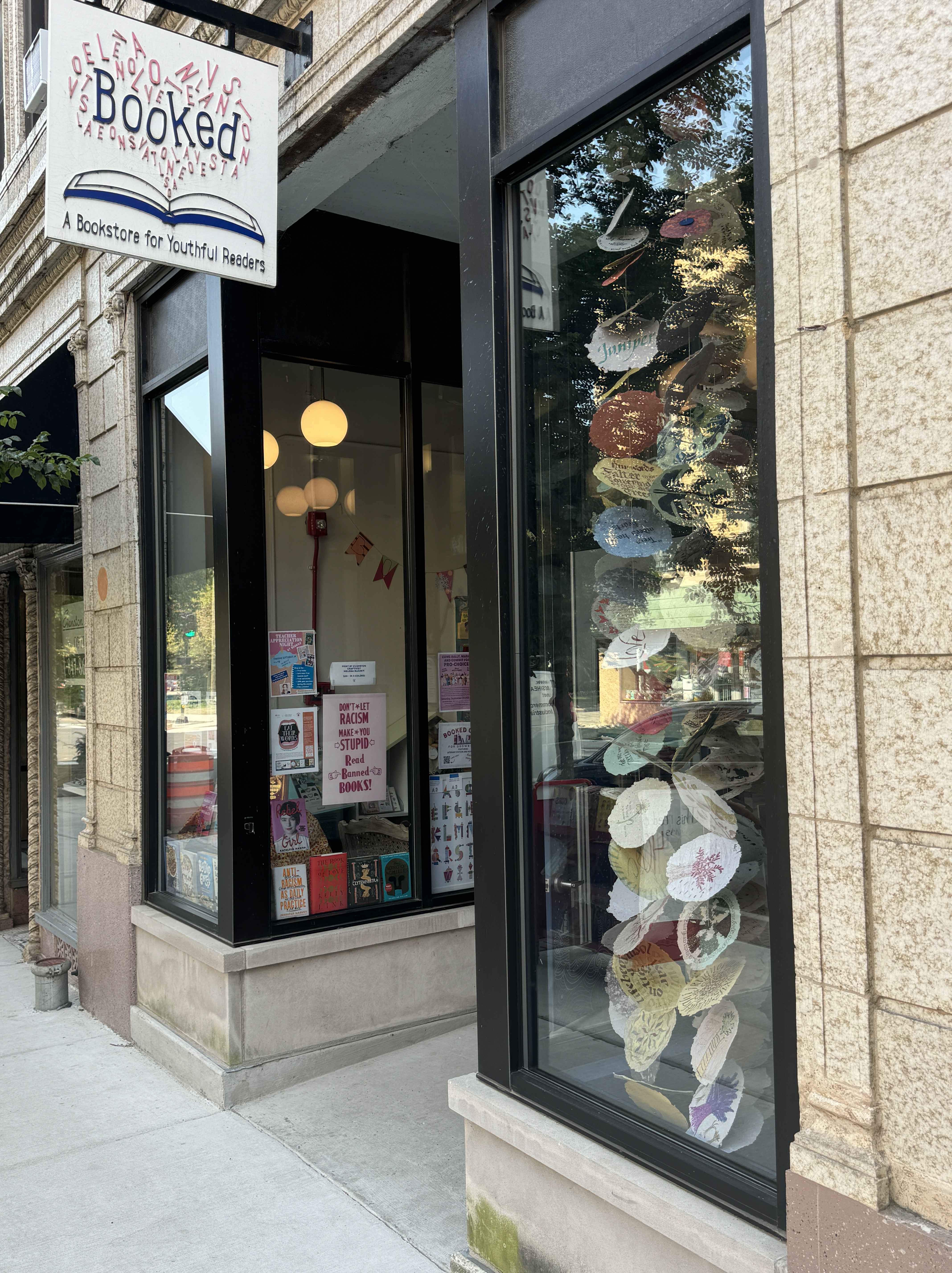


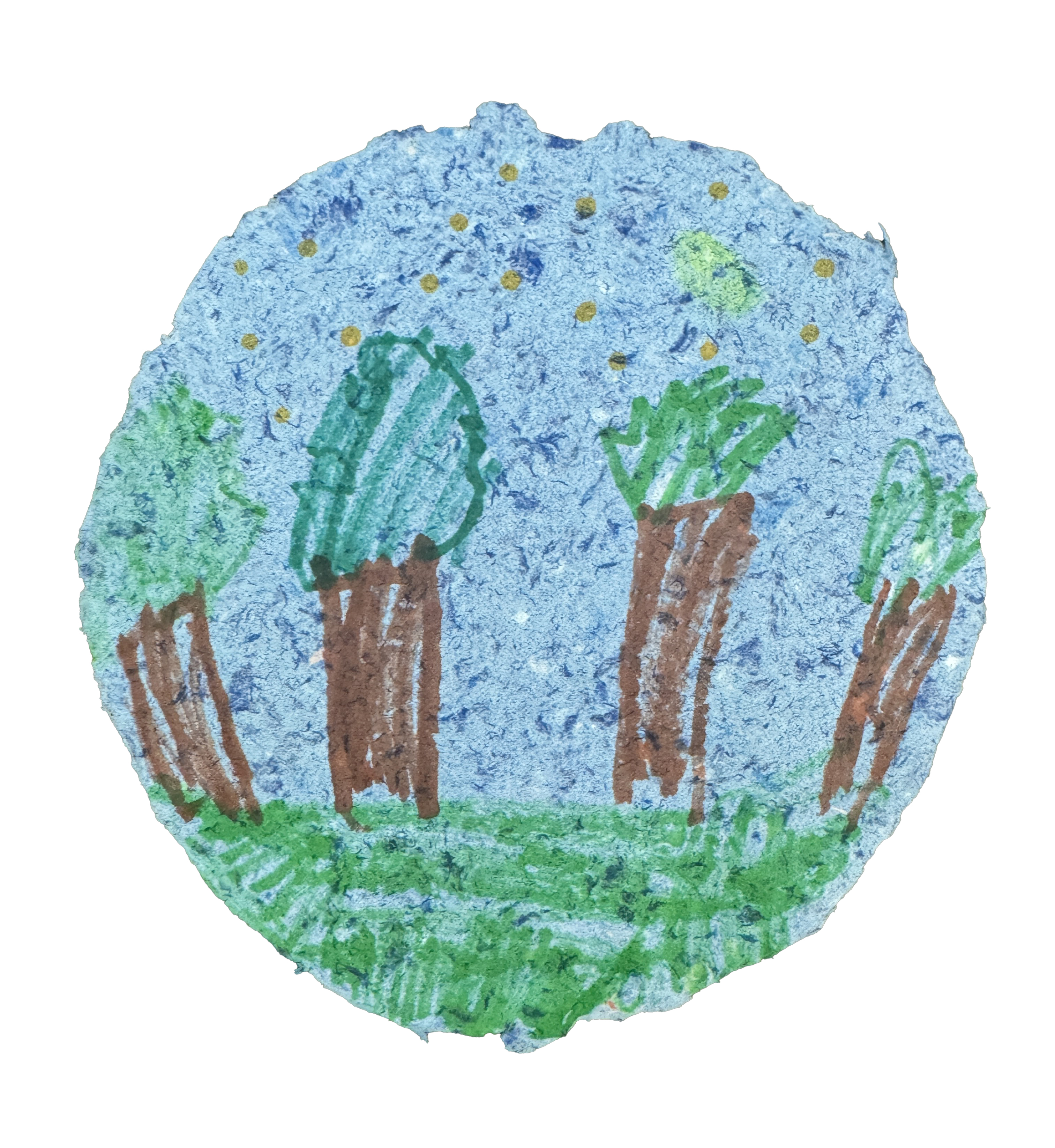


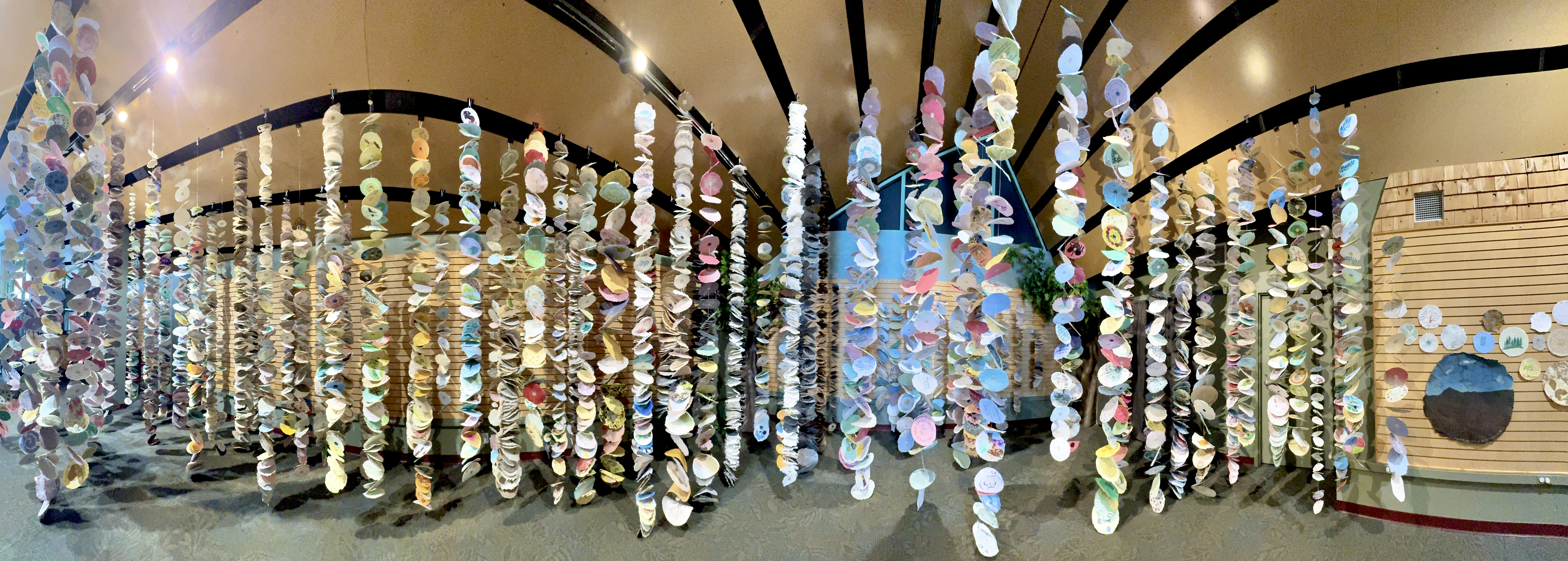



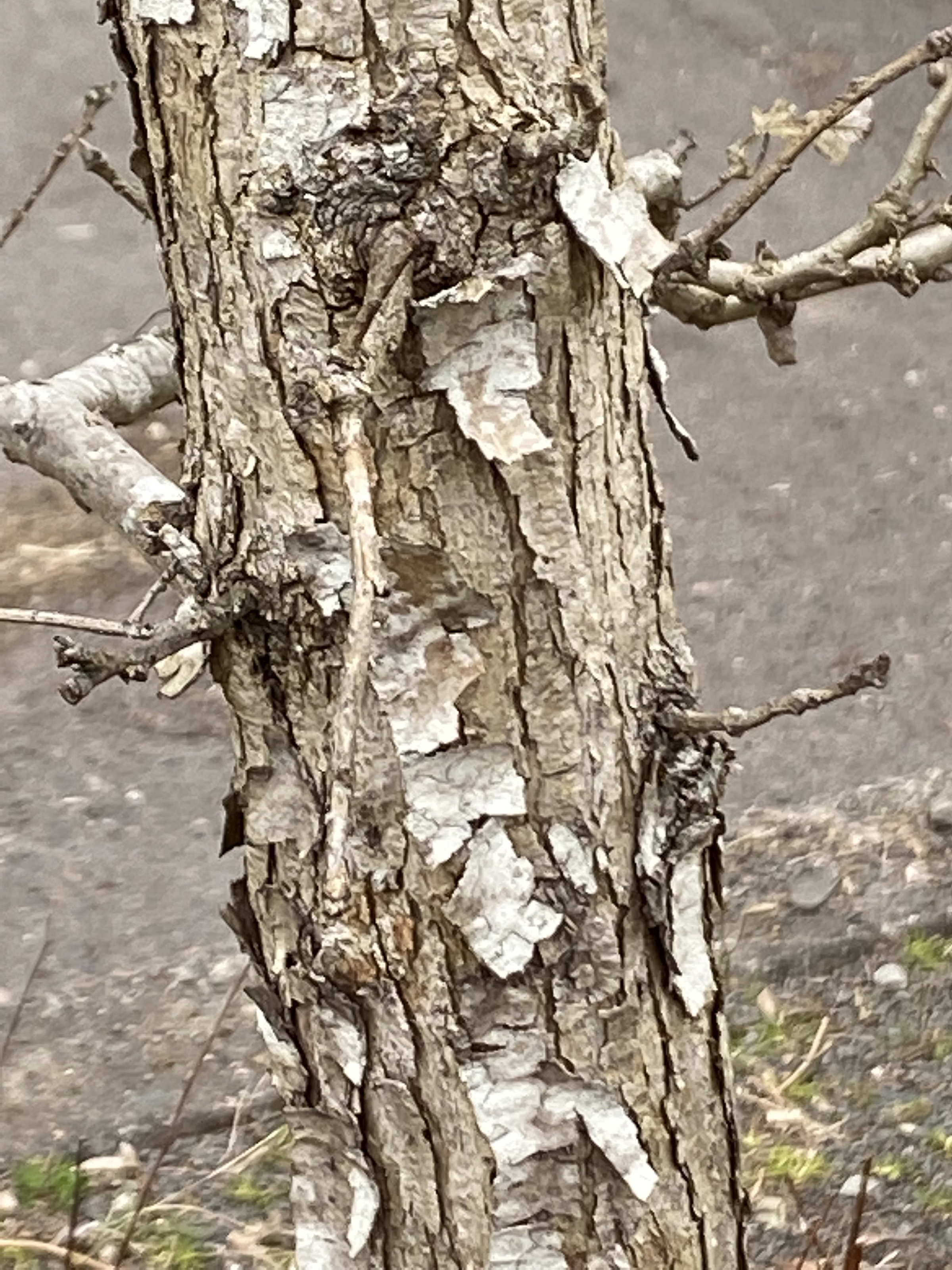


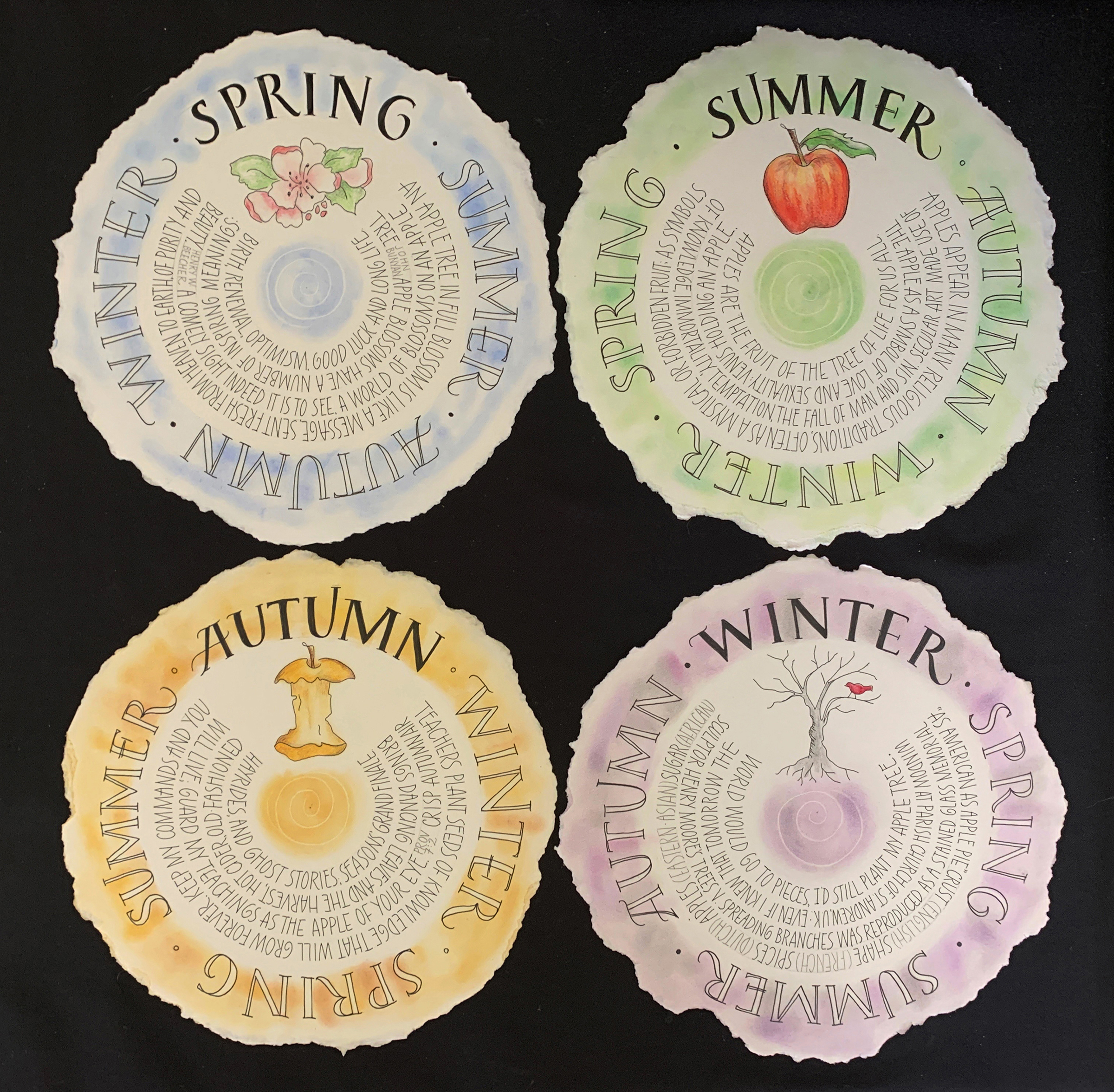


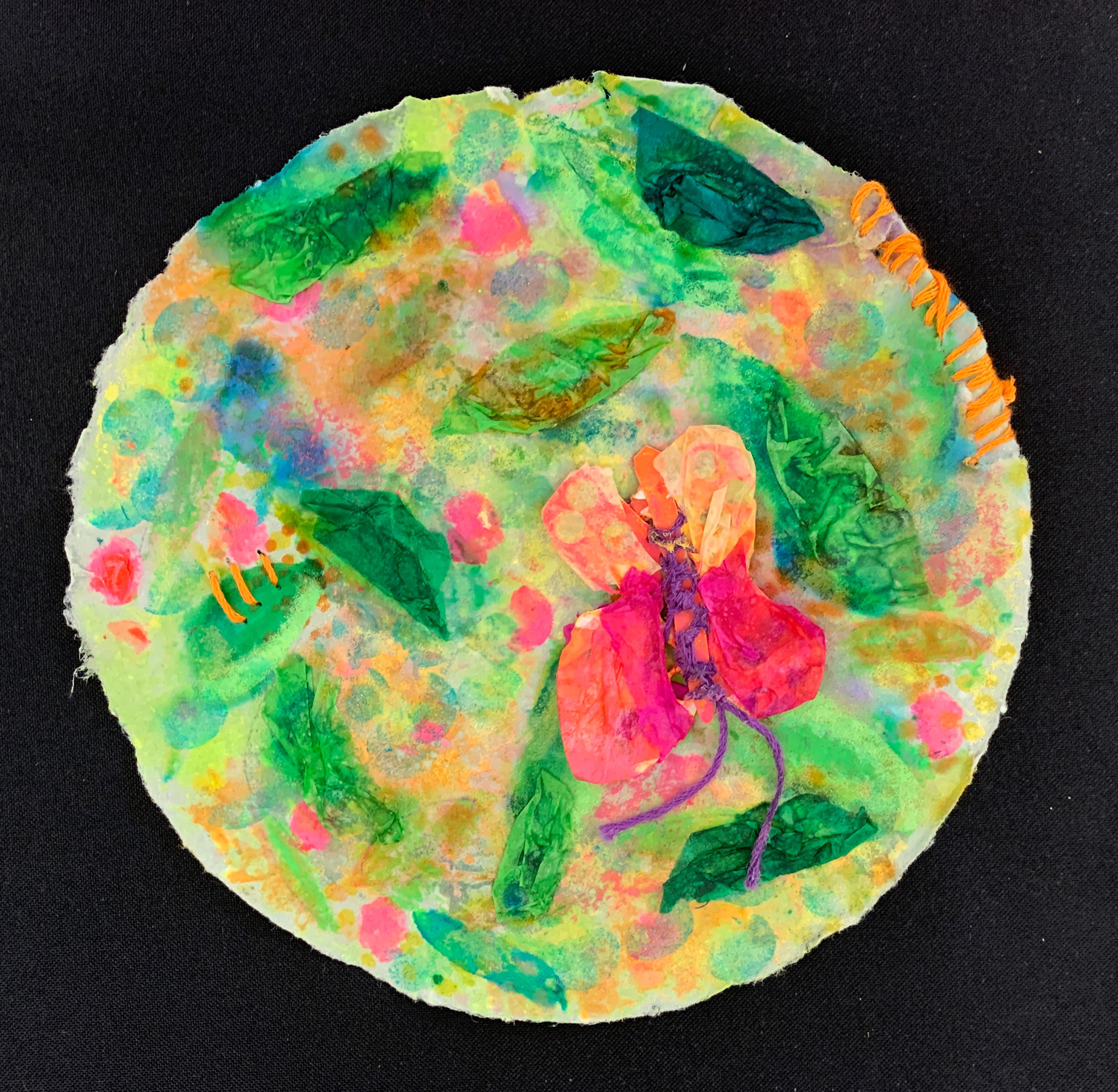


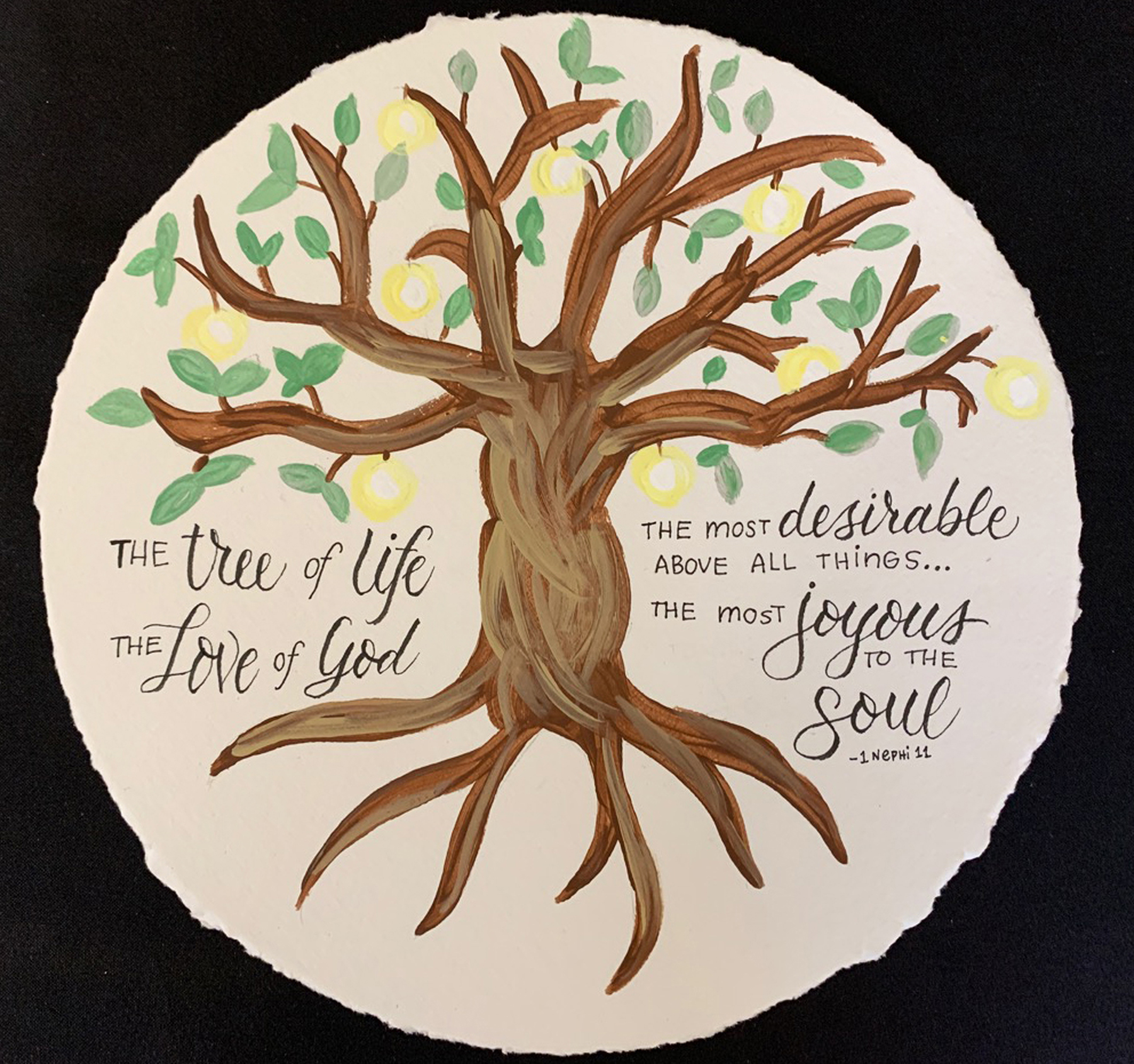


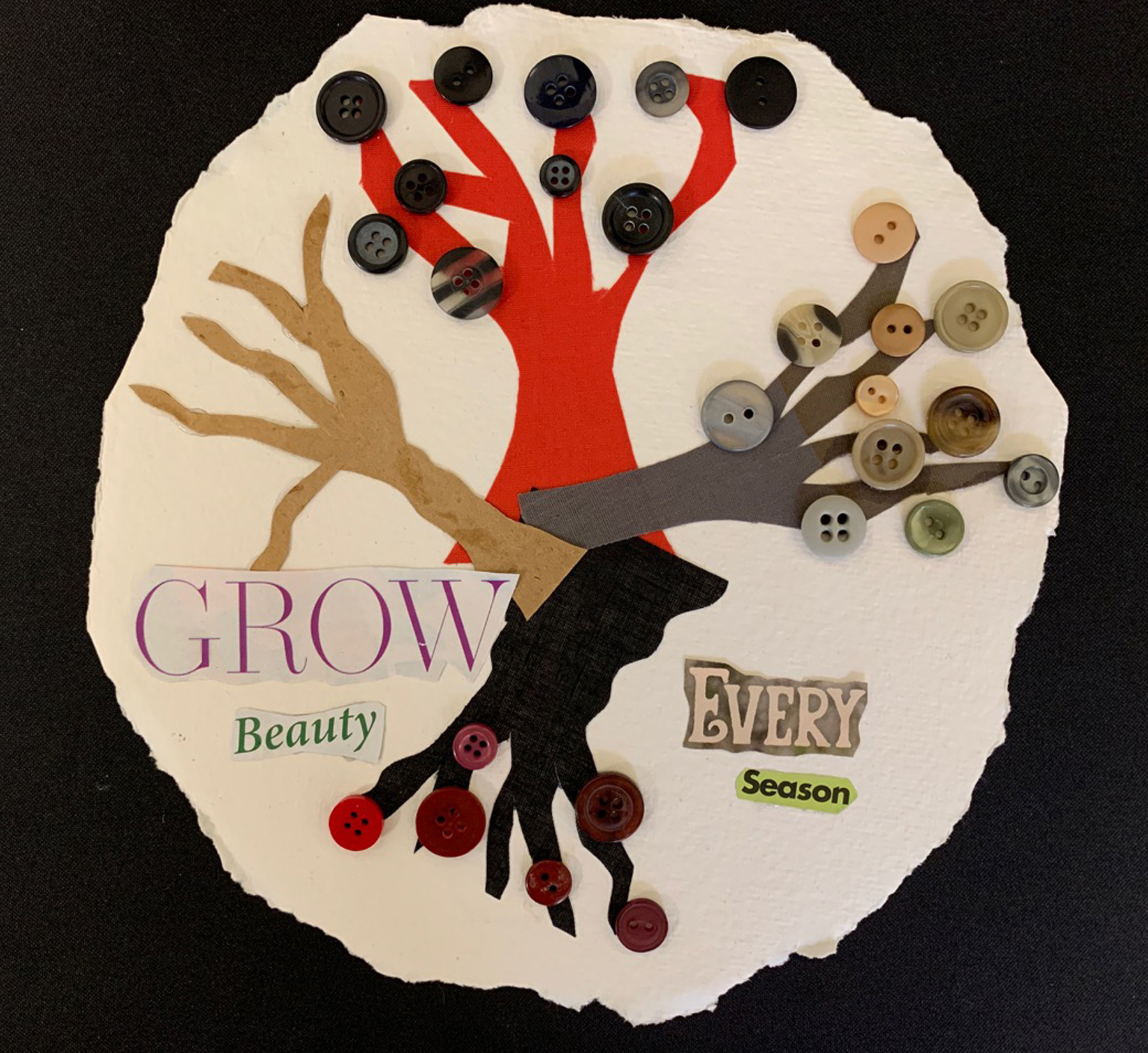


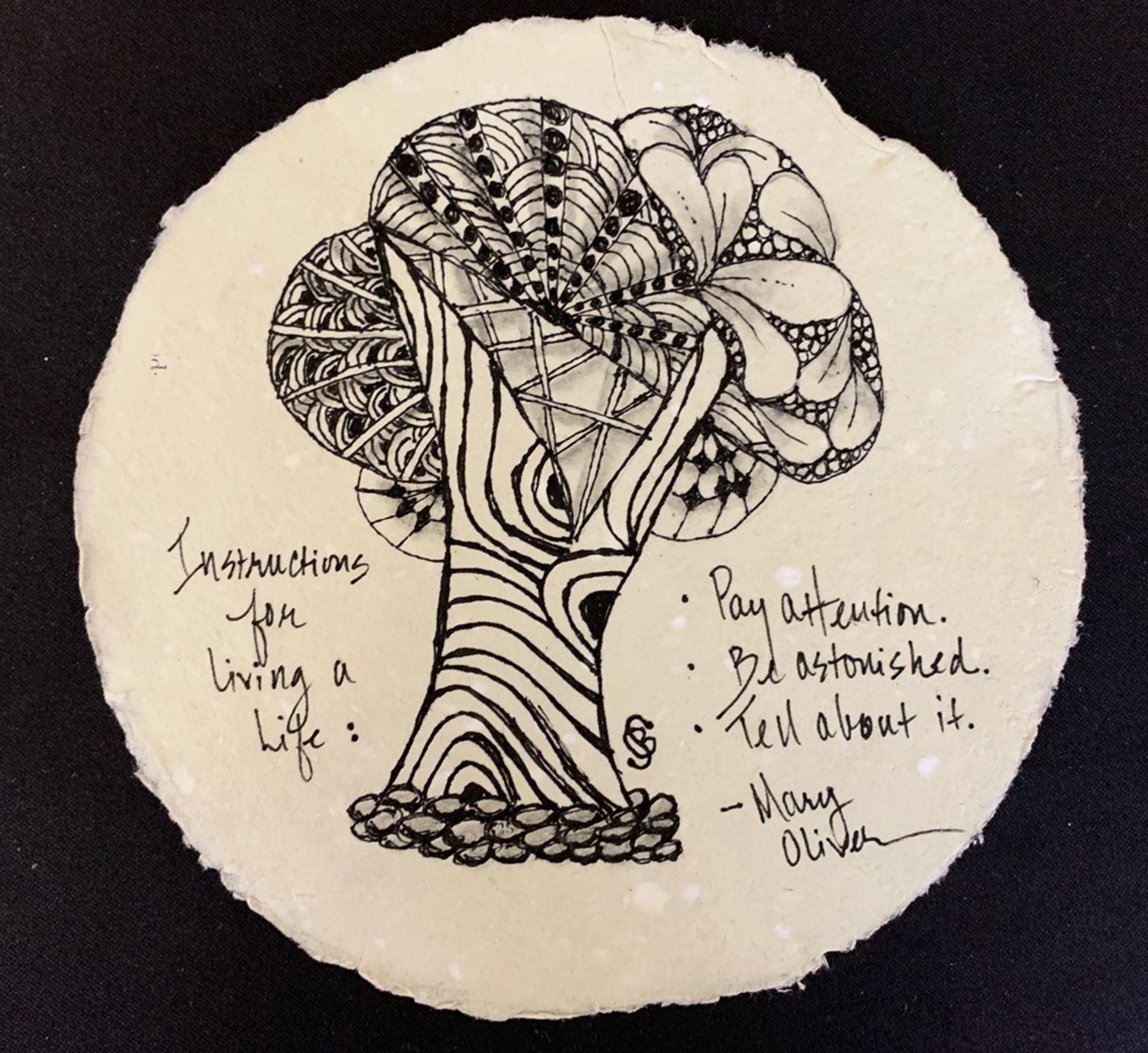



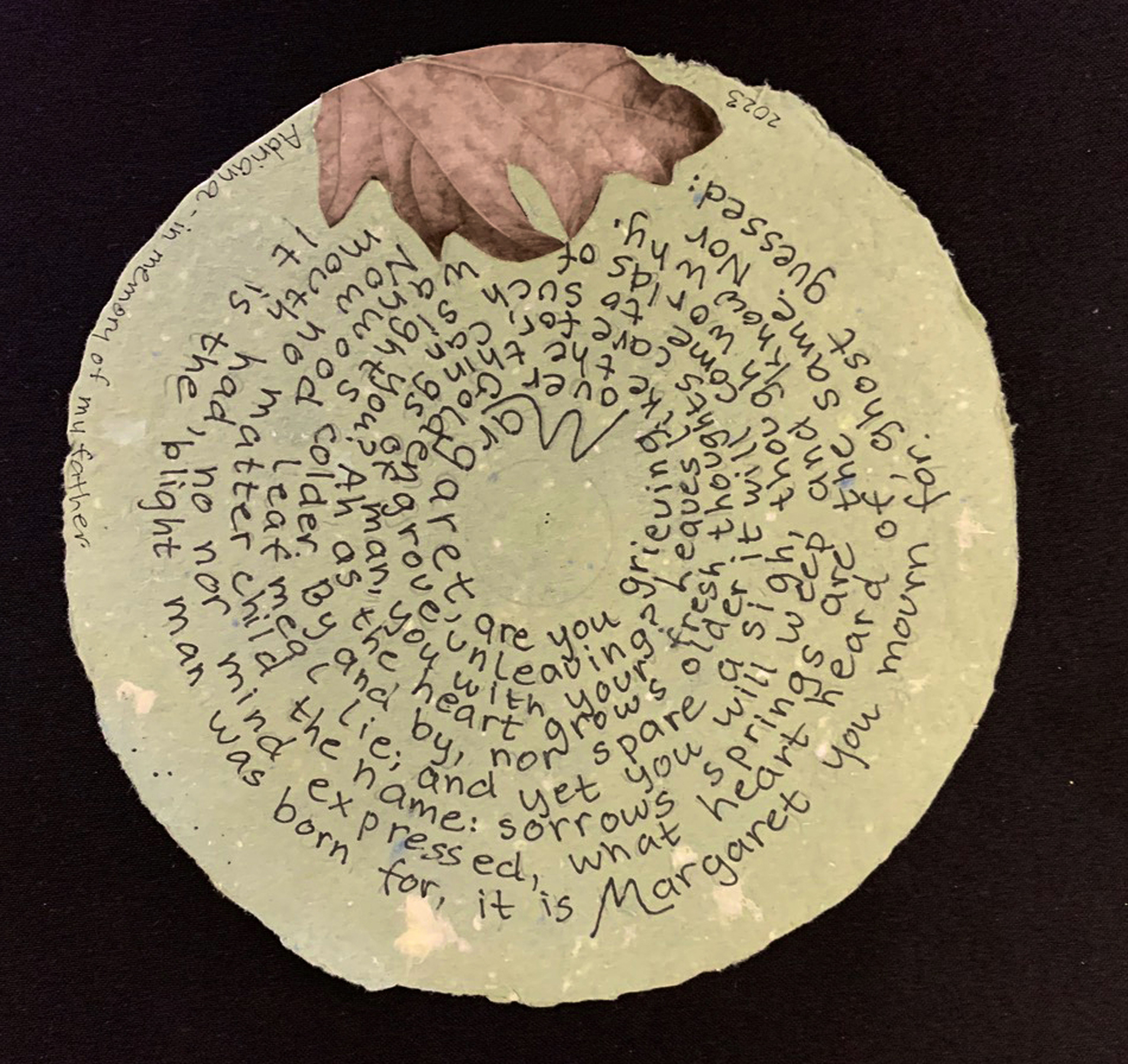


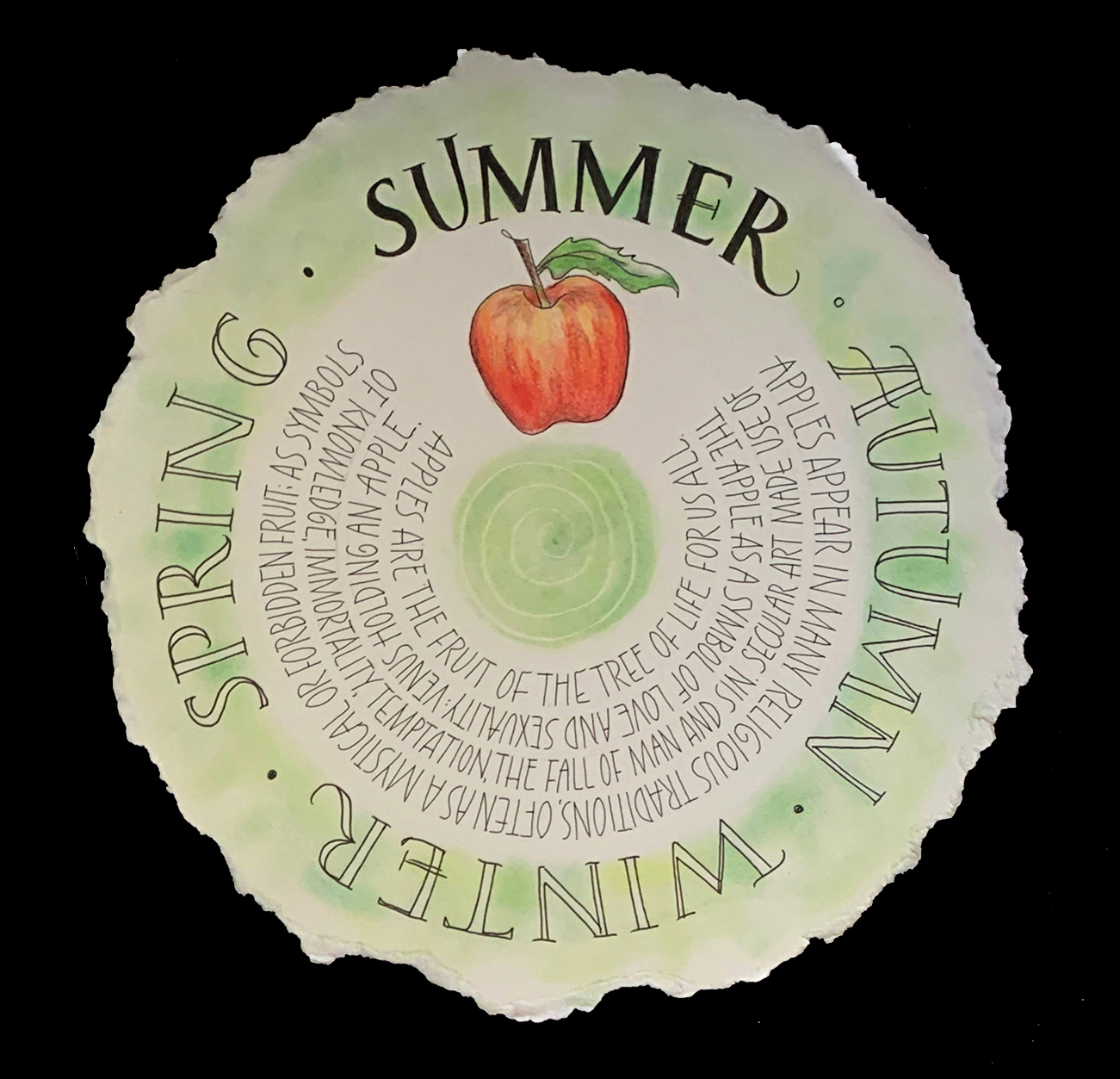


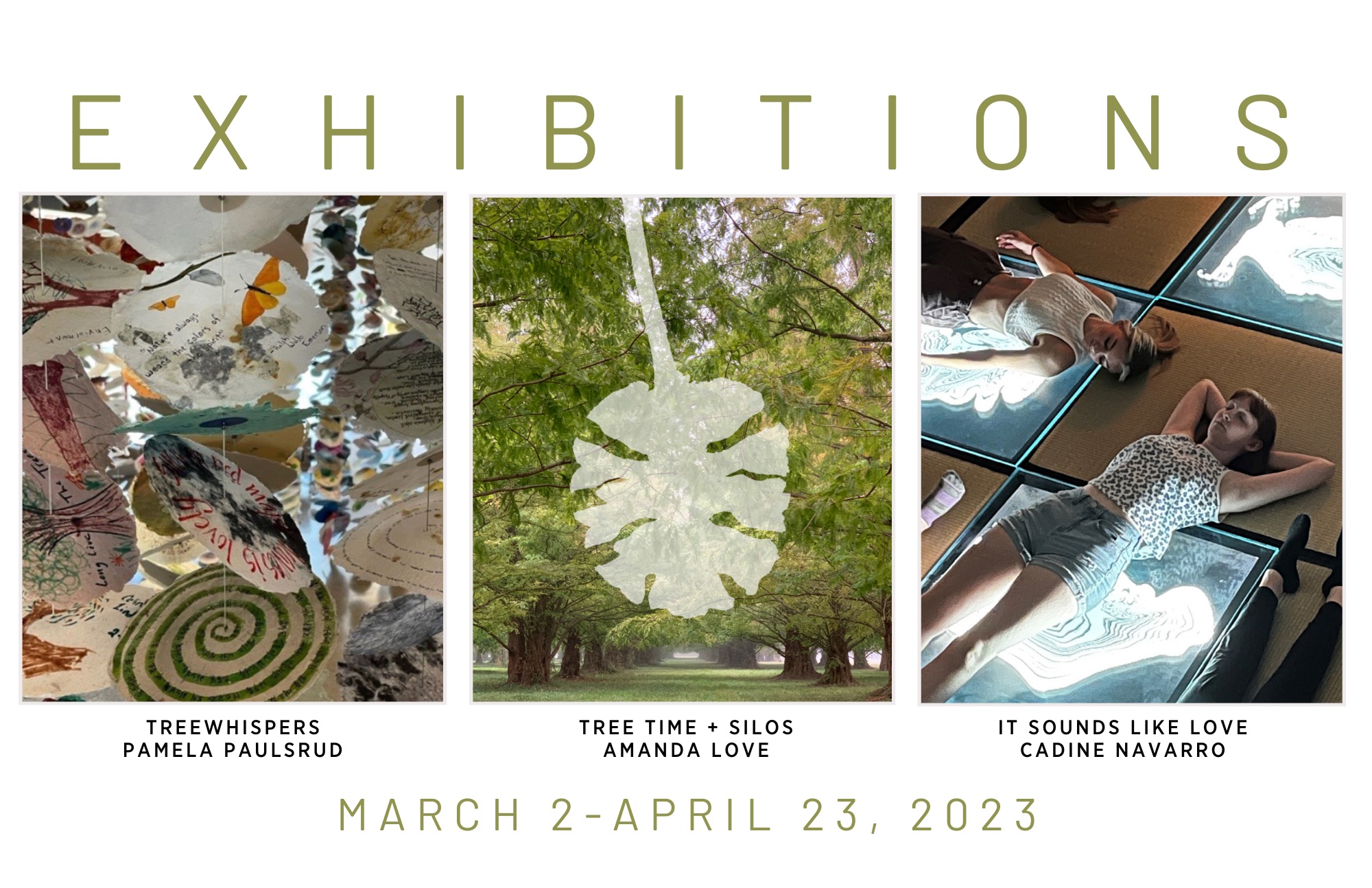


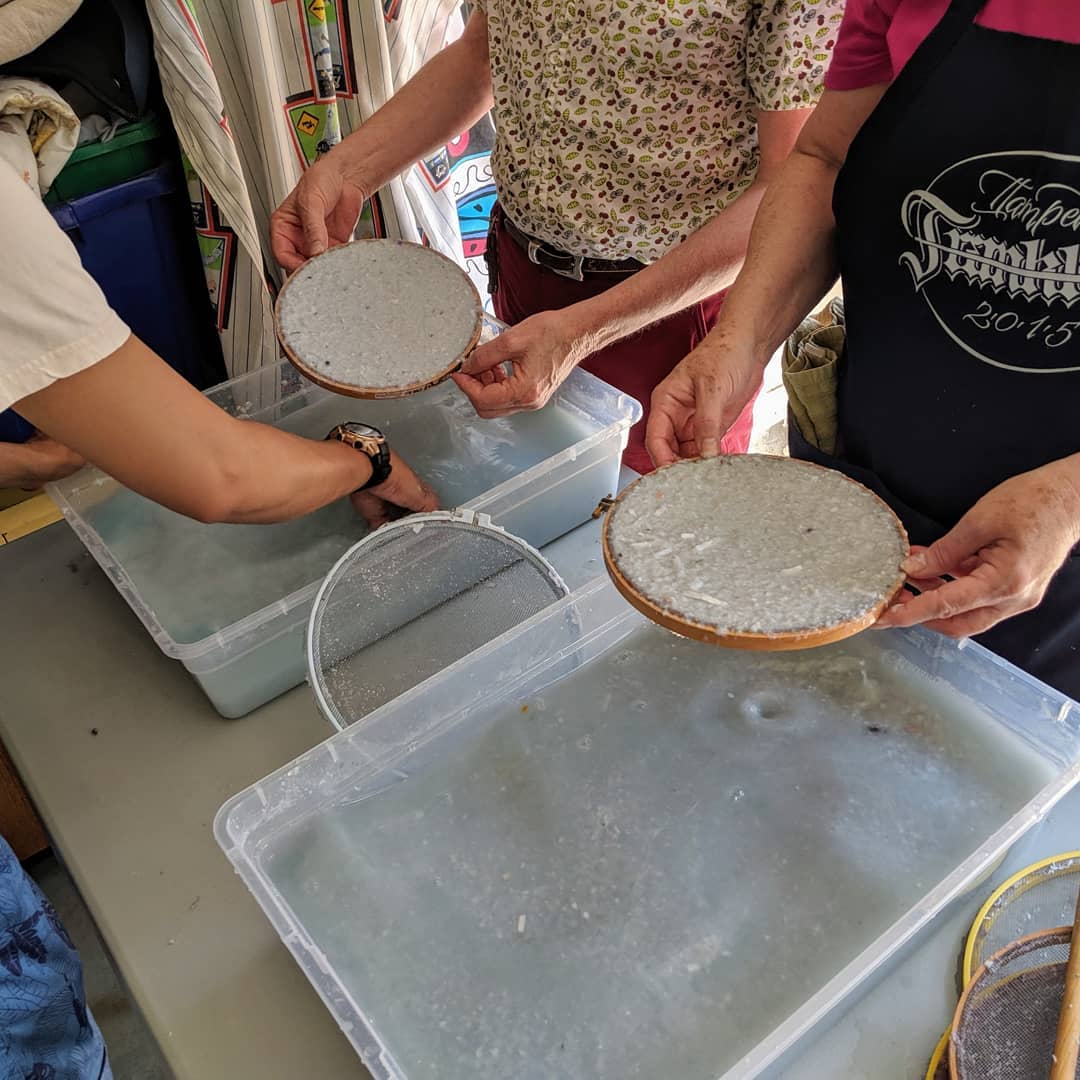
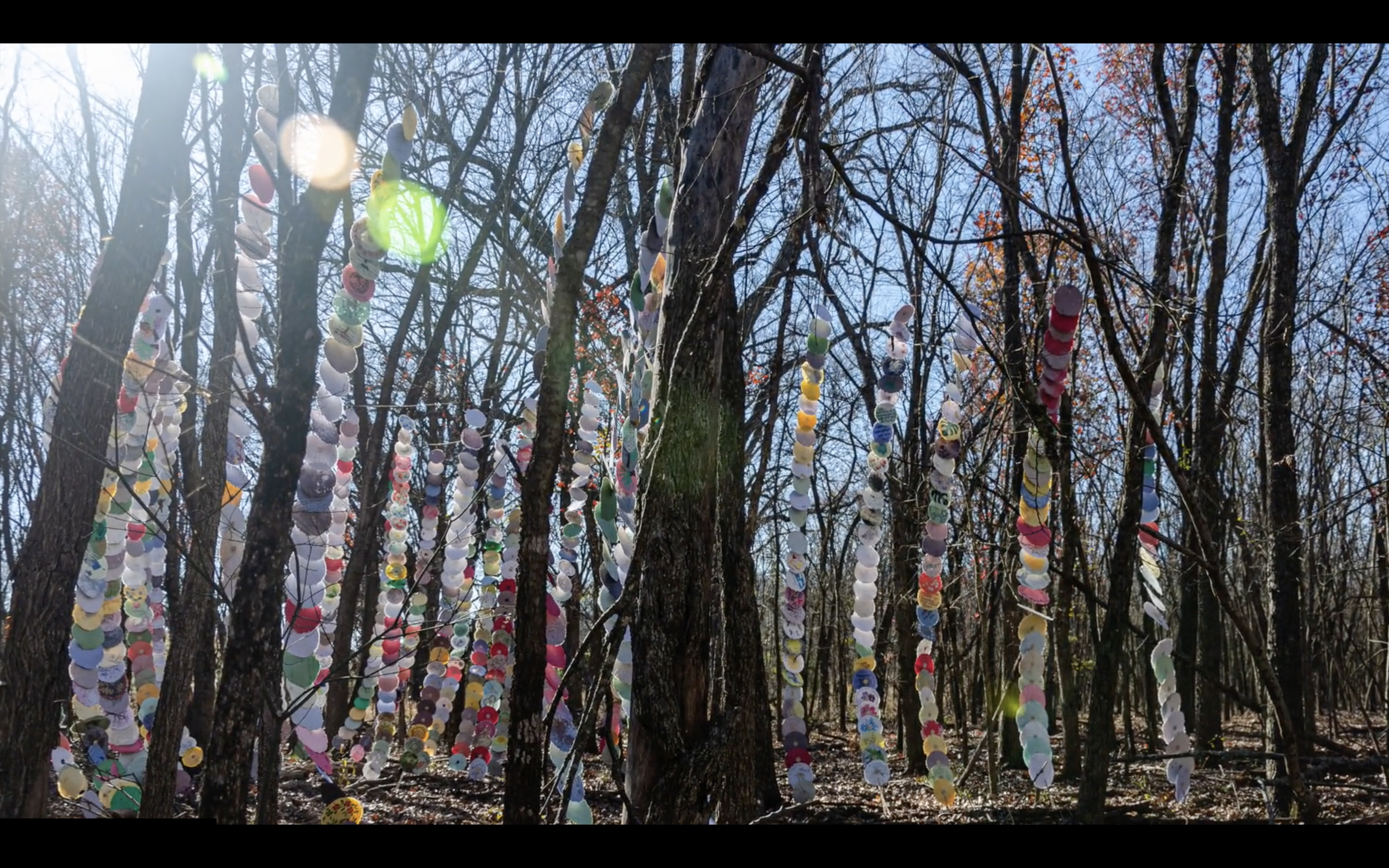


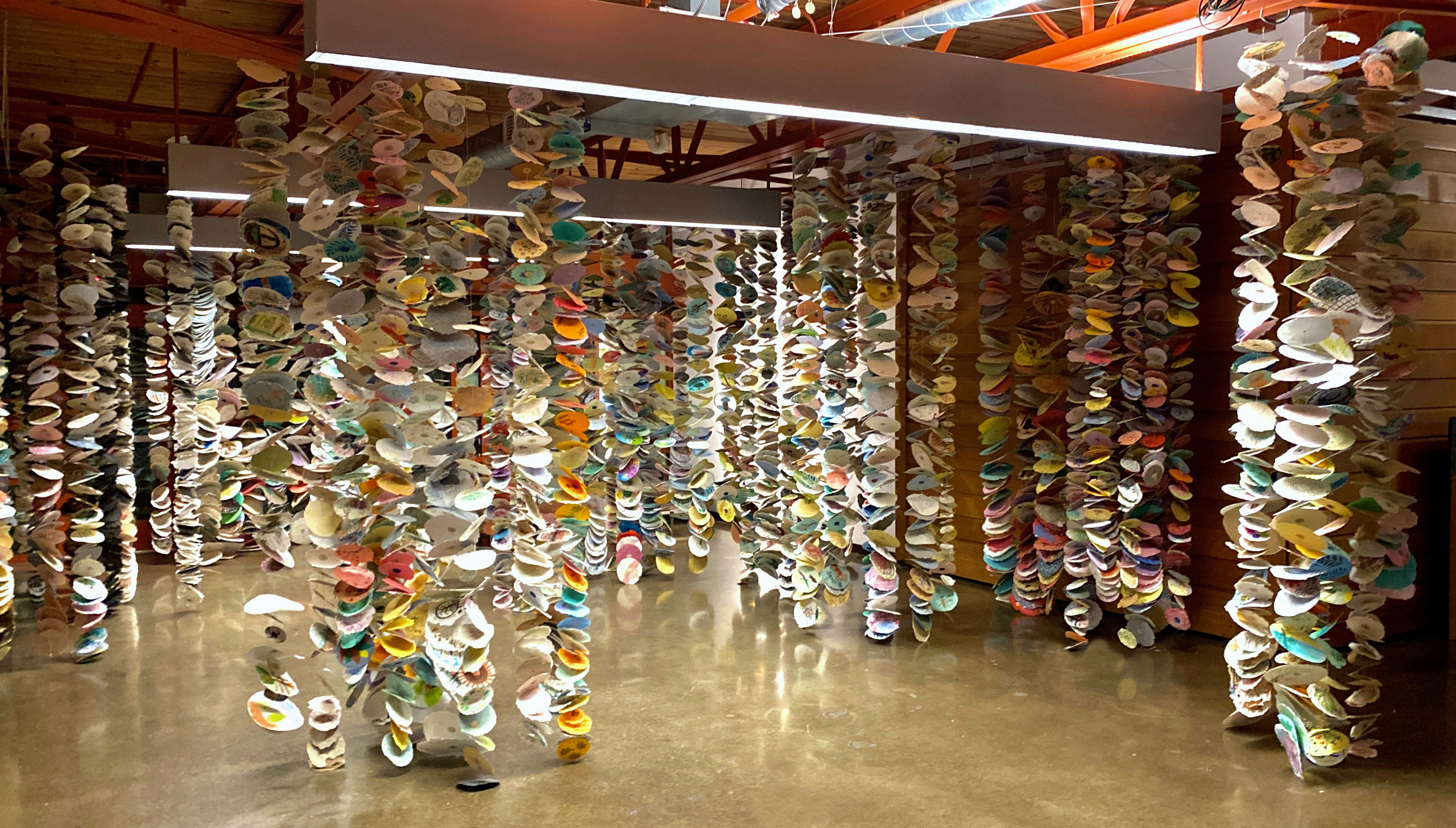

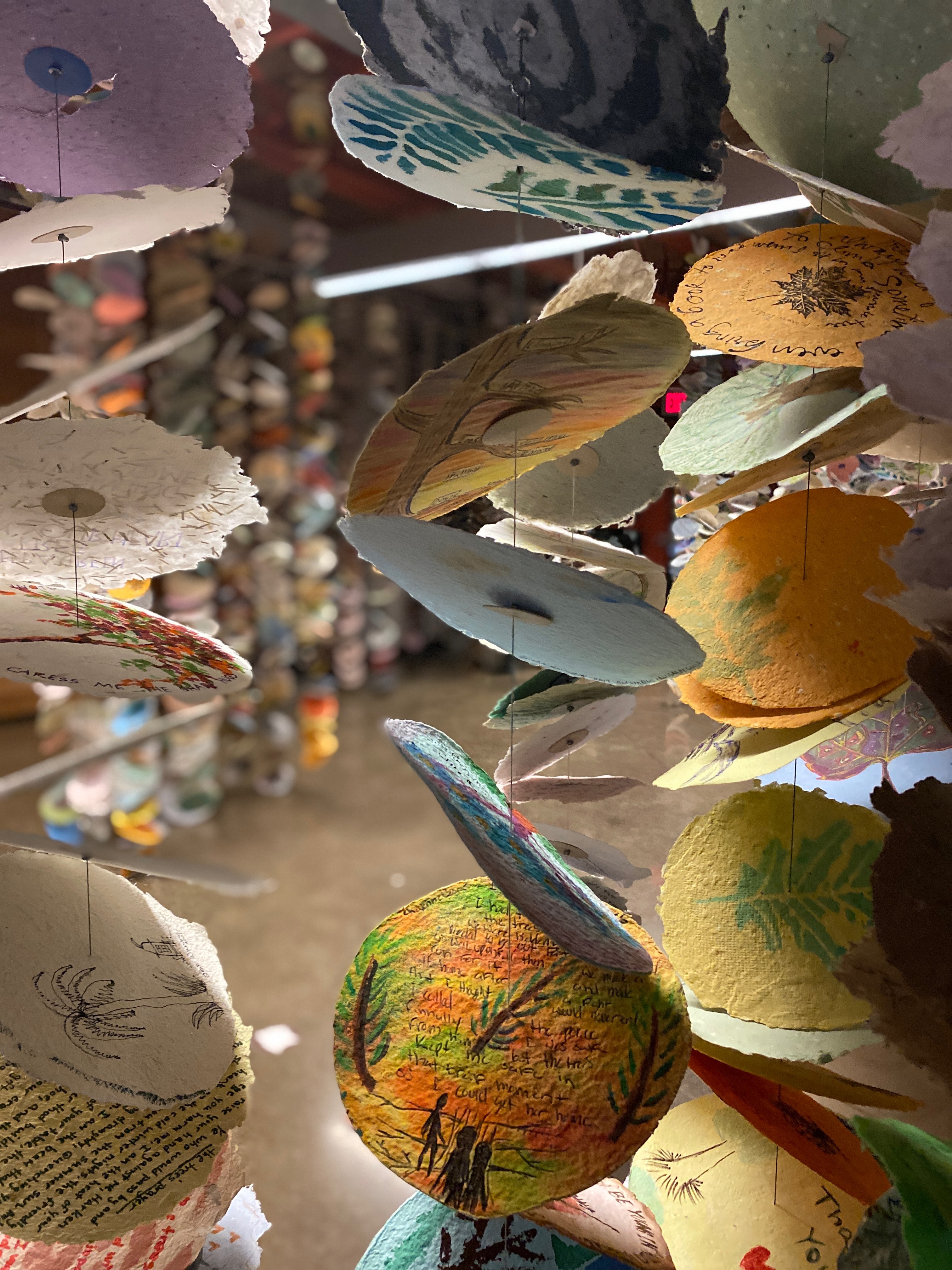


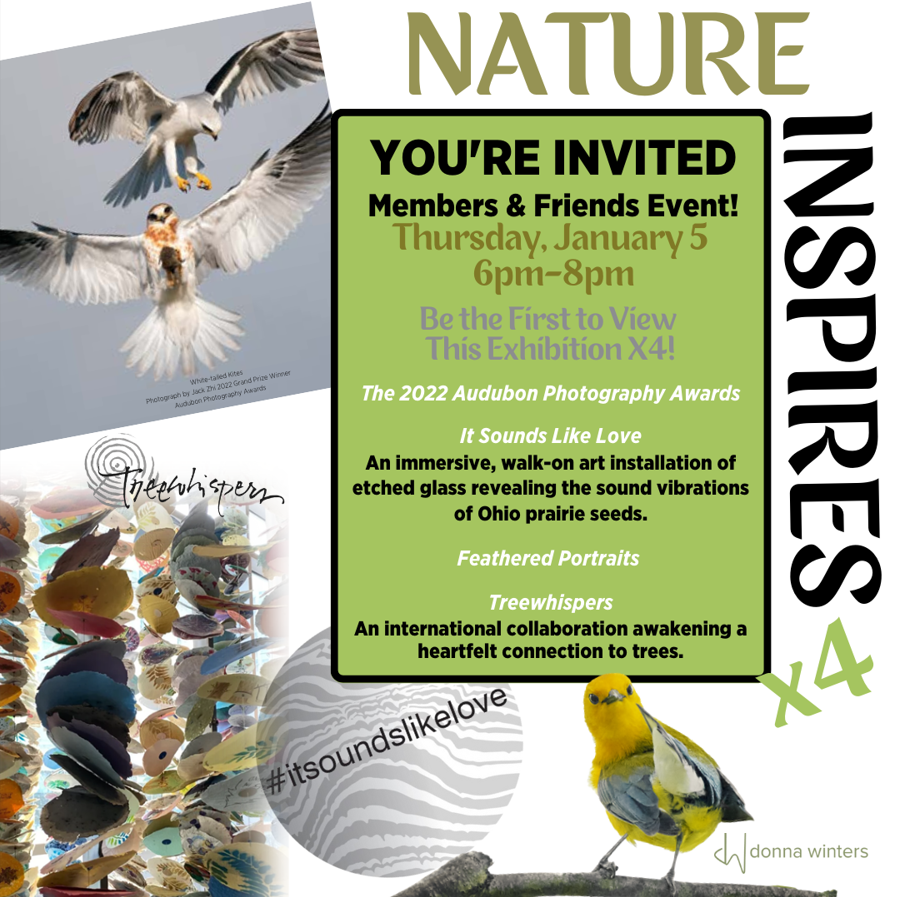

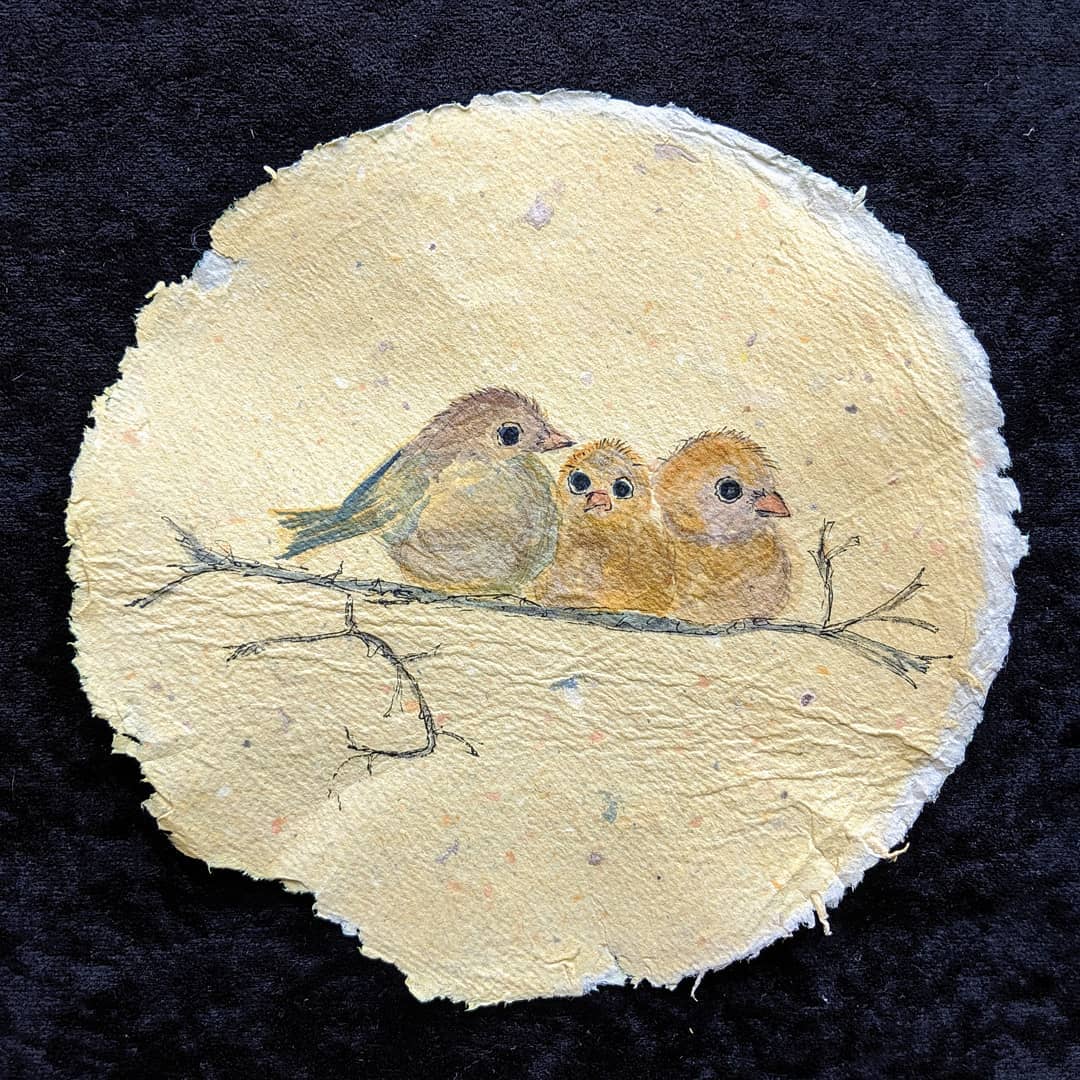

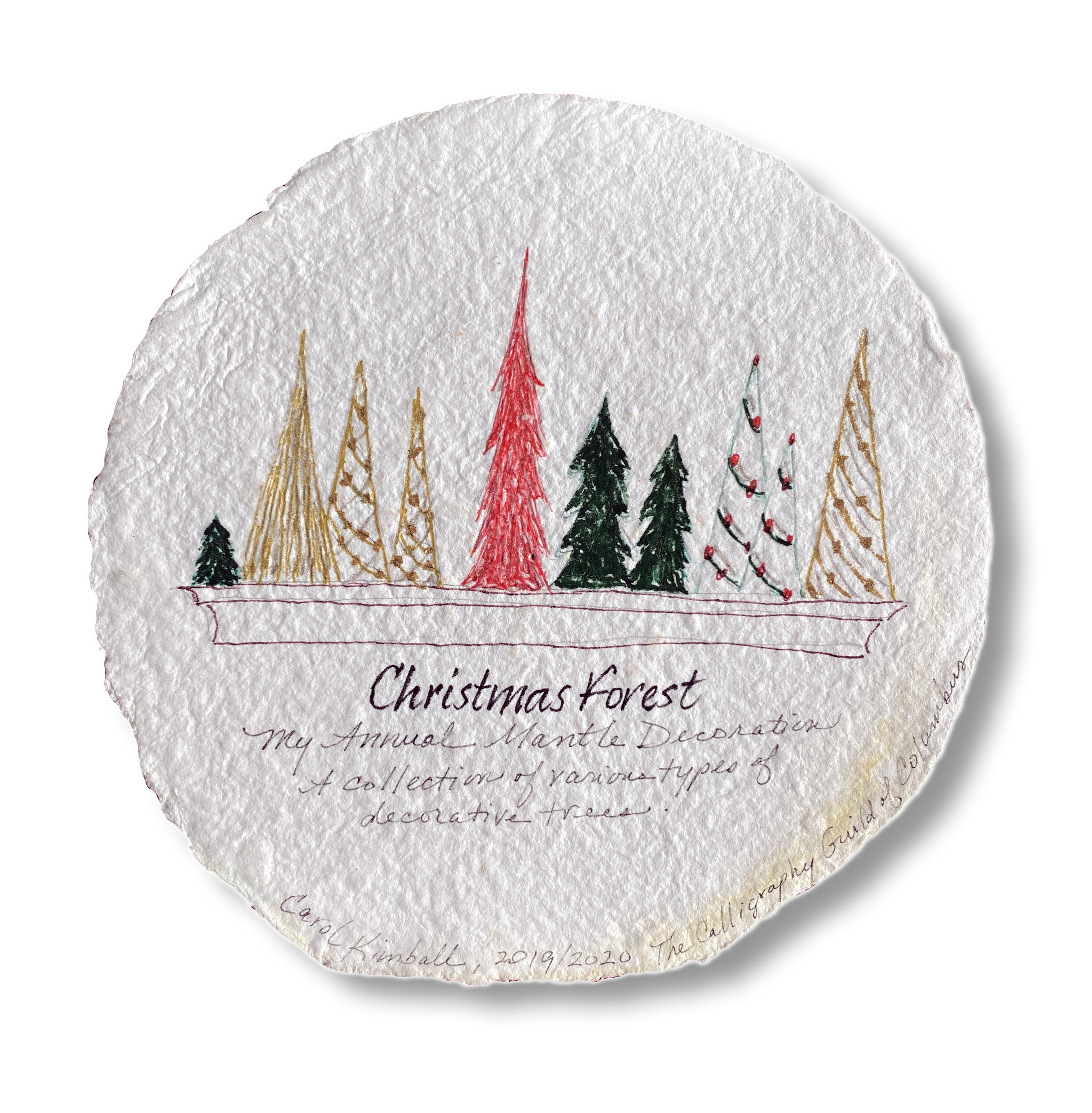

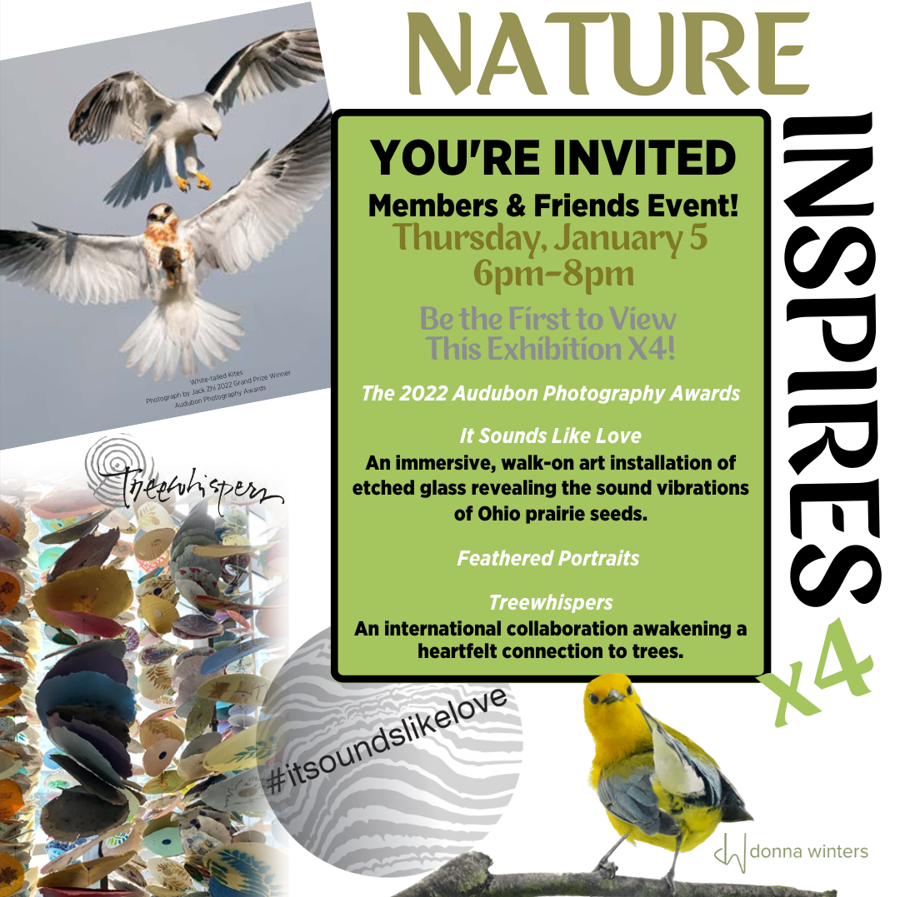


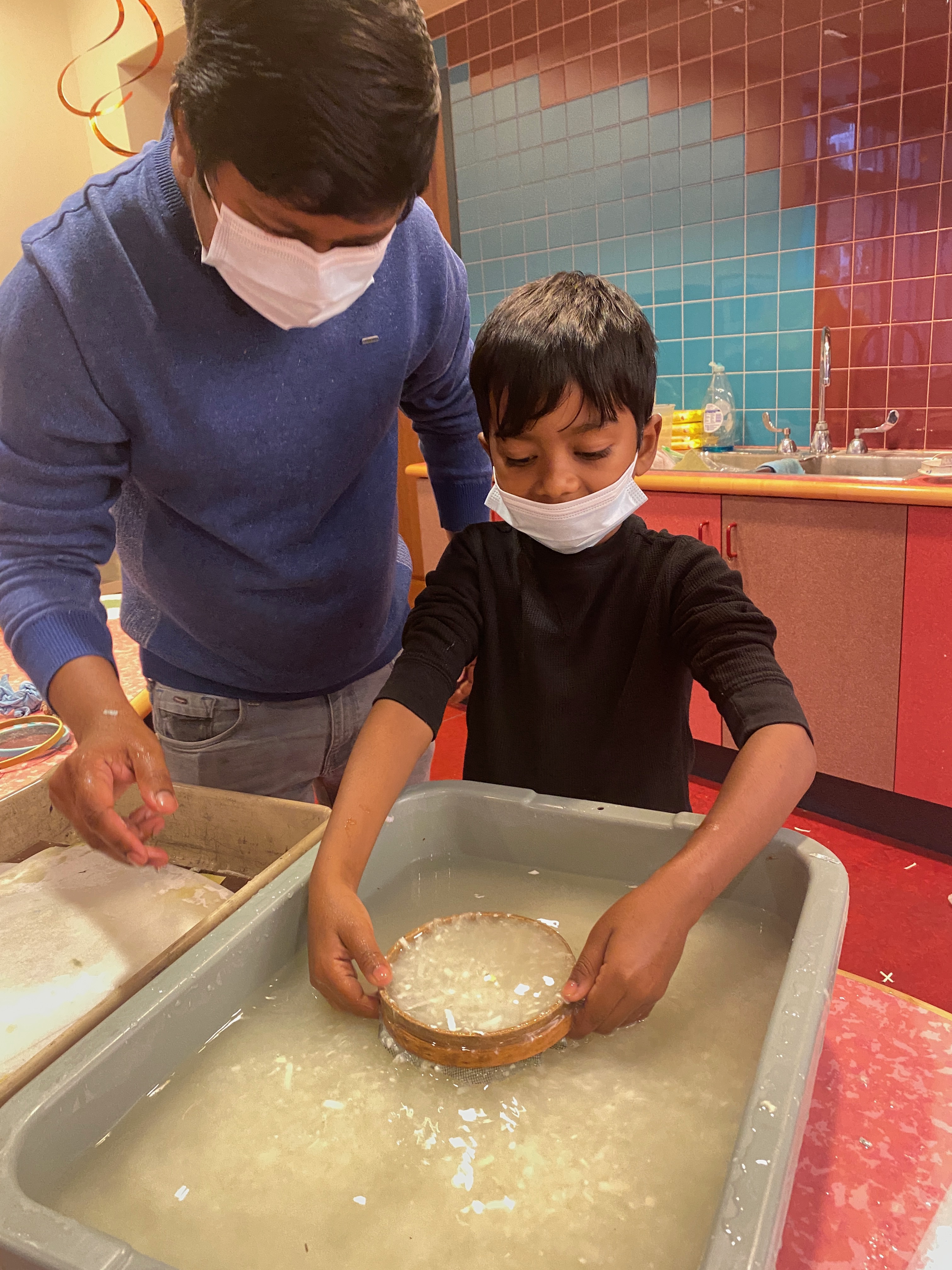


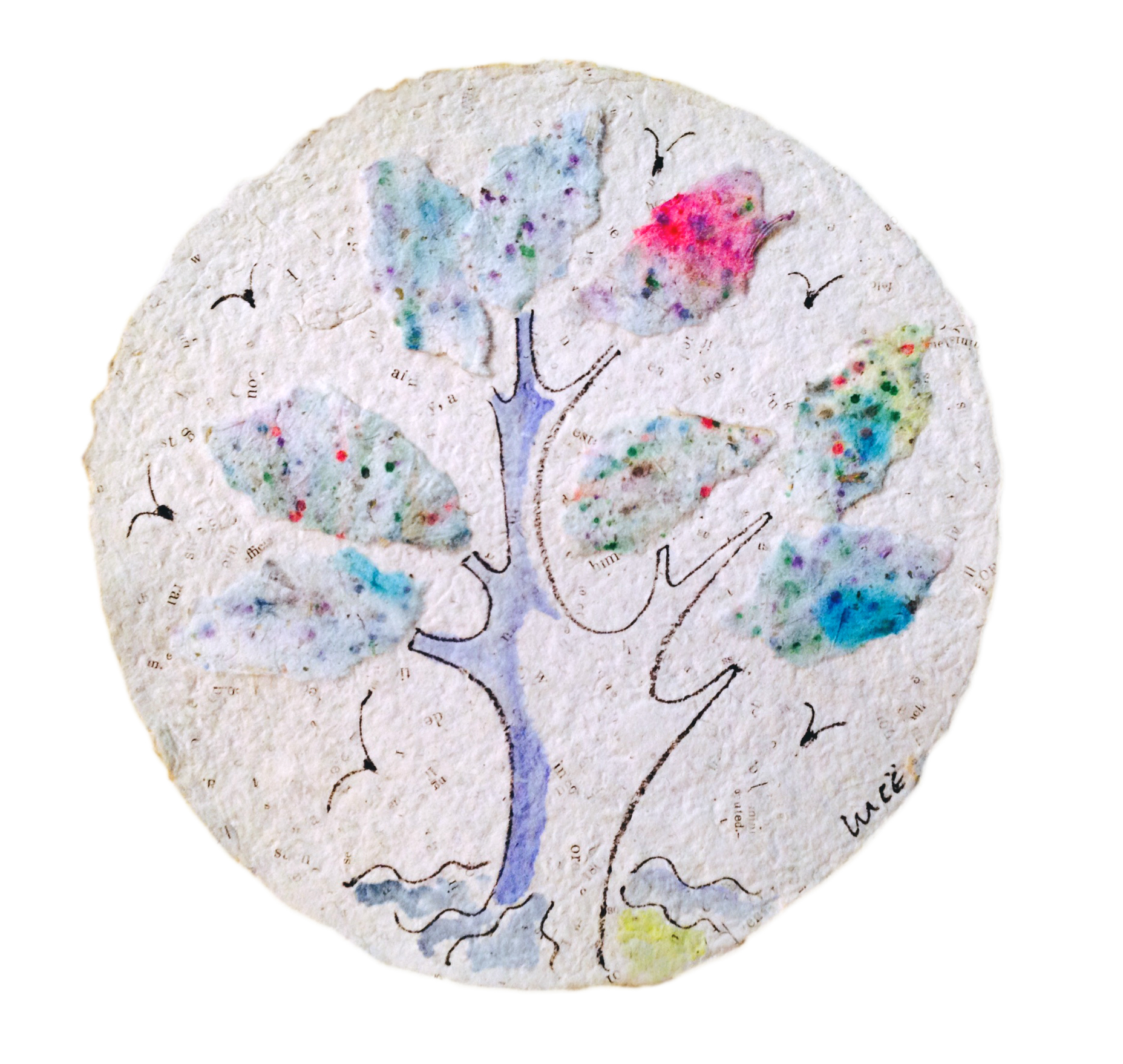


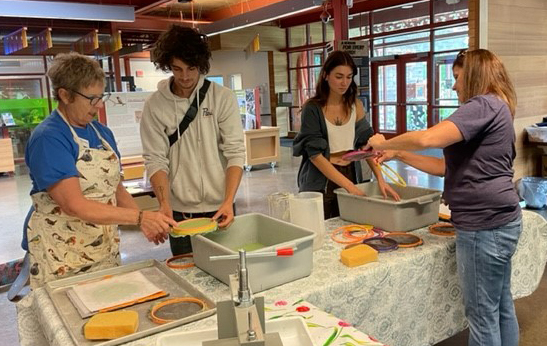


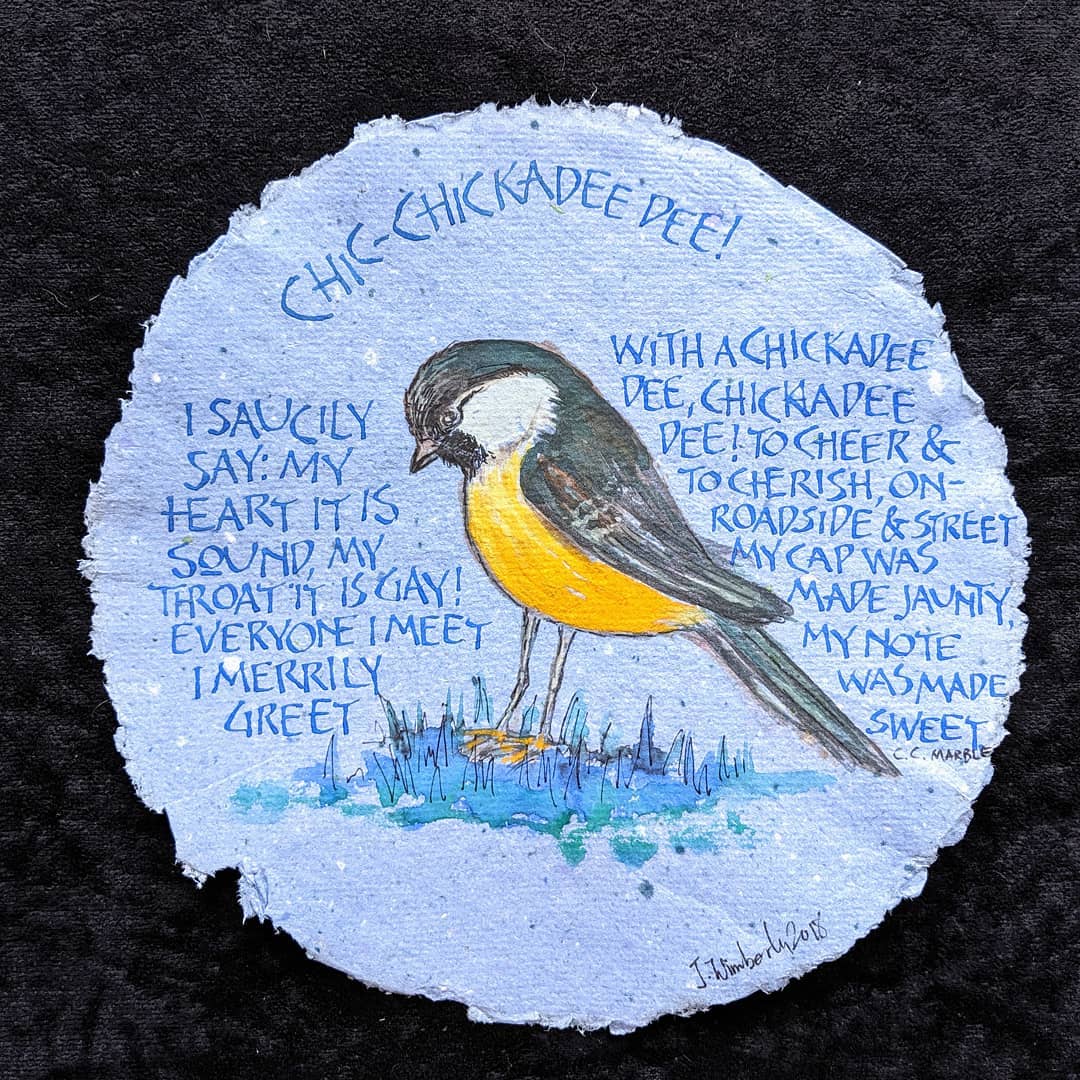




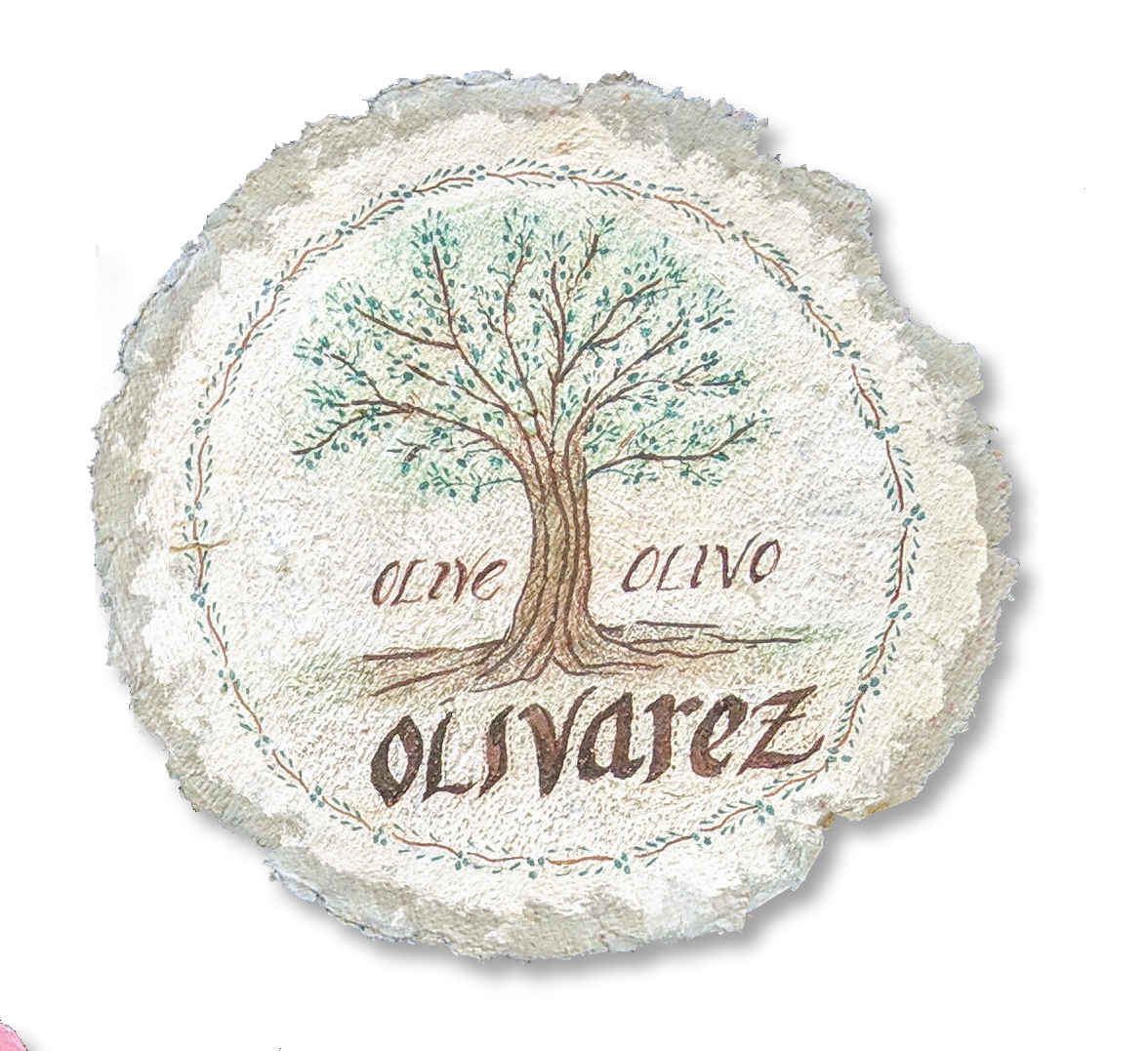

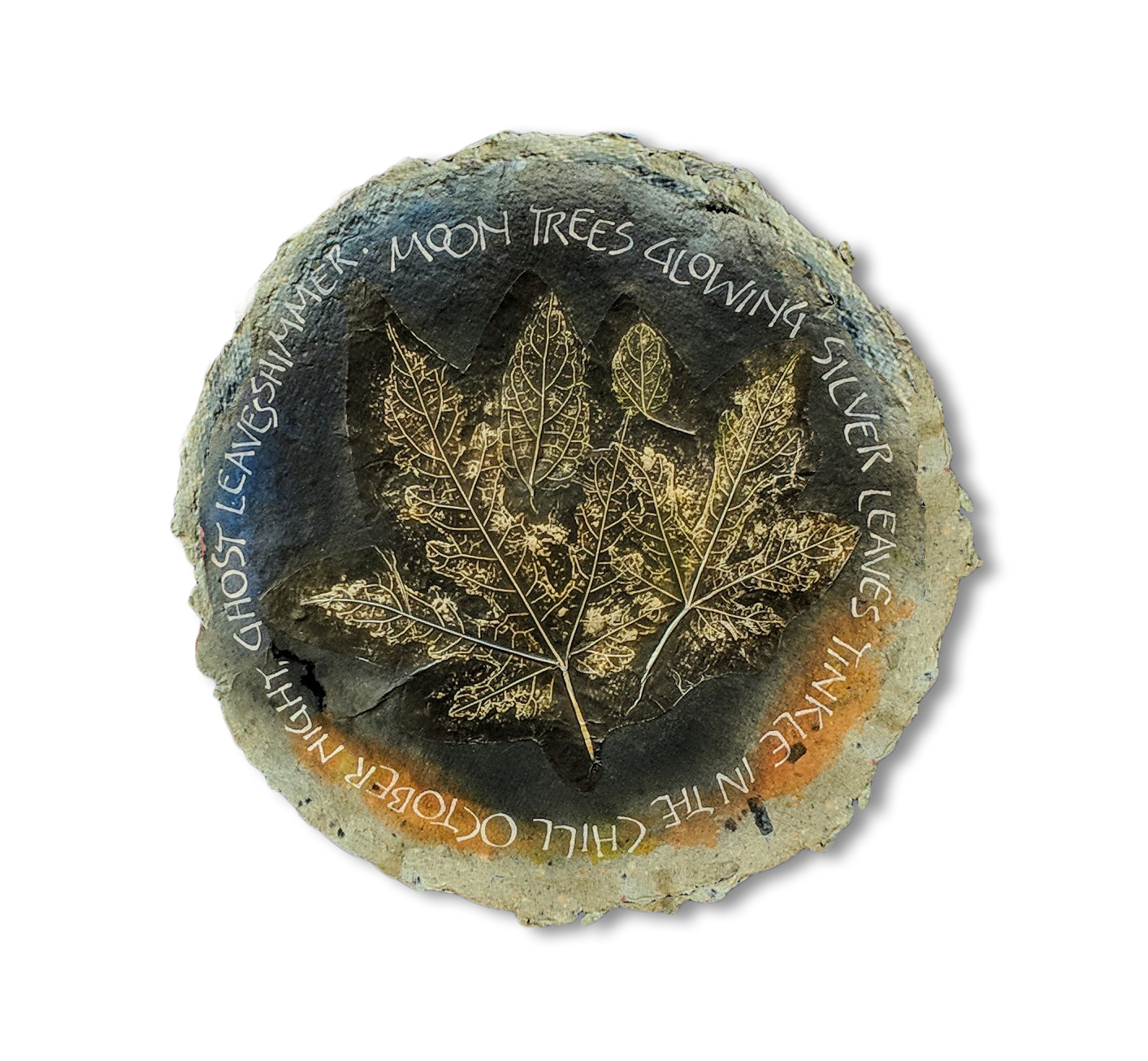


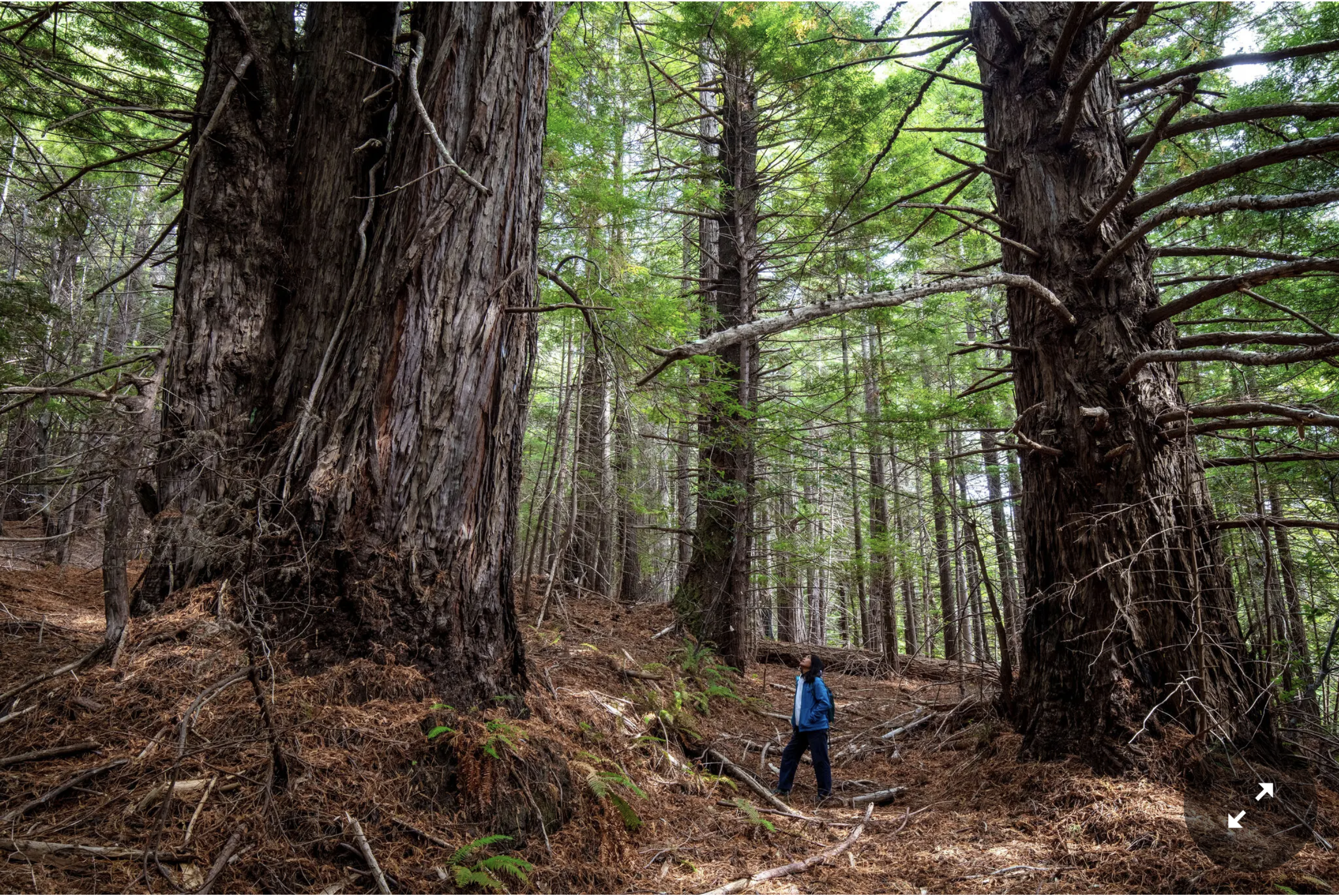

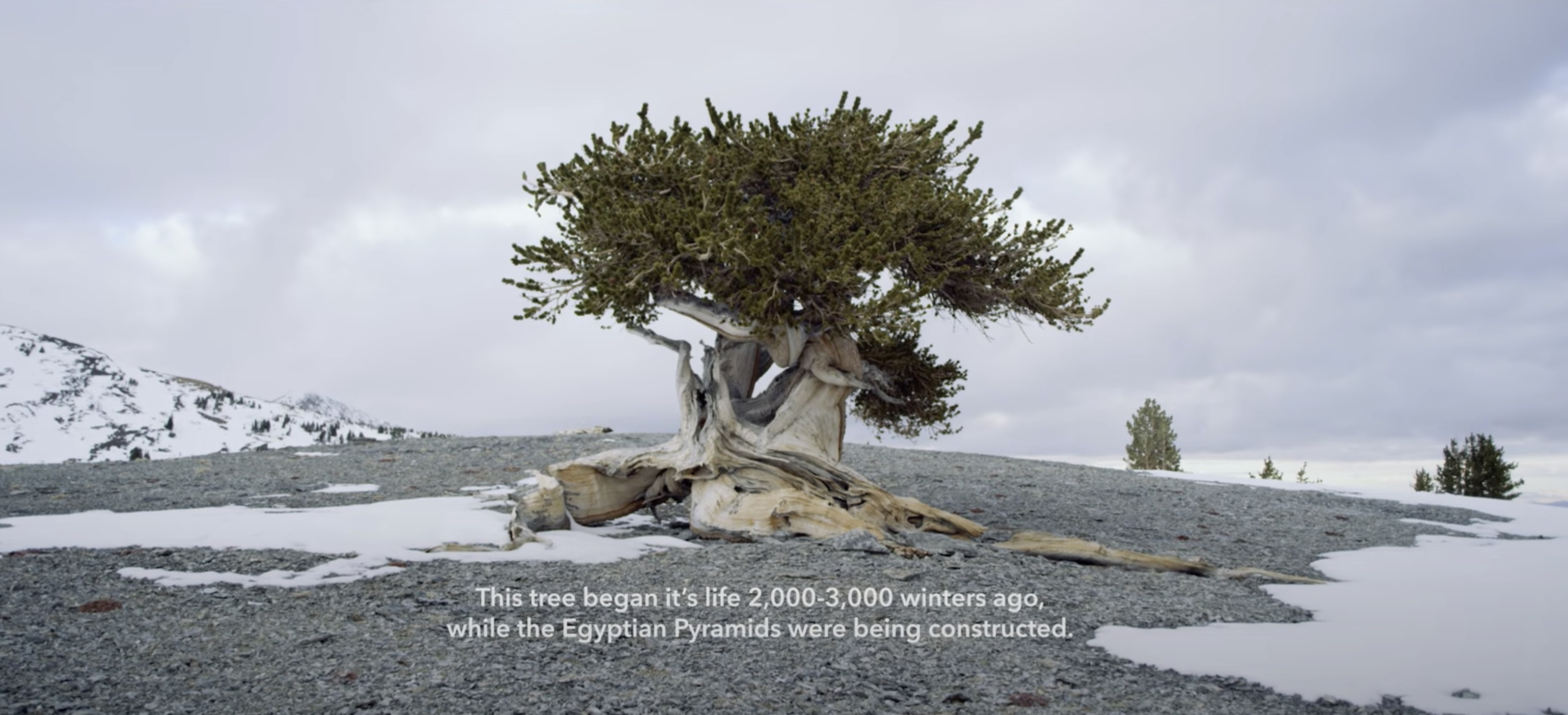


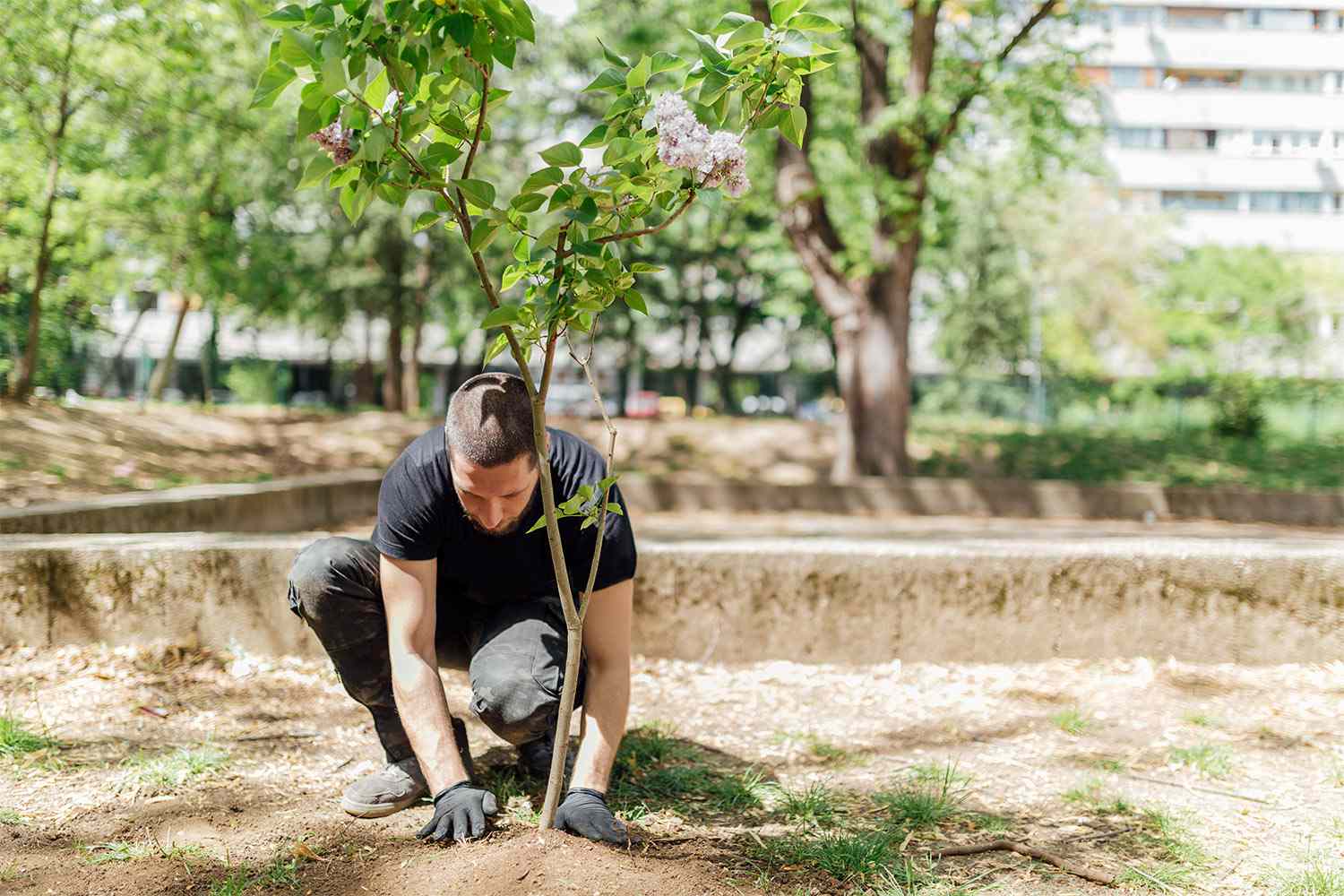


 Experience the exhibit and upcoming events at The Dawes Arboretum.


 Photo showing the base of the Big Tree (located on Big Tree Farm near Edens Highway and Glenview Road) with a farmer and two boys. Taken by Dr. Byron Stolp circa 1898, photo courtesy of the Wilmette, Illinois Historical Museum.
  Handmade paper, artwork, and photo by Kaligrafos – Calligraphy Guild member


 Judi Dench listens to water rising through the bark of an oak tree CREDIT: GARY MOYES


 Handmade paper and artwork by Annette, Wichmann, Canada


 Photo by Pamela Paulsrud


 Photo by Pamela Paulsrud


 Artwork by Kirsten Horel
 Contributed by children in the Bryant School After School Program with Cori O’Connell, Art Teacher, Helena, MT


 Mapleton’s Irven Walter honored in tree planting ceremony July 5 – Washington County Enterprise and Pilot Tribune: News.
 She included a little note stating that the rounds were made by she and her family some time ago—seems perhaps a year ago? (Ah, yes, a reminder that it’s not about time.) So happy though that they’ve finally found their way to the Treewhispers project! She shared with me a link she has on her blog referencing the project and papermaking


 Photo by Pamela Paulsrud at the Chicago Botanic Garden Papermaking Event
 Photo by Pamela Paulsrud


 Photos by Pamela Paulsrud


 ©Chicago Botanic Garden 2012
 We bought our house in 1999 and proceeded to completely change the landscape. My sister died in 2000 and we put in a memorial garden for her. Then a miracle happened and my granddaughter was born in 2001. As she grew she became increasingly interested in our landscape project. When she was about 3 or 4 we had to replace a dying curbside maple. We replaced it with a white oak, which will not doubt become the mightiest tree in the yard. We told her that it was “her tree”. she then made us assign a tree to everyone in the family. mine is a paper birch, her mom’s is an autumn lazy and her dad’s is a buckhorn fern that lies in the memorial garden. Her white oak is growing tall, strong and beautiful—just like her!
 From my amazing hike in the hollows this weekend with wrigs…


 Contributed by Sandy Riddell Wagner: Our magnolia was planted as an understory tree beneath several American Elms in 1940 by my grandparents. As kids we sat among her branches. Then last spring a woman stopped by our house to tell us that she had photographed it the year this was taken. It was a low point in her life and she dubbed the tree “hope” and hung it on her wall. This will be my sixtieth spring and I still marvel at it’s beauty and constancy.


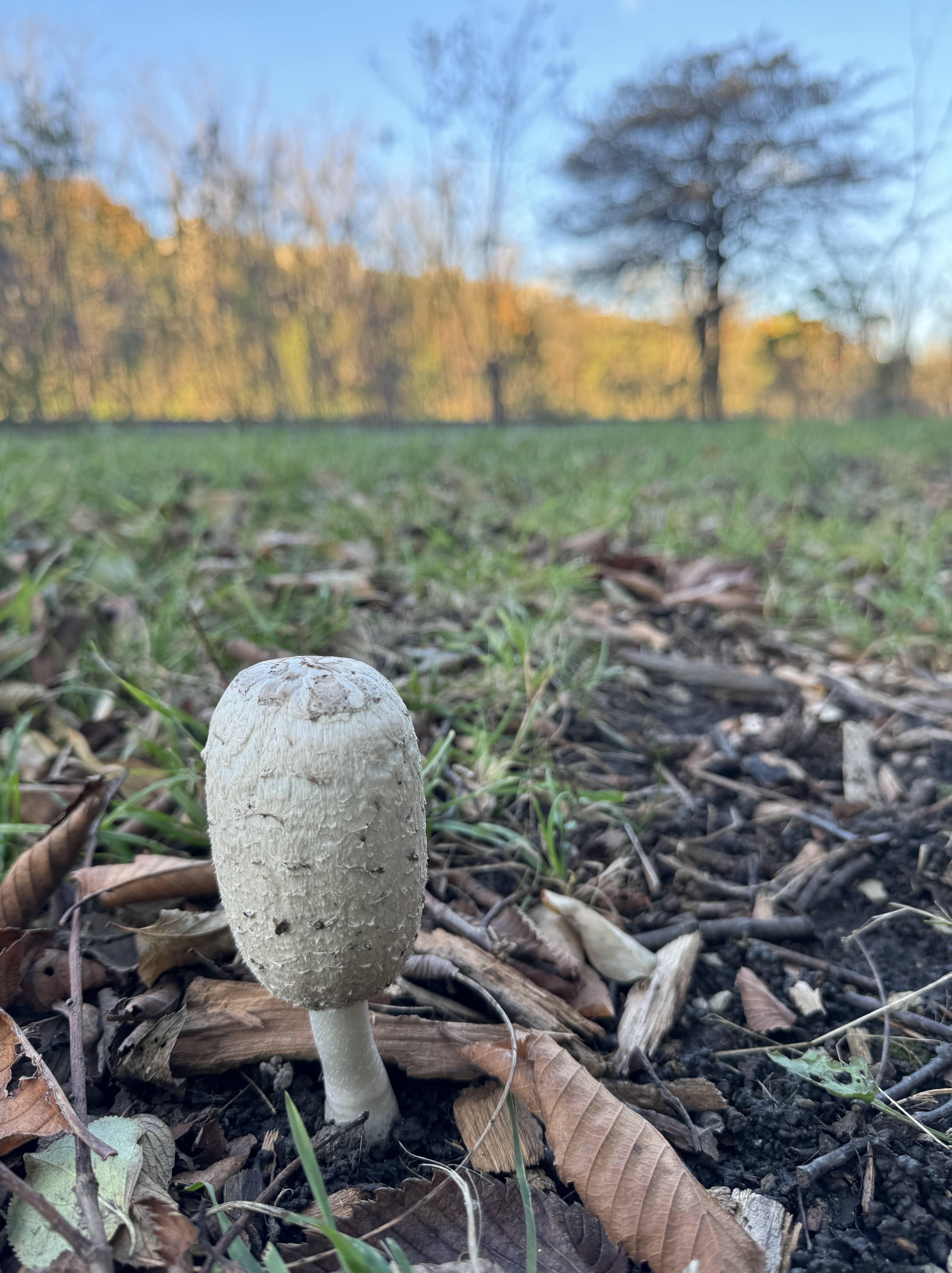

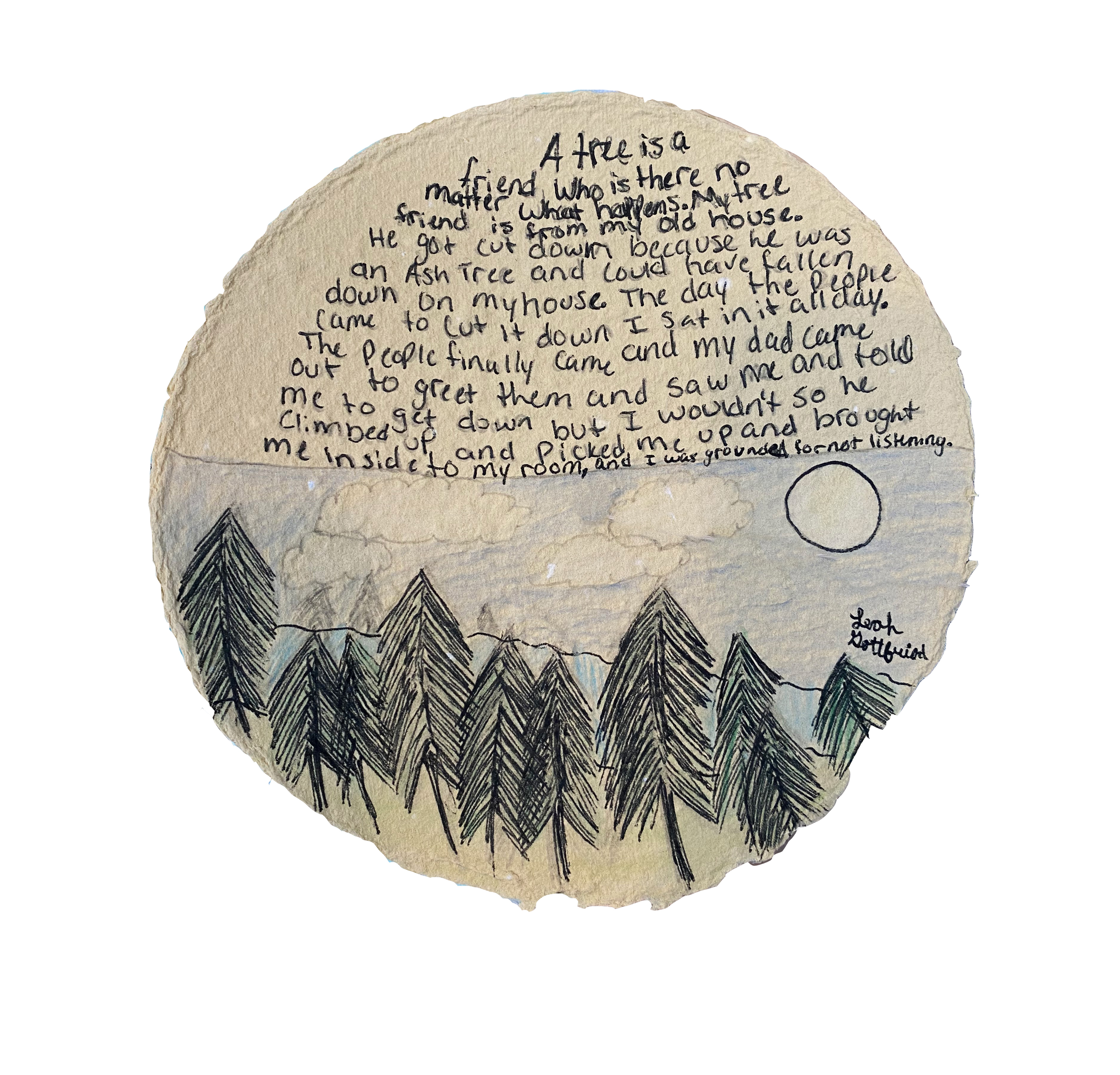


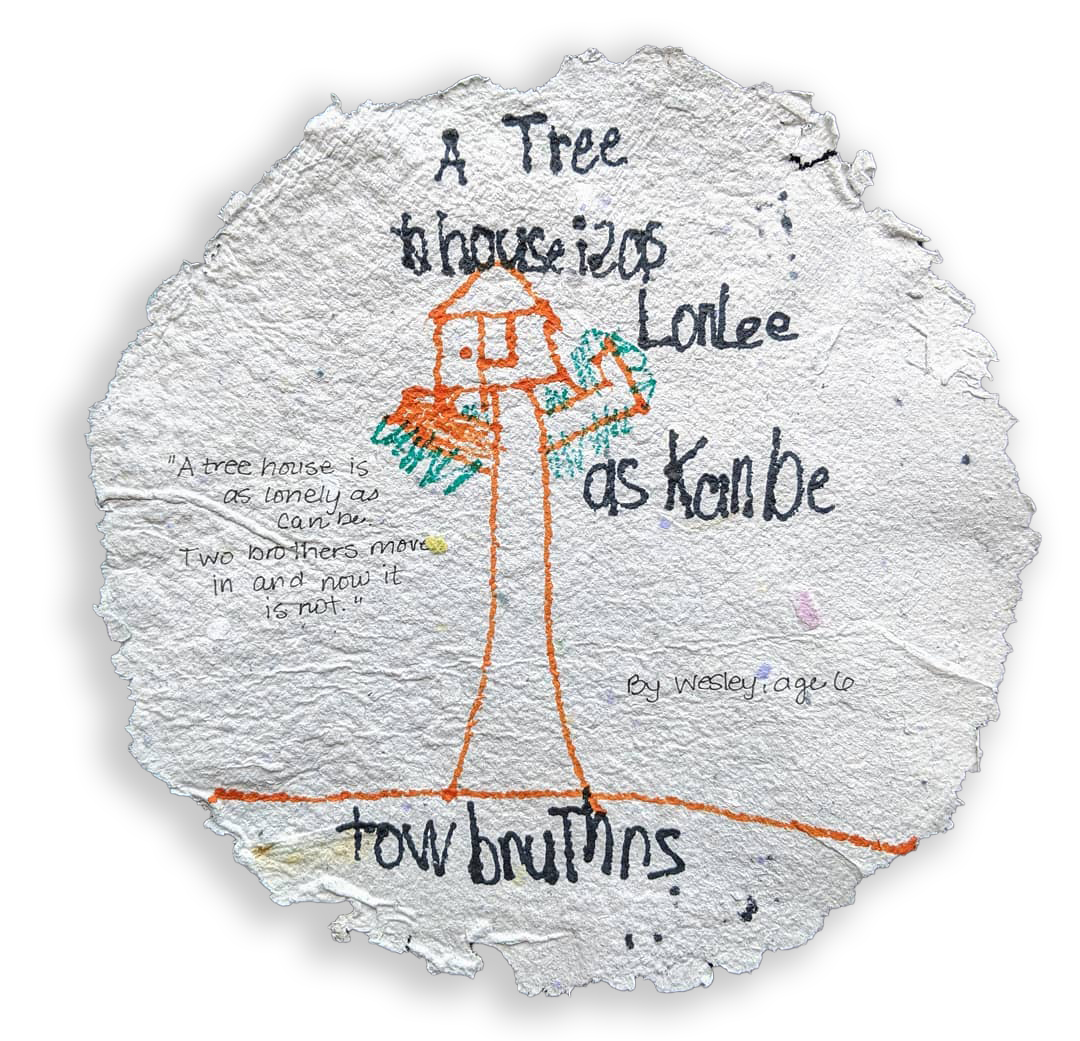

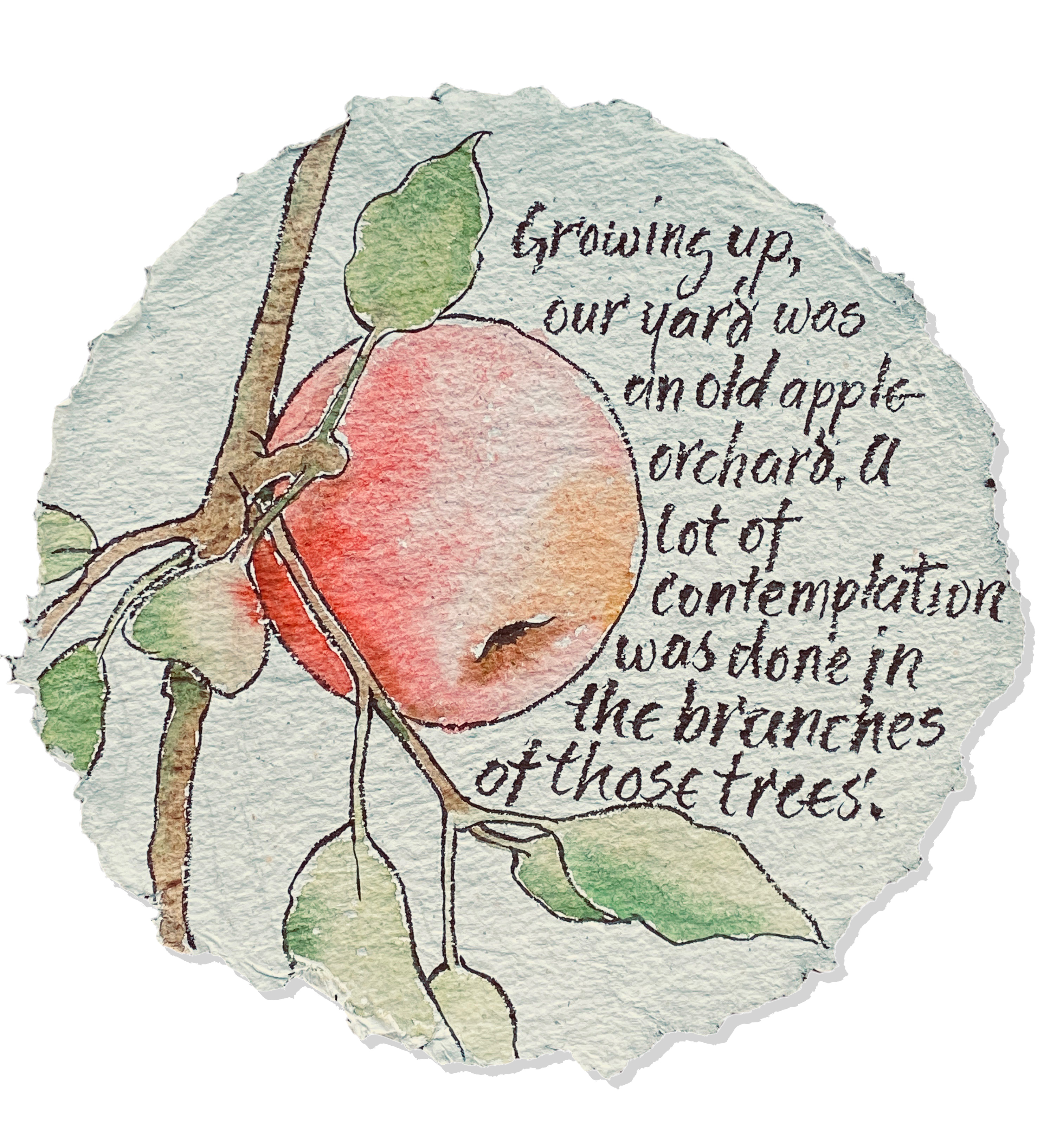



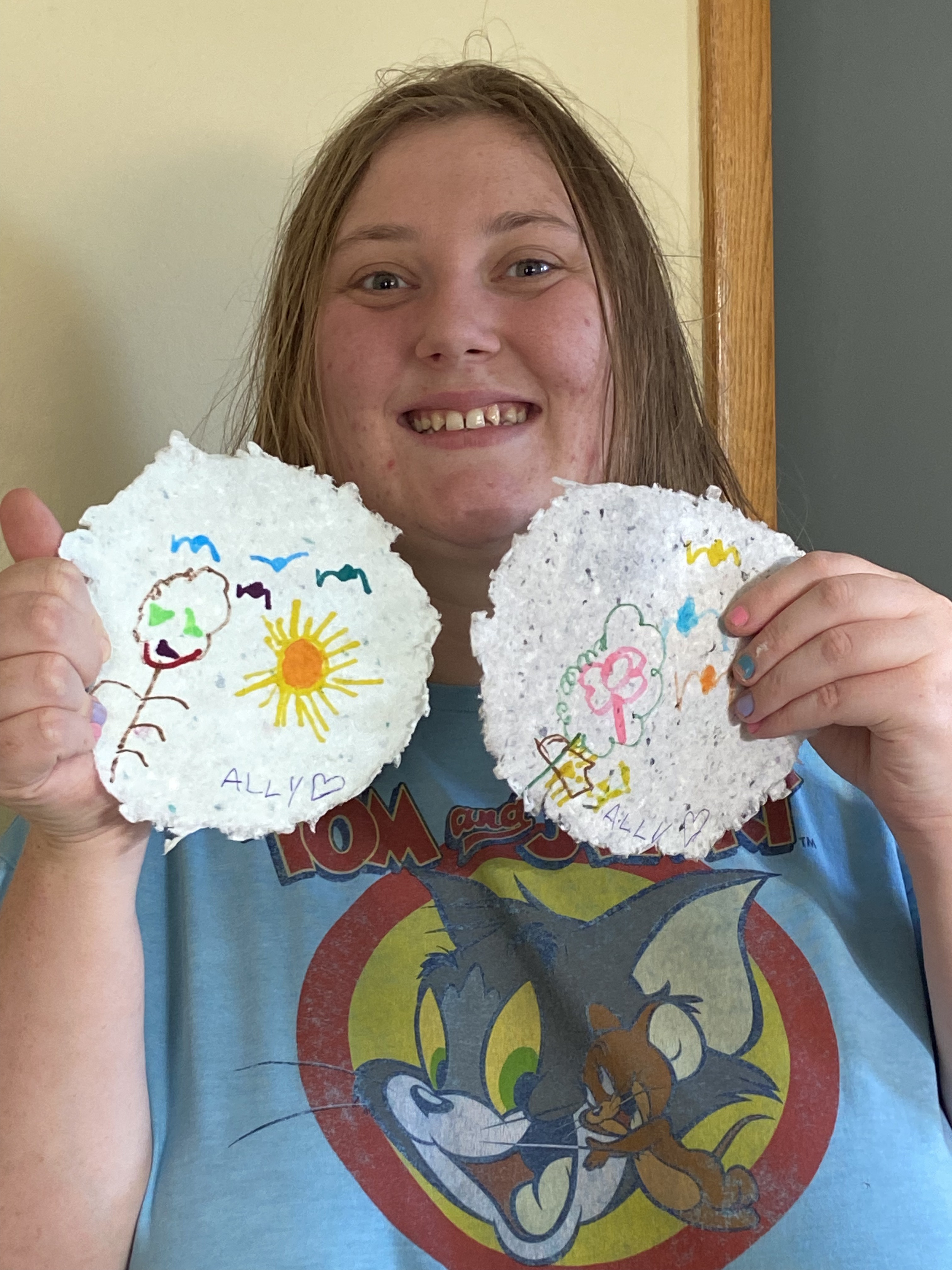


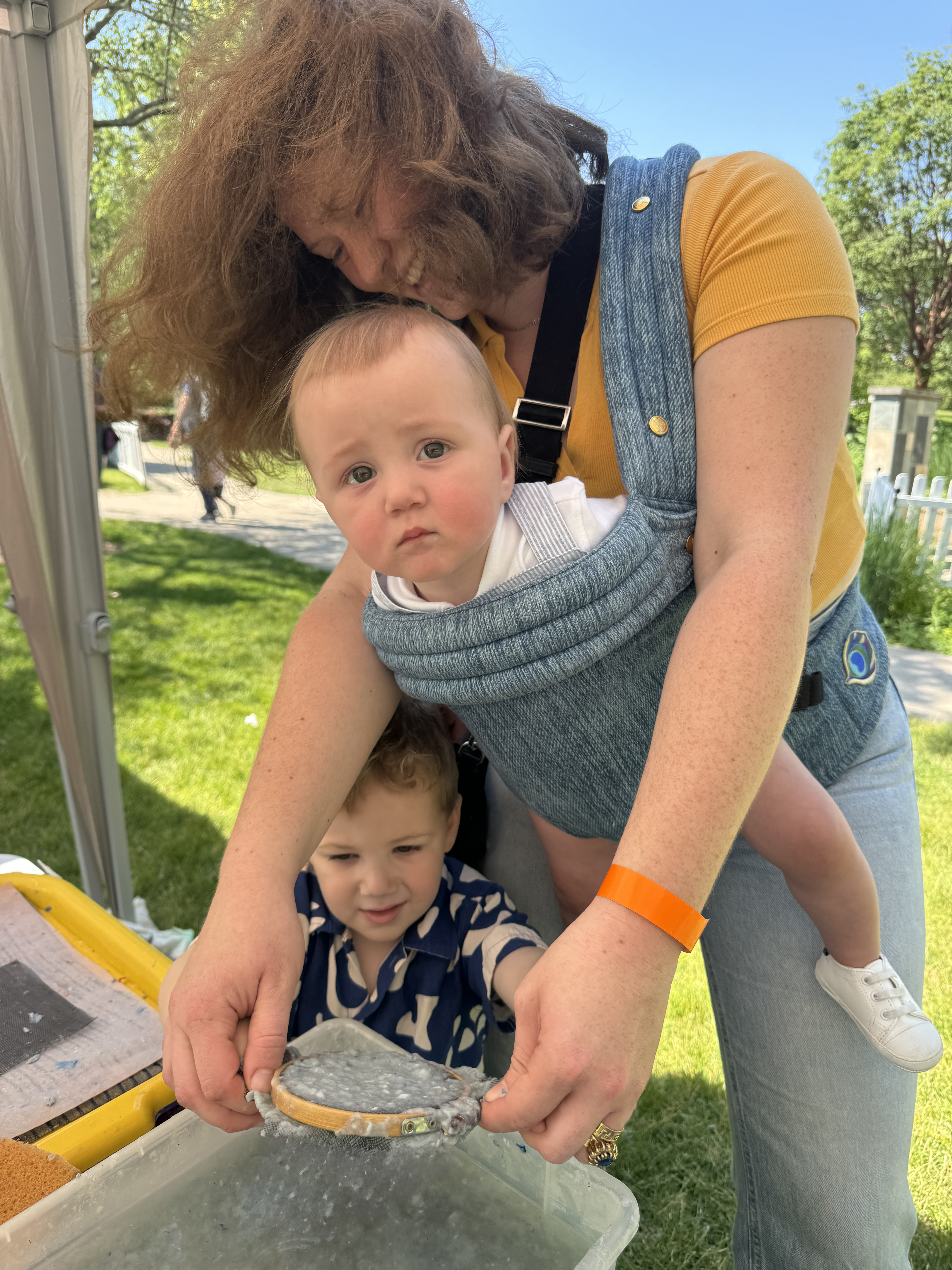


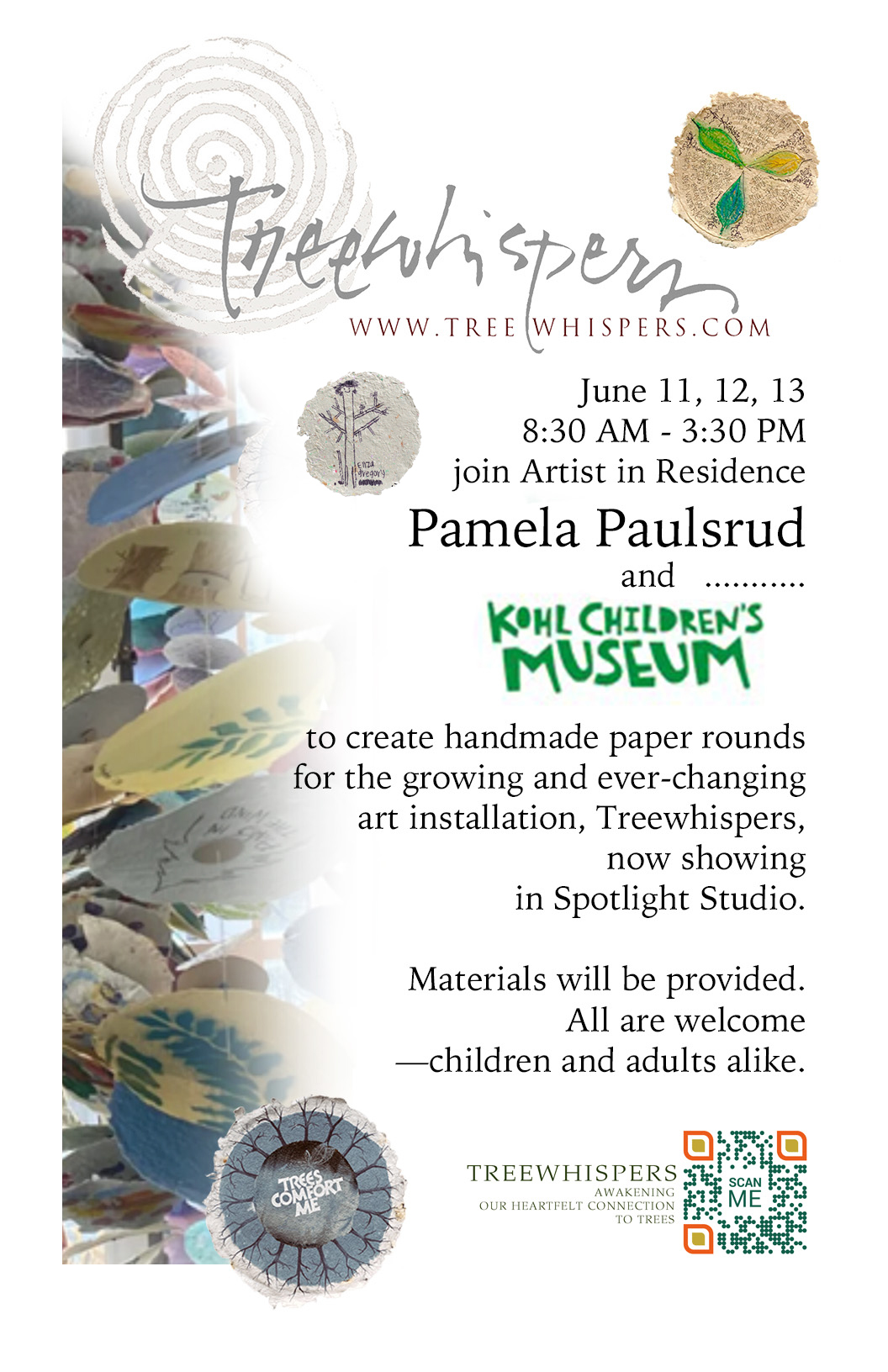


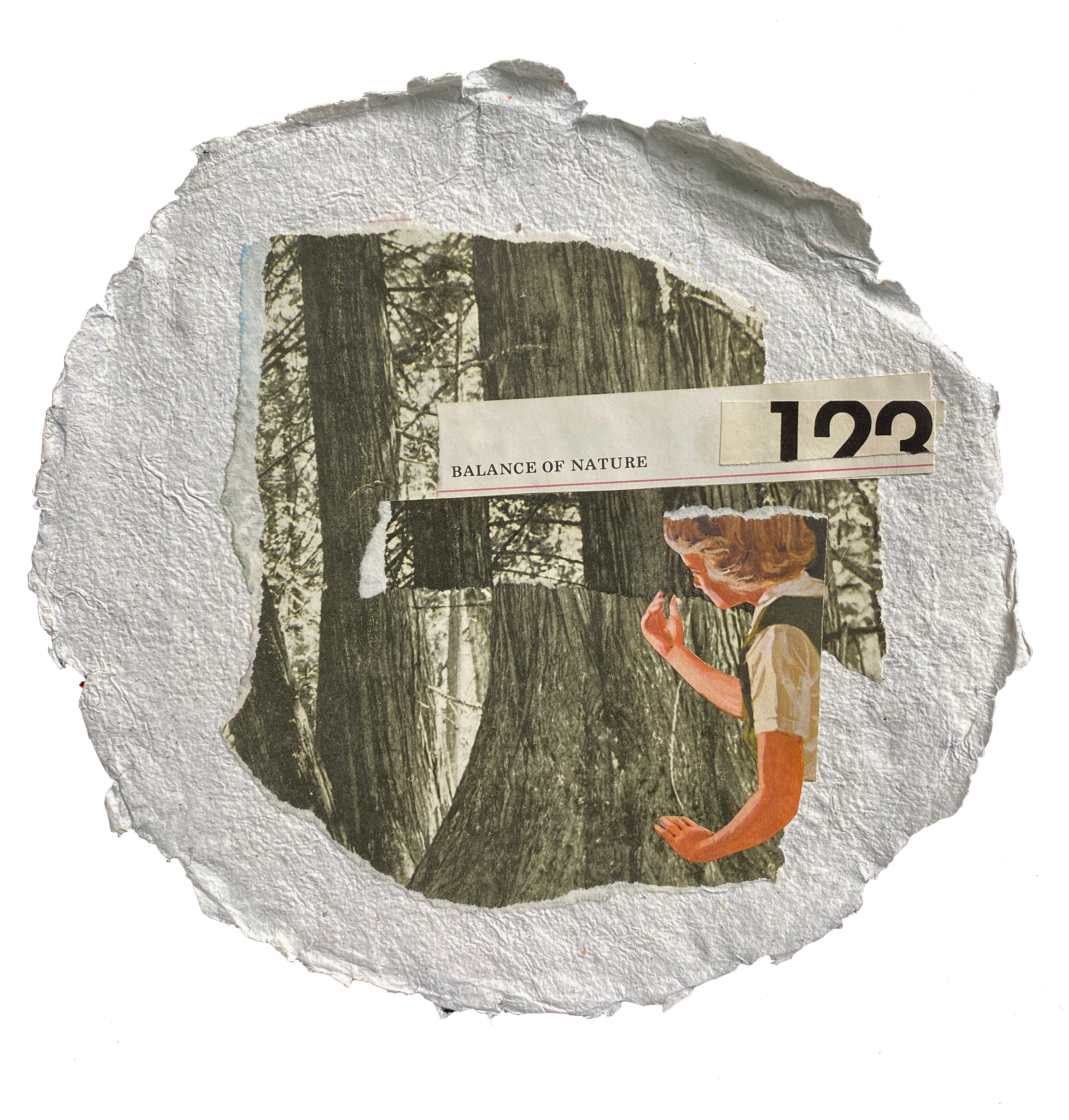


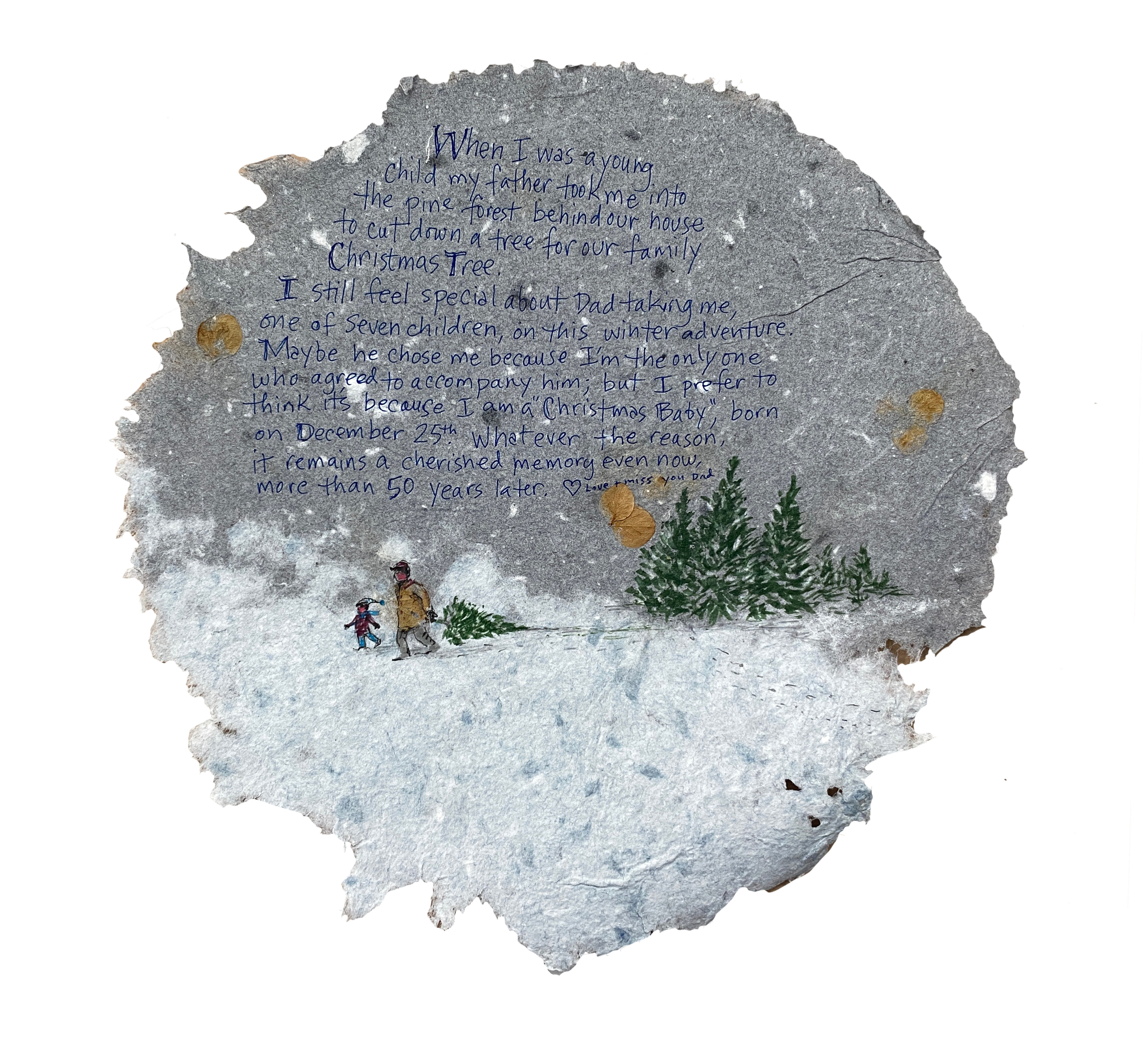

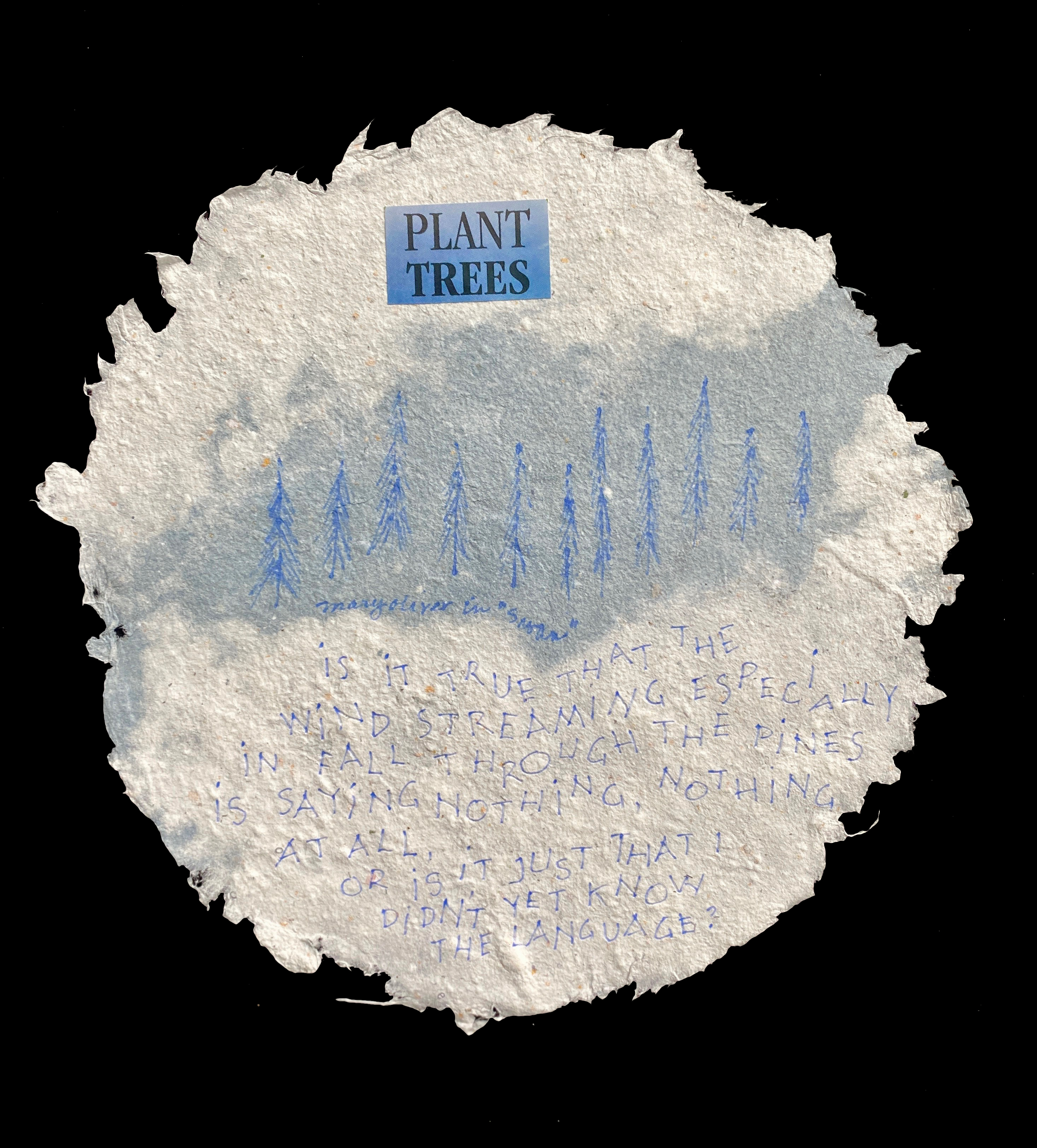

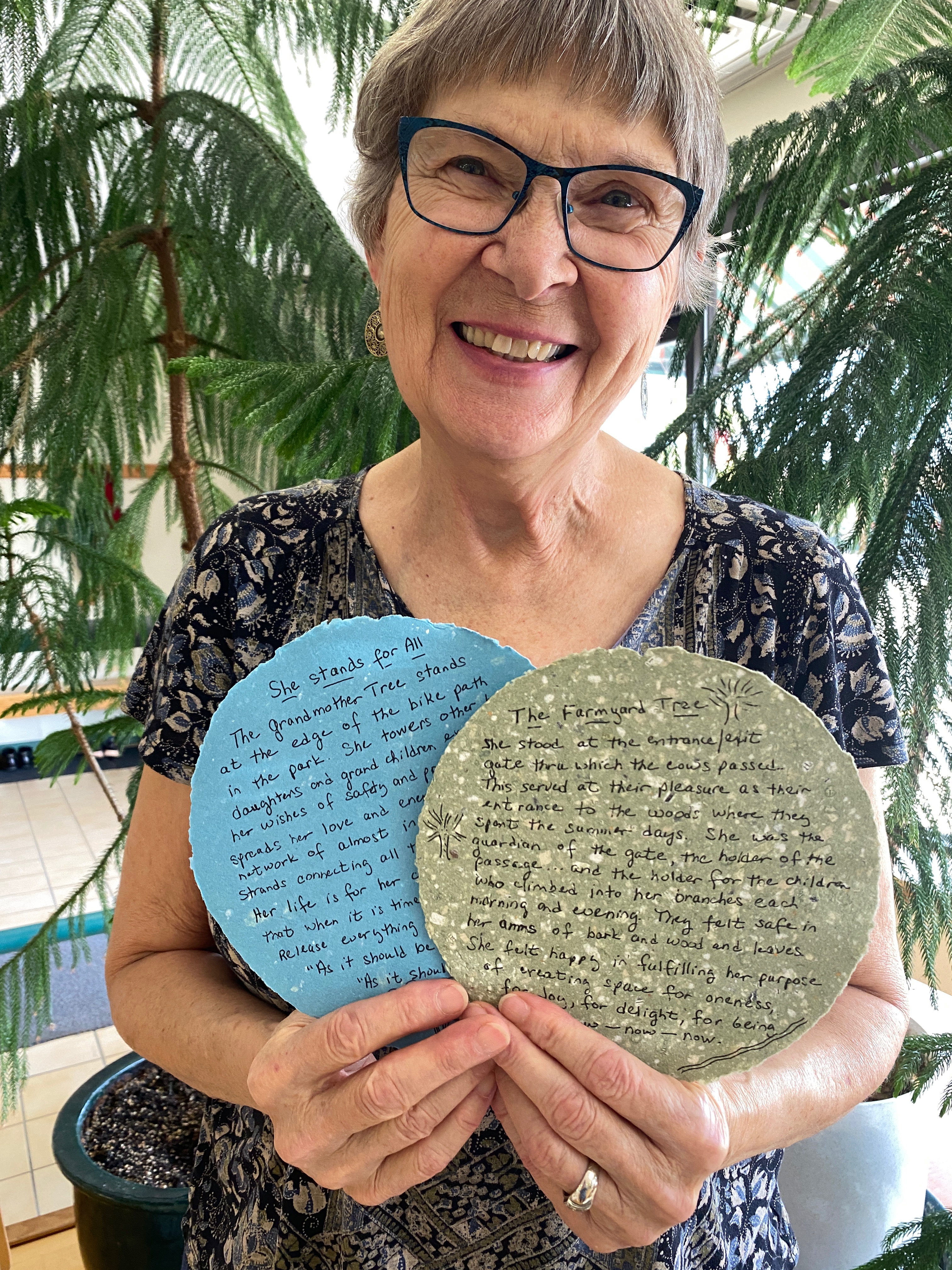


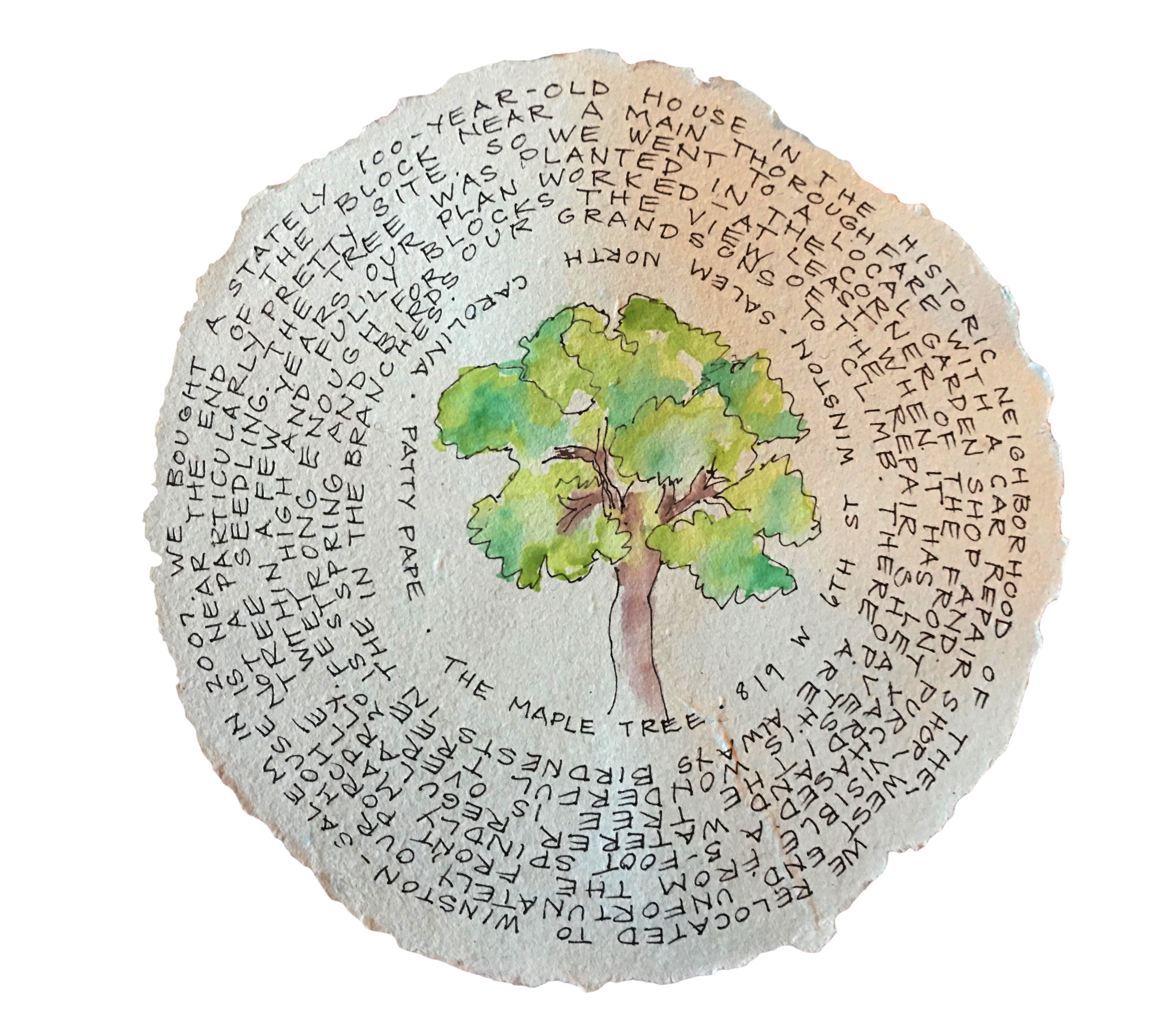


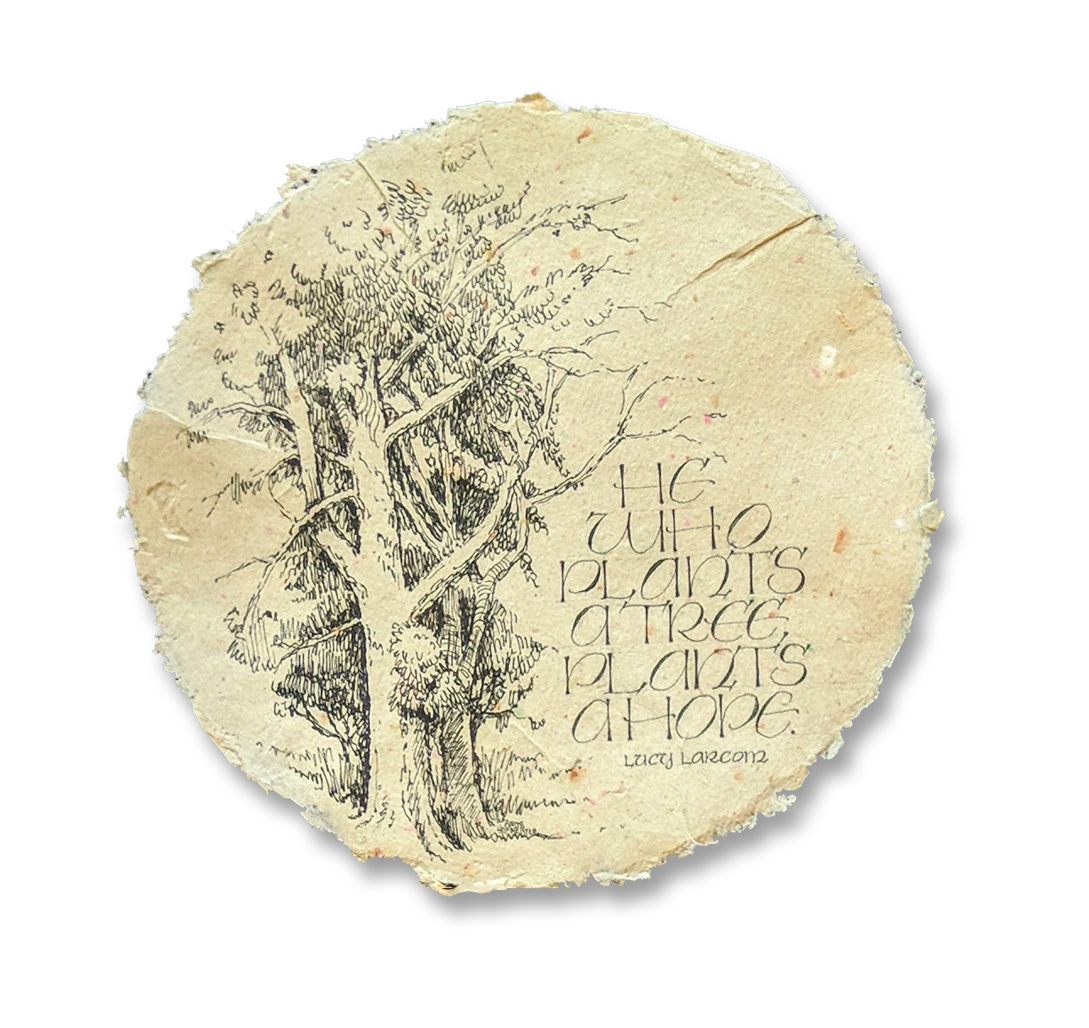

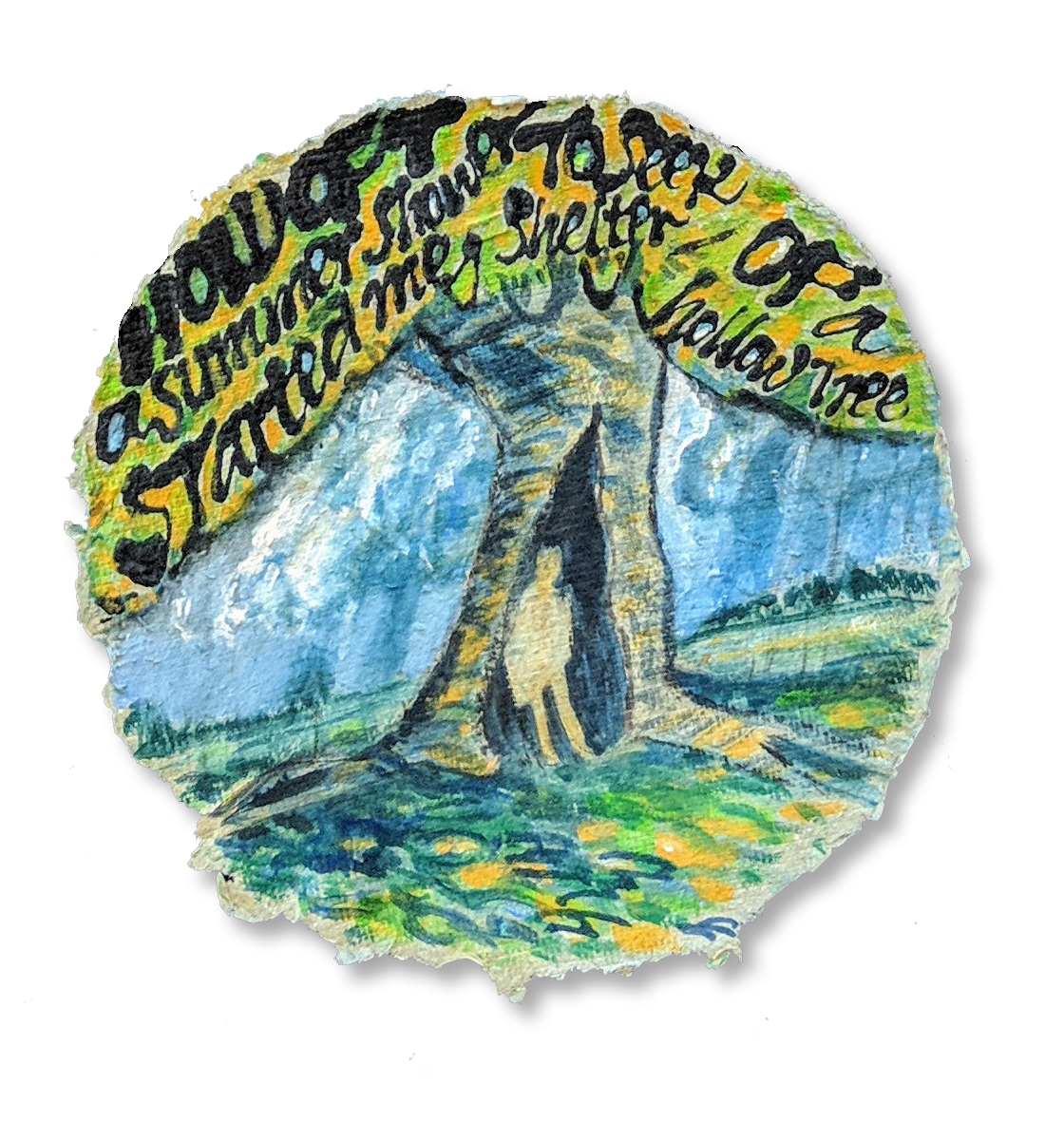





 Artwork by Eliz. Simmonds, Black Mountain, North Carolina


 Photo by Pamela Paulsrud


 Artwork and handmade paper by The Dawes Arboretum enthusiasts, Newark, Ohio.


 Artwork and handmade paper by The Dawes Arboretum enthusiasts, Newark, Ohio.


 Photo by Pamela Paulsrud


 Handmade paper/art by
 Handmade paper/art by
  Handmade paper/art by
  Handmade paper/art by
  Handmade paper/art by


 Handmade paper/art by Thomas Burns, Dallas, TX, USA, 2019
 Handmade paper/art by Janell Wimberly, Dallas, TX, 2019
 Handmade paper/art by Nicolas Worden, 2019
 Handmade paper/art by
  Handmade paper/art by
  Handmade paper/art by
  Handmade paper/art by
  Handmade paper/art by
  Handmade paper/art by
  Handmade paper/art by

 Handmade paper, story by
 Handmade paper, artwork, and photo by


 Artwork by Bonnie Keyes, April 2018


 Artwork by Jo Ann Bunosky Buzulencia, Handmade paper by Don Widmer


 Photo by Pamela Paulsrud
 Photo by Pamela Paulsrud


 Artwork by Patty Pape, Winston Salem, North Carolina
 Photo by Pamela Paulsrud
 Artwork by Sheila W. Cheek
 Artwork by Terry Englehart, Oakland, CA
 Artwork by Barbara Yale Read


 Photo by Pamela Paulsrud


 Photo by Pamela Paulsrud
 Artwork by Pam Rinaldo
 Photo by Pamela Paulsrud
 Photo by Pamela Paulsrud


![hdr_00034_0[1]](https://i0.wp.com/treewhispers.com/wp-content/uploads/2012/12/hdr_00034_01.jpg?resize=500%2C379)


 Photo by Pamela Paulsrud
 Photo by Pamela Paulsrud
 Photo by Pamela Paulsrud
 Photo by Pamela Paulsrud
 Photo by Pamela Paulsrud
 Photo by Pamela Paulsrud
 Photo by Pamela Paulsrud
 Photo by Pamela Paulsrud
 Photo by Pamela Paulsrud
 Photo by Pamela Paulsrud
 Photo by Pamela Paulsrud


 Photo by Pamela Paulsrud


 Photo by Pamela Paulsrud
 Photo by Pamela Paulsrud


 Photo by Pamela Paulsrud
 Photo by Pamela Paulsrud
 Photo by Pamela Paulsrud

 Photo by Pamela Paulsrud
 Photo by Pamela Paulsrud